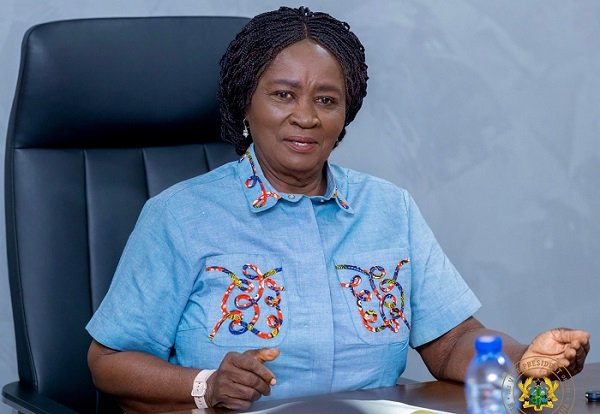
The Vice-President, Professor Naana Jane Opoku-Agyemang, has raised concerns about the increasing cost of elections, describing it as a threat to democratic governance in Africa.
She said the rising cost of political participation was discouraging people with vision, competence and commitment to public service from entering politics.
Citing studies in Ghana which suggest that prospective parliamentary candidates could spend about $700,000 to contest elections, Prof. Opoku-Agyemang said the challenge was not a lack of people willing to serve, but the financial barriers associated with political contests.
“The issue is not a shortage of people willing to serve. The cost of entry has become so high that many who could strengthen our democracies are discouraged from participating,” she said.
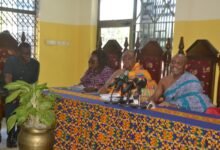
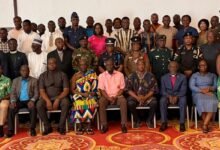
The Vice-President made the remarks in a speech read on her behalf at the opening of a three-day regional conference on **Advancing Reform, Accountability and Democratic Integrity** in Accra yesterday.
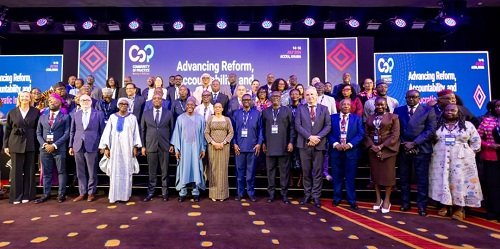
The conference is expected to examine practical reforms aimed at improving transparency and accountability in political financing, while developing recommendations to support sustainable democratic reforms, strengthen accountability mechanisms and promote good governance across the region.
Prof. Opoku-Agyemang said the growing influence of money in politics was contributing to declining public confidence in democratic institutions, dissatisfaction with political parties and increasing support for non-democratic alternatives.
She noted that women, young people and many qualified citizens continued to face barriers because they were unable to finance expensive political campaigns.
She, therefore, urged stakeholders to see political finance reform as a development issue rather than merely an electoral matter.
The Vice-President highlighted Ghana’s efforts to strengthen accountability through reforms such as the Conduct of Public Officers Bill currently before Parliament and the approval of the National Ethics and Anti-Corruption Action Plan for 2026-2030.
She called for stronger disclosure requirements, effective enforcement mechanisms and spending limits, but stressed that legislation alone would not address the challenge.
“We must build political systems in which integrity is rewarded and money strengthens democracy instead of weakening it,” she said.
The Speaker of Parliament, Alban Kingsford Sumana Bagbin, also expressed concern about the growing influence of money in politics, saying it was undermining democracy across Africa.
He said when money became the main determinant of who won political office, public service was reduced to an investment opportunity rather than a responsibility.
“When money becomes the main factor in winning political office, public office is seen as an investment to recover rather than a public trust,” he said.
“Political competition shifts from a contest of ideas and service to a contest of financial power,” he added.
Mr Bagbin said Parliament had a critical role to play in ensuring that international commitments on political finance reforms were translated into national laws and stronger oversight systems.
He said Parliament had established a Governance Services Division with departments responsible for anti-corruption, legal services, investigations and human rights to strengthen accountability.
The Executive Director of the Ghana Centre for Democratic Development (CDD-Ghana), Professor Henry Kwasi Prempeh, said growing dissatisfaction with democracy across Africa should be a major concern for stakeholders.
He cited Afrobarometer findings which showed that more than six out of every 10 Africans were dissatisfied with the way democracy was functioning in their countries.
Prof. Prempeh said the increasing monetisation of politics was one of the major factors driving the dissatisfaction.
BY AGNES OPOKU SARPONG
Follow our WhatsApp Channel now! https://whatsapp.com/channel/0029VbAjG7g3gvWajUAEX12Q