Experts advocate shift to professional water management in rural communities
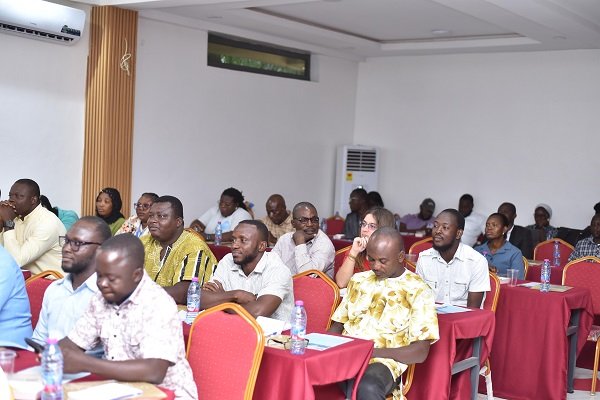
Stakeholders in the Water, Sanitation and Hygiene (WASH) sector have urged the adoption of professionally managed water services.
They are of the view that the current volunteer-based system was no longer reliable for delivering safe drinking water to hard-to-reach communities in the Savannah Region.
The call was made at a learning and stakeholder engagement session organised yesterday by Saha Global, a non-profit water service provider, to share lessons from its professionalised rural water management model and explore strategies for scaling it across underserved communities.
Participants, including officials from the Council for Scientific and Industrial Research (CSIR)-Water Research Institute, district assemblies, development partners and government representatives, noted that the long-standing volunteer-managed approach to rural water systems had become unsustainable and required urgent reforms.


The Savannah Regional Minister, Mr Salisu Be-Awuribe, described Saha Global’s model as innovative and timely, saying it aligned with the government’s commitment to expanding access to potable water in rural communities.
He said access to safe drinking water remained one of the major development challenges confronting many communities in the region, particularly those in hard-to-reach areas.
Mr Be-Awuribe urged Metropolitan, Municipal and District Assemblies (MMDAs) to allocate part of their development resources towards supporting the management of rural water systems.
The Director of Strategy and Partnerships at Saha Global, Mr Theo Boateng, said evidence gathered over years of operating in last-mile communities had shown that volunteer-managed water systems were unable to guarantee reliable service delivery.
According to him, the organisation’s experience during the COVID-19 pandemic revealed significant weaknesses in the volunteer model, prompting Saha Global to adopt a professionalised approach centred on paid local water operators.
He explained that under the new model, trained community members, mainly women were employed as contracted water operators and supported with structured training, performance monitoring, monthly remuneration and technical supervision.
Mr Boateng stated that the approach had significantly improved water production, water quality and household consumption in communities served by the organisation.
A Research Scientist at the CSIR-Water Research Institute, Mr Emmanuel Mensah, commended Saha Global for maintaining high standards in water quality management through regular laboratory testing.
He said the institute had partnered with Saha Global over the past three years to test both untreated source water and treated drinking water in several beneficiary communities.
“The results from our laboratory analyses indicate that the treatment systems being used are producing water within acceptable quality standards,” he stated.
Presenting an overview of the programme, Mr Gbandan Francis Blessings underlined that access to safe drinking water continued to be one of the most persistent development challenges in the Savannah Region due to poor hydrogeological conditions, dispersed settlements and the limited commercial attractiveness of rural water systems.
He explained that Saha Global currently serves more than 140,000 people in 27 districts across five regions, operating both non-mechanised boreholes and simple surface water treatment systems for communities dependent on contaminated surface water.
FROM GEOFFREY BUTA, TAMALE
Follow our WhatsApp Channel now! https://whatsapp.com/channel/0029VbAjG7g3gvWajUAEX12Q