From the 18th to the 81st UNGA: What has changed?
The United Nations (UN) was formed in 1945, primarily to maintain international peace and security after the collapse of the League of Nations. Its creation reflected the collective determination of nations to prevent another devastating global conflict and to establish an international system based on cooperation, dialogue and respect for the sovereignty of states.
The organisation is founded on the principle of the sovereign equality of its member states. In principle, therefore, every member state is entitled to equal recognition and respect within the international system, regardless of its size, population, economic strength or military capability.
However, as the United Nations approaches its ninth decade, an important question remains: How much has actually changed in the international system since the early years of the organisation?
During the 18th UN General Assembly (UNGA) meeting in October 1963, the speech delivered by Emperor Haile Selassie of Ethiopia continued to resonate deeply with Africans and people of African descent across the world. His words captured the struggle against racial discrimination, inequality and the structures that had historically denied some people their dignity and equal place in the international community.
He said: “…until the philosophy which holds one race superior and another inferior is finally and permanently discredited and abandoned… Until that day, the dream of lasting peace and world citizenship and the rule of international morality will remain but a fleeting illusion.”
Those words, delivered more than six decades ago, remain relevant because the fundamental issues they addressed have not entirely disappeared. The world has changed considerably since 1963, but the question of whether international relations are truly governed by equality and fairness remains unresolved.
At the 80th UNGA meeting, President John Dramani Mahama of Ghana, with support from his peers, delivered a landmark call for reparatory justice and reparations. He demanded formal acknowledgement, apologies and structural compensation for the historical crimes associated with the trans-Atlantic slave trade and colonisation.
The trans-Atlantic slave trade remains one of the gravest crimes against humanity. Millions of Africans were forcibly removed from their homes, communities were disrupted, economies were distorted and generations were subjected to brutal exploitation. The consequences of that history continue to inform discussions about inequality, development, justice and the relationship between Africa and the rest of the world.
President Mahama’s intervention at the UN therefore placed the question of historical injustice firmly within the contemporary international debate. It also raised an important issue: whether the international community can genuinely speak about equality, justice and shared prosperity without confronting the historical foundations of the inequalities that continue to shape global relations.
To add further weight to the demand for systemic change at the global level, the Prime Minister of Barbados, Her Excellency Mia Amor Mottley, also raised concerns about the structures of the international system at the 81st UNGA meeting.
She said: “The mindset that established, justified and sustained slavery is the same mindset that sustains the iniquities within the power structures of this very institution and within the international financial architecture.”
I have therefore criss-crossed from Emperor Haile Selassie through President Mahama to Prime Minister Mottley. The words of each leader fire up our souls in the demand for equal respect, justice and dignity.
Within the space of 63 years, from the 18th to the 81st UNGA meetings, African and Caribbean voices have continued to articulate concerns about the structure of the global system. The language and circumstances may have changed, but the central demand remains remarkably similar: that the international order must become more equitable, representative and responsive to the interests of all peoples.
It is clear that we are making progress in some areas. However, what remains evident is that those who created and benefited from exploitative systems would not necessarily voluntarily dismantle structures that have historically served their interests.
The composition of the UN Security Council is a clear example of the debate. Its permanent membership has not changed since 1945. While the world has undergone profound political, economic and demographic transformations since then, the permanent structure of the Council remains largely rooted in the realities of the post-Second World War era.
The international financial architecture has also remained a major subject of debate. Questions about representation, access to financing, debt, development and the distribution of economic power continue to occupy the global agenda. For many developing countries, particularly in Africa and the Global South, the concern is whether the existing financial structures adequately reflect contemporary global realities.
The philosophy of superiority and inferiority, meanwhile, continues to influence aspects of the international order. This does not necessarily mean that the language of the past remains unchanged. Rather, the concern is that unequal power relationships can continue to reproduce themselves through political, economic and institutional arrangements.
Notably, former UN Secretary-General Kofi Annan introduced numerous reforms during his tenure and contributed significantly to strengthening the organisation. Yet, some of the fundamental structures identified above remained beyond meaningful transformation.
The question, therefore, is not simply whether the United Nations has achieved anything. It clearly has. The deeper question is whether the international system is capable of adapting sufficiently to reflect the aspirations of a changing world.
If we are to succeed in moving forward, we must review our approaches and build stronger partnerships. We must enlist men and women of conscience who believe in the collective power of the human race and who understand that diversity, equality and mutual respect are essential to sustainable peace.
Such partnerships must extend beyond governments. Civil society, academia, business, faith-based organisations, traditional institutions, young people and other stakeholders all have roles to play in shaping a more equitable international order.
We must also embrace the principle that lifting another person, nation or region does not amount to diminishing one’s own power. The prosperity of one part of the world should not have to depend on the deprivation of another.
The best way to do away with a system that hurts our very being may therefore be to CREATE a better alternative—one that serves the interests of humanity more fairly and provides genuine opportunities for all.
The difficulty experienced over the years in transforming the 81-year-old system should be a clarion call for us to think differently. Rather than spending all our energy attempting to dismantle an existing system, that was purposely designed to keep the second world war champions leaders of the new order.
We should also consider how to create alternative institutions, partnerships and economic arrangements that can gradually make the current system less dominant or less favourable to exploitation.
This does not mean abandoning international cooperation. On the contrary, it means strengthening cooperation on a more equitable foundation.
Change, as difficult as it appears, must come from within. But change must also be driven by ideas, partnerships, courage and a willingness to challenge long-standing assumptions about power and privilege.
We do not need nuclear warheads and deliberately designed financial systems that keep others poor while widening the gap between the rich and the poor. What humanity needs is a global order in which resources, opportunities and responsibilities are shared more fairly.
Africa and the Global South must therefore continue to engage the international system, while also building the capacity, institutions and partnerships necessary to influence its future.
The journey from Haile Selassie’s historic words to the contemporary calls for reparatory justice and reform demonstrates that the struggle for equality is not new. What has changed is the generation making the demand. What remains constant is the desire for dignity, justice and equal respect.
If exploitation remains a dominant tool in global geopolitics, international peace and security shall indeed remain an illusion.
The challenge before our generation is to ensure that the next UNGA gathering does not merely repeat the demands of previous generations, but records measurable progress towards a fairer and more representative international system.
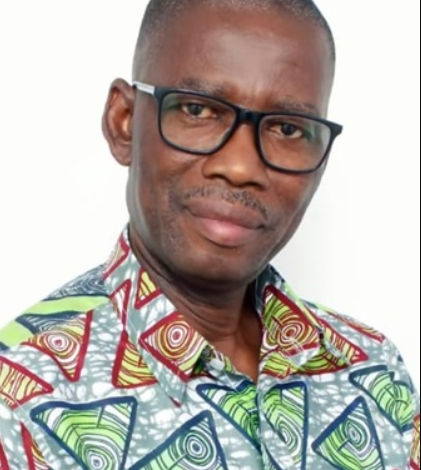
The Writer is the Member of Parliament for Wa West, a retired Police Officer, and a Veteran United Nations Peace Keeper
BY PETER LANCHENE TOOBU
You can now read the *Ghanaian Times* and *The Spectator* newspapers digitally on [TimesNewsPlus](https://timesnewsplus.com/newspapers).
Follow our WhatsApp Channel now! https://whatsapp.com/channel/0029VbAjG7g3gvWajUAEX12Q