Ghana Immigration Service records major gains in 1st year of CGI Samuel Basintale Amadu
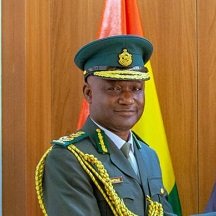
The Ghana Immigration Service (GIS) has entered a new phase of transformation under the leadership of its Comptroller-General of Immigration (CGI), Samuel Basintale Amadu. His appointment in March 2025 by the President, His Excellency John Dramani Mahama, marked the beginning of a renewed national drive toward stronger border security, operational efficiency, and institutional reform.
Following his vetting by the Public Services Commission, the Comptroller-General was tasked with a critical mandate: safeguarding Ghana’s territorial integrity, strengthening intelligence-led operations, enhancing inter-agency collaboration, and dismantling transnational criminal networks, particularly those involved in smuggling and human trafficking. Central to this agenda is the modernisation of border management systems and the accelerated digitalisation of visa and permit processes to improve service delivery.
One year into his tenure, the GIS has recorded significant progress across key operational areas, including revenue generation, enforcement, infrastructure development, and international cooperation.
Record revenue and operational milestones
Under CGI Amadu’s leadership, the service has adopted a results-driven approach aligned with national priorities. This has translated into measurable gains. Over the past year, GIS generated more than GH¢546 million in revenue, largely driven by reforms in visa and permit processing. A total of 186,959 permits and visas were issued, representing a 32.5 per cent increase over the previous year.


These achievements are attributed to ongoing investments in digital infrastructure, automation, and system upgrades, which have significantly reduced processing times and enhanced transparency.
In addition, the service efficiently managed over 2.8 million passenger movements across Ghana’s air, land, and sea entry points without major incident. This performance played a key role in supporting national initiatives such as the “2025 December in Ghana” tourism initiative, which recorded increased international arrivals.
Enhanced border security and enforcement
Strengthening border security has been a central pillar of CGI Amadu’s strategy. Through coordinated operations involving the National Operations Department, Border Management Department, and Regional Commands, the GIS achieved notable enforcement successes, leading to major seizures of smuggled goods, narcotics, ammunition, and contraband, all handed to relevant authorities.
Significant interceptions include: 1,401 bags/jerrycans of smuggled cocoa beans; 1,398 packs of Tramadol and 88 parcels of suspected Indian hemp; 725 cartridges of ammunition; 22 post-paid meters; 119 gallons of smuggled fuel; and 61 jerrycans of cooking oil.
These operations reflect growing effectiveness in disrupting illicit trade networks.
In addition, 909 individuals, both Ghanaians and foreign nationals, were intercepted at entry points and checkpoints. A broader enforcement exercise involving 7,204 facility inspections led to the arrest of 3,533 individuals for immigration-related offences.
Intelligence, legal enforcement, and fraud detection
The service has strengthened its intelligence and legal capabilities, contributing to improved enforcement outcomes. A total of 666 intelligence requests were processed in collaboration with partner agencies.
The service prosecuted 29 cases and secured 28 convictions, covering offences such as illegal entry, fraud schemes including QNET-related activities, and cybercrime. Court-ordered repatriations were enforced where applicable.
Meanwhile, the Document Fraud Expertise Centre examined 932 suspected cases, with 35.2 per cent confirmed as fraudulent, placing prominence on both the scale of document fraud and the service’s enhanced detection capacity.
Capacity building and institutional development
Recognising the importance of human capital, the Comptroller-General of Immigration initiated a significant expansion of training programmes. More than 970 officers received specialised training locally and internationally in areas such as counter-terrorism, crisis management, and border security.
Building on this momentum, the service collaborated with the Youth Employment Agency (YEA) and National Ambulance Service to deliver a three-month training programme in 2025. This initiative trained Community-based Medical First Responders (CMFRs) in three cohorts at the GIS Training School facilities.
Complementing these efforts, instructors were hosted at a conference, a first of its kind at the Immigration Service Academy and Training Schools (ISATS), convening the Instructor Corps and representatives from the British Army Special Brigade. Participants reviewed training systems, identified operational gaps, and drafted recommendations to elevate instructional standards, instructor welfare, and the overall GIS training framework.
Further advancing internal expertise, in partnership with the European Union Security and Defence Initiative (EUSDI), the service held a Trainer of Trainers (ToT) programme, training officers for effective internal capacity building.
In parallel, a Krav Maga unarmed combat training was also held at ISATS, equipping selected officers drawn from different offices, with plans of expansion to cover more personnel around the country with instinctive self-defense techniques. This training was in response to recent attacks on officers across the country. Officers received skills training in enhanced close-quarters combat, building on prior VIP protection training.
Infrastructure expansion and decentralisation
To support operational efficiency nationwide, the GIS has embarked on infrastructure development projects across key locations, including Tema, Damango, Kumasi, Sunyani, Cape Coast, Sekondi-Takoradi, and Tamale. These projects aim to improve working conditions, enhance service delivery, and strengthen decentralised operations beyond the national headquarters.
Strategic international collaboration
The GIS has also expanded its global engagement through strategic partnerships and policy collaboration. Ongoing cooperation with the International Organisation for Migration supports initiatives in gender mainstreaming, community engagement, and migration governance.
Recent high-level engagements have included delegations from the United Nations Counter Terrorism Centre, immigration authorities from Rwanda, and study missions from Nigeria and Sierra Leone to Ghana. These exchanges have enhanced knowledge sharing and contributed to the development of integrated border management systems.
The road ahead: Reform and sustainability
Looking forward, the service is advancing a reform agenda focused on sustainability and innovation. A key initiative is Project SECOBOR (Secure Our Borders), a public-private partnership model designed to address gaps in logistics, surveillance, infrastructure, and officer welfare.
The project was launched under the leadership of Rev. Stephen Y. Wengam, Chairman of the GIS Governing Council.
Additional proposals focus on staff welfare and institutional sustainability. These include establishing a Private Mutual Health Insurance Scheme to improve healthcare access and cost predictability, and creating a Staff Endowment Fund to provide structured welfare and emergency support.
The Comptroller-General of Immigration has consistently emphasised staff welfare as a critical pillar of operational effectiveness, combining strategic vision with disciplined execution.
The past year has repositioned the service as a more responsive, technology-driven, and intelligence-led institution. While challenges remain in an increasingly complex global security environment, the progress achieved under CGI Samuel Basintale Amadu provides a strong foundation for the future.
As Ghana continues to expand its economic and diplomatic footprint, the role of the Ghana Immigration Service remains pivotal in safeguarding national sovereignty and facilitating secure mobility.
The writer is the Deputy Commissioner of Immigration, Public Affairs Department.
BY MAUD ANIMA QUAINOO
Follow our WhatsApp Channel now! https://whatsapp.com/channel/0029VbAjG7g3gvWajUAEX12Q
Follow our WhatsApp Channel now! https://whatsapp.com/channel/0029VbAjG7g3gvWajUAEX12Q