Ghana Water Justice Network launched in Accra

THE Executive Director of the Integrated Social Development Centre (ISODEC), Mr Samson Danse, has called for a renewed and sustained national and regional action to ensure equitable and affordable access to safe water.
According to him, access to clean and potable water is a human right issue guaranteed both under the 1992 Constitution and international human right charters.
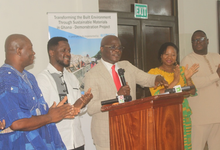
Mr Danse made the call at the launch of the Ghana Water Justice Network in Accra yesterday, a platform designed to strengthen advocacy on water as a fundamental human right and push governments to prioritise investment in water infrastructure and governance.
He expressed concern about environmental degradation affecting water bodies, including drying rivers and dams, which he said is worsening supply constraints and the safety of water.
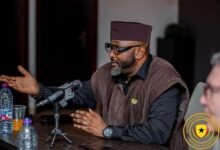

The Executive Director of ISODEC called for stronger community involvement in protecting water sources.
He stressed that the lack of sustained pressure on duty bearers had contributed to persistent challenges in the sector, including inadequate investment, weak enforcement, and limited accountability in service delivery.
Mr Danse underscored that water remained a basic human right recognised under international frameworks such as the United Nations human rights system and the African Charter on Human and Peoples’ Rights, and should therefore be accessible to all without discrimination.
The Executive Director raised concerns over growing inequalities in access, highlighting disparities between urban and rural communities, as well as between high-income and low-income households.
He noted that while some urban residents are able to purchase water at high costs, many poor communities continue to face severe shortages.
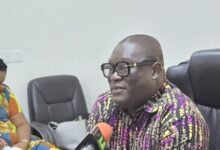
The Coordinator for African Water Justice, Leonard Shang-Quartey, said that Ghana’s water sector faced major investment and funding gaps, with less than half of the allocated capital expenditure released and even less spent.
He said that about GH¢790 million was allocated for capital expenditure under the 2026–2029 Medium-Term framework, but less than half of the funds were released, and an even smaller proportion was spent.
That shortfall, Mr Shang-Quartey said, had contributed to delays in providing critical water infrastructure, leaving many communities without adequate access to safe water, despite government budgetary provisions.
The Chairman of the Ghana Water Justice Network, Mr Geoffrey Ocansey, said the initiative sought to mobilise citizens, civil society organisations, and development partners to demand accountability and action from duty bearers.
He stated that the network’s mission was not temporary but a continuous struggle that would persist until universal access to safe and affordable water is achieved.
BY PRINCE ADDO FRIMPONG
Follow our WhatsApp Channel now! https://whatsapp.com/channel/0029VbAjG7g3gvWajUAEX12Q