Ghana has called for deeper mining cooperation with China, urging Chinese investors to move beyond the traditional export of raw minerals and partner the country in processing, technology transfer, skills development and industrialisation.
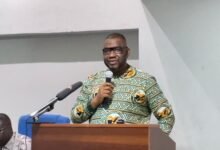
The Minister for Lands and Natural Resources, Mr Emmanuel Armah-Kofi Buah, made the call when he addressed the Ministerial Forum on International Mining Cooperation and the opening of the 28th China Mining Conference and Exhibition 2026 in Tianjin, China.
The conference is being held on the theme: ‘Win-Win Cooperation, Green and Intelligent.’
Representing President John Dramani Mahama and the government, Mr Buah said Ghana was ready to build a new generation of mining partnerships that would deliver greater value to the country, investors, mining communities and the wider global economy.

He said Ghana’s vision was no longer limited to extracting minerals and exporting them as raw materials, stressing that the country wanted its mineral wealth to drive industrialisation, create jobs and develop local expertise.
“The next chapter of mining must be measured not simply by what we take from the ground, but by what we leave above it: industries, skills, technology, restored land, stronger communities and a more prosperous nation,” he said.
Mr Buah noted that for decades, resource-rich countries, including Ghana, had supplied raw materials while most processing, technology and value creation took place elsewhere.
He said Ghana was determined to change that model under President Mahama’s leadership by ensuring that its minerals contributed directly to value addition, industrial development, job creation and skills development.
“For the young Ghanaian looking for work, value addition is not an economic theory. It is a job. It is a skill. It is a career. It is the possibility of building a life at home,” Mr Buah stated.
He explained that Ghana’s concept of a win-win partnership meant that the country must receive fair value from its resources, while investors must have a stable, predictable and commercially viable environment in which to operate.
The Minister said Ghana was reviewing its mining regulatory framework, formalising artisanal and small-scale mining and strengthening transparency and responsible oversight across the gold value chain.
Mr Buah highlighted the presence of major Chinese companies, including Chifeng Gold Group, Shandong Gold and Zijin Mining, in Ghana’s mining sector, describing their investments as evidence of what the two countries could achieve through cooperation.
He, however, said Ghana wanted future partnerships to go beyond extraction.
“We want the next generation of partnerships to go further into processing, technology, skills development, infrastructure and local supply chains,” he said.
According to him, China’s experience in connecting natural resources to processing, manufacturing, infrastructure and technology presented significant opportunities for Ghana.
“The question is no longer only, ‘Who will buy our resources?’ The more consequential question is: ‘What can we build together from them?’” he asked.
Mr Buah also placed environmental sustainability at the centre of Ghana’s mining agenda, particularly in the fight against illegal and irresponsible mining.
He cited the establishment of the National Anti-Illegal Mining Operations Secretariat (NAIMOS) as part of the government’s efforts to strengthen the fight against illegal mining.
He said the Responsible Cooperative Mining and Skills Development Programme (rCOMSDEP) was also being advanced as part of efforts to formalise small-scale mining.
He stressed that environmental protection must remain central to mining development.
“A river is not simply an environmental statistic. It is drinking water. It is farming. It is the livelihood of a community. It is an inheritance held in trust for a child not yet born,” he said.
The Minister called for greater cooperation between Ghana and China in environmental management, mine reclamation, tailings management and land restoration, drawing on China’s technological experience.
Mr Buah identified intelligent mining and modern geological information as another major area for Ghana-China cooperation.
He said Ghana was modernising its national geological database, improving geological survey and mapping capabilities and strengthening digital traceability across the gold supply chain.
“A country must understand the resources it owns if it is to manage them well, attract the right investment and negotiate from a position of knowledge,” he said.
He added that improved geological data would reduce exploration risks for investors, strengthen government decision-making and help Ghana better understand the scale and quality of its mineral resources.
The Minister said China’s expertise in automation, geological science, mineral processing, data systems, engineering and infrastructure made it a natural partner for Ghana in developing intelligent mining.
He, however, emphasised that technology cooperation must include deliberate efforts to develop Ghanaian human capital.
BY TIMES REPORTER
You can now read the *Ghanaian Times* and *The Spectator* newspapers digitally on [TimesNewsPlus](https://timesnewsplus.com/newspapers).
Follow our WhatsApp Channel now! https://whatsapp.com/channel/0029VbAjG7g3gvWajUAEX12Q