Inflation outlook to dominate MPC meeting – BoG Governor
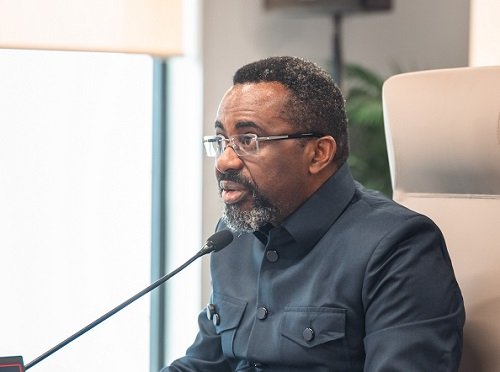
The Governor of the Bank of Ghana (BoG), Dr Johnson Pandit Asiama, has indicated that the recent rise in inflation will be a major focus as the Monetary Policy Committee (MPC) begins deliberations ahead of its next interest rate decision.
He said while the economy continued to show resilience, the rebound in inflation after months of decline required careful assessment to determine whether it was driven by temporary external factors or pointed to a more sustained trend likely to shape inflation expectations and policy direction.
In his opening remarks at the 131st MPC meeting in Accra yesterday, Dr Asiama said the domestic economy remained steady but warned that the change in the inflation trajectory needed close attention.
He noted that headline inflation had increased for three consecutive months, rising from 3.2 per cent in March to 5.3 per cent in June, largely driven by higher transport and haulage costs.


Despite the increase, he explained that inflation remained below the lower bound of the Bank’s target band of eight per cent, plus or minus two percentage points, and was significantly lower than the 13.7 per cent recorded in the same period last year.
Dr Asiama said the period of sustained disinflation had ended, with inflation now moving back towards the target range.
The key question for the committee, he added, was whether the development reflected a normal adjustment or the beginning of a more persistent shift in the outlook.
He recalled that at its previous meeting, the committee maintained the policy rate at 14 per cent and replaced the dynamic cash reserve ratio framework with a uniform reserve requirement of 20 per cent to be held in domestic currency.
That decision, he explained, was taken in the context of heightened global uncertainty, with the Bank opting to strengthen its operational framework rather than adjust the policy rate.
Dr Asiama also announced that, effective July 1, the BoG had stopped pre-financing the Ghana Gold Purchase Programme through its auction arrangements, describing the move as a significant shift in domestic liquidity management.
He said the committee would evaluate the impact of recent policy measures on liquidity conditions, the transmission of monetary policy and overall macroeconomic performance before deciding on the appropriate policy stance.
On the global front, Dr Asiama noted that downside risks had intensified since the committee’s last meeting.
He attributed this partly to renewed tensions around the Strait of Hormuz, which had pushed Brent crude oil prices above $85 per barrel and slowed global disinflation.
Touching on growth, he said the economy remained strong, expanding by 6.4 per cent in the first quarter of the year, up from 6.2 per cent in the corresponding period last year.
Real private sector credit, he added, had rebounded sharply to 34.1 per cent from a contraction of 4.5 per cent over the same period.
Dr Asiama outlined four key issues for the committee’s consideration: the inflation outlook, the effectiveness of recent monetary policy reforms, changes in domestic liquidity following the end of gold purchase financing, and the impact of volatility in global oil markets on Ghana’s external sector.
He also announced the introduction of the Monetary Policy Committee Educational Observership Programme (MPCEOP), which will allow selected students from the University of Ghana to observe aspects of the committee’s proceedings.
The initiative, he said, formed part of efforts to deepen transparency, improve public understanding of monetary policy and strengthen collaboration between academia and policy institutions.
BY KINGSLEY ASARE
Follow our WhatsApp Channel now! https://whatsapp.com/channel/0029VbAjG7g3gvWajUAEX12Q