NCCE charges youth to lead integrity drive
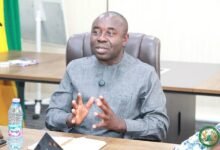
The Volta Regional Director of the National Commission for Civic Education (NCCE), Mr Kenneth Kponor, has urged student leaders to demonstrate patriotism and take a firm stand against corruption.
Corruption, he said had hindered the country’s development over the years.
He noted that as the future leaders of the country, the youth must cultivate values and virtues that are socially acceptable and strong enough to help them resist corrupt practices.
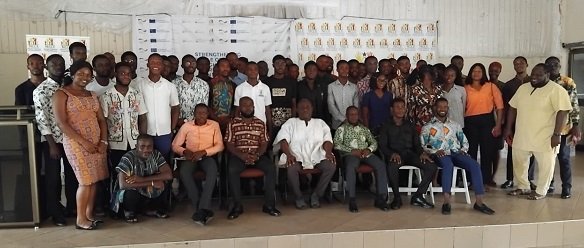
Mr Kponor made the call during a dialogue organised by the NCCE for student leaders from the University of Health and Allied Sciences (UHAS) and Ho Technical University (HTU) yesterday.


He stressed that student leaders must take the lead in the fight against corruption within their institutions, explaining that such actions would inspire others and help build a generation that rejects corrupt practices.
According to him, tackling corruption must begin at the school level so that students would carry those principles into their professional lives.
Mr Kponor explained that the dialogue was aimed at strengthening student leadership and instilling in participants the principles of ethical leadership, transparency and accountability, which he described as essential for deepening democratic governance and sustaining public trust in institutions.
He added that the time had come for young people, particularly students, to rise and confront corruption, noting that the country had lost millions of cedis through corrupt practices, resources that could have been channelled into national development.
A Principal Registrar at the Volta Regional Office of the Commission on Human Rights and Administrative Justice (CHRAJ), Mr Eric Oduro Opoku, also called on the youth to demonstrate discipline in the fight against corruption.
He expressed concern that corruption had become widespread and, in some cases, accepted as a normal way of life, with many people unwilling to speak out against it.
Mr Opoku explained that acts such as bribery and conflict of interest—including gifts intended to influence public officials for personal gain—constituted corruption.
He further cited the misuse of state resources, such as using official vehicles for private purposes like transporting children to school, taking spouses to the market, or attending funerals, as clear examples of corrupt practices.
A lecturer at Ho Technical University, Mr Yaw Amu, observed that although the rule of law was critical in promoting peace and justice, it alone could not eliminate corruption.
He emphasised that strong ethical and moral values upheld by society remained the most effective way to reduce, if not eliminate, corruption.
The Volta Regional Director of the Department of Children, Mr Israel Akrobortu, said effective student leadership was key to promoting good governance.
He urged student leaders to embrace integrity, honesty and accountability, stressing that such values were essential to eliminating corruption and fostering national development.
The programme, which was on the theme “Strengthening the Rule of Law and the fight against corruption in Ghana,” was funded by the European Union and German Cooperation.
FROM SAMUEL AGBEWODE, HO
Follow our WhatsApp Channel now! https://whatsapp.com/channel/0029VbAjG7g3gvWajUAEX12Q