Redefining financial freedom for retirement
EVERYONE has a version of what they want their retirement to look like. For many, it’s the dream of freedom from work-related responsibilities and the frenetic pace of daily life. For others, it’s the idea of having time and money to travel, to be with family, and to enjoy the fruits of decades of hard work.
Samuel Acquah, Chief Risk Officer at First National Bank, asserts that there is an observed disconnect between expectations of retirement and the current lived experience expressed by those who are already retired. Their stories are not just about financial shortfalls, but about the emotional and psychological adjustment that comes with realising that the retirement they planned for has not materialised in the way they had hoped and imagined.
Recent studies have revealed that while Ghana has a Three-Tier Retirement planning system that covers both the formal and informal sectors, many workers use informal approaches to plan for their retirement, which prevents them from accessing adequate retirement income security as they age.
Some pensioners attributed their limited knowledge of pre-retirement planning to low salaries; others posit that the ability of retirees to adjust to retirement is dependent on their access to resources, such as income, good health, and better information on retirement. “Sadly, while an entrenched assumption suggests that retirement brings stability, freedom, and financial security, it is not always accurate. And the situation whereby retirees rely solely on their children for their pension care is a thing of the past. Of course, this misalignment between aspiration and reality is not unique to Ghanaians; however, the gravity of the challenge necessitates attention from the financial industry”, says Samuel.

He emphasised that many retirees are working longer than they had planned, though some by choice, but most out of necessity. Others are drawing on retirement savings earlier than expected, dealing with unexpected expenses, or supporting extended family, eroding the financial freedom they anticipated and fundamentally changing the reality of retirement for them.
“With this gap between expectations and reality in mind, if we want to support individuals towards the path to financial freedom meaningfully, then we need to re-frame the conversations on the subject as well as encourage individuals to plan for retirement effectively. The planning should be less about an idealised end state and more about realism, flexibility, and long-term financial goals. That means educating consumers not only on how to save, but on how to adjust and adapt to life events, economic conditions, and shifting family roles”.
Samuel added that we need to recognise that retirement is no longer a ‘final destination’, but rather a dynamic next chapter in people’s lives that requires honest discussions, practical planning, and workable solutions to help create a post-career reality that is as balanced and comfortable as possible. “The earlier we start talking about this retirement reality, the better we will be able to equip our customers to plan well for it and align the ideal of financial freedom with the reality of retirement that most people desire”.
He confirmed that First National Bank has fit-for-purpose banking products to address these gaps. “At First National Bank, we understand that redefining retirement requires more than just conversation; it also requires actionable solutions that empower individuals to take control of their financial futures. That’s why we’ve designed savings products like our market-leading Fixed Deposit and Flexi-Fixed Deposit options, offering competitive interest rates to help Ghanaians grow their wealth securely over time. Whether you’re starting early or planning a mid-course correction, saving with First National Bank offers you both stability and flexibility, essential ingredients for achieving true financial freedom in retirement”.
“Taking such a realistic approach is the only real way of ensuring that those dreams are achievable, and we at First National Bank will continue to provide Ghanaians with the adequate support they need to live their best possible life in retirement”, Samuel concluded.
The writer is Chief Risk Officer at First National Bank
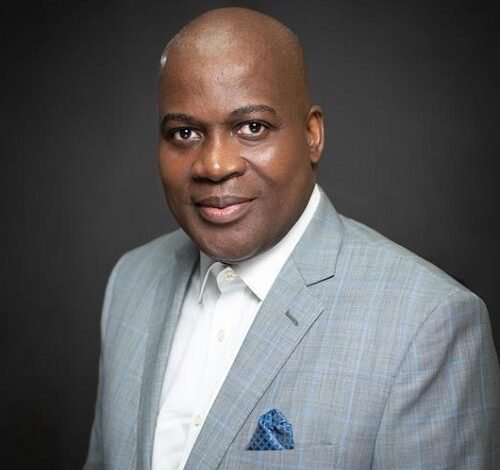
- Mr Acquah
Global South Dialogue on Climate to open in Belem
AN Interregional Dialogue of Civil Society Organisations from the Global South will be held on November 7 and 8, 2025, in Brasília, as a prelude to the 30th Conference of the Parties (COP30) in Belém, Brazil.
Dubbed “South-South Dialogue for Climate Sovereignty and Resilience,” the meeting will bring together organisations from Africa, the Caribbean, Latin America, and Asia around a strong political ambition, to build strategic alliances and speak out collectively on loss and damage, climate finance, ecological justice, and people’s sovereignty.
The peoples in the Global South are faced with intensifying climate impacts as well as double injustice: they suffer the most severe effects of the climate crisis while being marginalised in international decision-making and financing mechanisms. This dialogue is intended as a collective response to this systemic divide, affirming the centrality of local communities in the ecological transition.
During two days of technical and cultural work, participants will exchange ideas around a structured programme including: four transregional panels on forests, climate finance, ecological sovereignty, and peoples’ rights; a «community solutions marketplace,» highlighting 10 local initiatives led by the territories; documentary screenings, strategic dialogue sessions, and artistic and cultural expressions.
The Dialogue will culminate in the adoption of a South-South Pact for Climate Sovereignty, the result of demands made by indigenous peoples, rural women, youth, farmers, ecological artisans, climate justice movements, and social economy actors. This pact will be presented to the international community at COP30 in Belém.
The Dialogue will be organised in a hybrid format to ensure broad participation, including organisations that cannot physically attend Brasilia.
A call for participation is currently open, particularly from Caribbean, African, Amazonian, and Asian organisations, as well as cross-cutting networks from the Global South.
BY SAMUEL ACQUAH
🔗 Follow Ghanaian Times WhatsApp Channel today. https://whatsapp.com/channel/0029VbAjG7g3gvWajUAEX12Q
🌍 Trusted News. Real Stories. Anytime, Anywhere.
✅ Join our WhatsApp Channel now! https://whatsapp.com/channel/0029VbAjG7g3gvWajUAEX12Q