Africa is open for business

Africa is undergoing a profound economic transformation that challenges decades-old perceptions of the continent as merely a source of raw materials or a perpetual recipient of aid. Far from the outdated narratives of dependency and extraction, Africa is emerging as a dynamic hub of opportunity, institutional reform, and self-driven growth. As someone who has spent decades in Europe but recently returned from an extended business expedition across the continent from Côte d’Ivoire to Angola, South Africa, Kenya, Ethiopia, Morocco, and Egypt, I witnessed this shift firsthand. The story is no longer one of passive waiting; it is one of agency, ambition, and accelerating momentum.
Recent projections underscore this reality. According to the World Bank’s Africa’s Pulse report (October 2025), Sub-Saharan Africa’s growth is poised to reach 3.8 per cent in 2025, accelerating to an average of 4.4 per cent in 2026–27. The International Monetary Fund forecasts steady growth at around 4.1 per cent in 2025, with a modest pickup in 2026, while the United Nations’ World Economic Situation and Prospects 2026 projects continent-wide growth rising to 4.0 per cent in 2026 and 4.1 per cent in 2027. These figures outpace many global averages, driven by cooling inflation, rising domestic consumption, infrastructure investments, and expanding digital economies. East Africa, in particular, is expected to lead with rates around 5.8 per cent in 2026, fueled by strong performers like Ethiopia and Kenya.
At the heart of this resurgence lies the African Continental Free Trade Area (AfCFTA), now several years into implementation. This landmark initiative connects 54 countries and over 1.4 billion people into the world’s largest free trade area by population. While intra-African trade has historically hovered between 15 per cent and 21 per cent of total trade, progress under AfCFTA is gaining traction.
Reports from Afreximbank and others indicate intra-African trade reached $192.2 billion in 2023, with a modest rise in its share of formal trade. Full implementation could boost intra-African exports by up to 45 per cent by 2045, adding hundreds of billions to GDP and fostering industrialisation in sectors like agro-processing, pharmaceuticals, automotive, and logistics. The Guided Trade Initiative has expanded to dozens of countries, and mechanisms like the Pan-African Payment and Settlement System are reducing reliance on external currencies for cross-border transactions.
This is not mere potential; it reflects concrete institutional building. African governments and private sectors are establishing frameworks for better trade facilitation, funding access, governance, and accountability. Countries are diversifying beyond resource extraction, investing in manufacturing, services, fintech, renewable energy, and digital infrastructure. In West Africa, new oil and gas production in Senegal and Niger, alongside reforms in Nigeria and Ghana, supports projected regional growth of around 4.2 per cent in 2026. Southern Africa’s financial hubs, like Johannesburg, continue to drive fintech and agriculture, while North Africa leverages ports and logistics for global connectivity.
A key driver is the growing role of the African diaspora. Remittances have long exceeded foreign aid and rivaled FDI, totalling tens of billions annually. Increasingly, however, diaspora professionals are shifting from transfers to direct investments. Platforms connecting diaspora capital to real estate, startups, and equities are emerging, with some markets delivering exceptional returns, such as West Africa’s BRVM stock exchange posting over 50 per cent gains in 2025. In Francophone West Africa alone, redirecting even a fraction of remittances could generate hundreds of millions in annual returns.
Return migration is creating a feedback loop: skills, networks, and capital flowing back to build industries serving a young, urbanising population hungry for housing, healthcare, education, and services.
Of course, challenges persist. Debt burdens, fiscal pressures, uneven implementation of reforms, climate vulnerabilities, and global uncertainties, including trade barriers and declining aid, require vigilant management. Yet the trajectory is clear: Africa is catching up after centuries of colonial legacies that oriented economies toward export of raw commodities with limited value addition. Today, Africans are not awaiting external salvation; they are constructing their own pathways to prosperity.
For international partners, particularly in Europe and beyond, this moment demands a recalibrated approach. Africa is open for equitable business, not as a charity case or resource pit, but as a partner with immense untapped markets and a demographic dividend that will shape the global economy for decades. Investments in high-potential sectors like renewables, agritech, fintech, and infrastructure can yield mutual benefits while supporting sustainable development.
Africa has humbled and inspired me. Its people are no longer defined by conflict or famine in dominant narratives; they are entrepreneurs, innovators, and institution-builders forging a new era. A brighter economic dawn is not just coming, it is already here, propelled by African agency and resolve. The continent is truly open for business, and the opportunities for those who engage on fair terms are boundless.
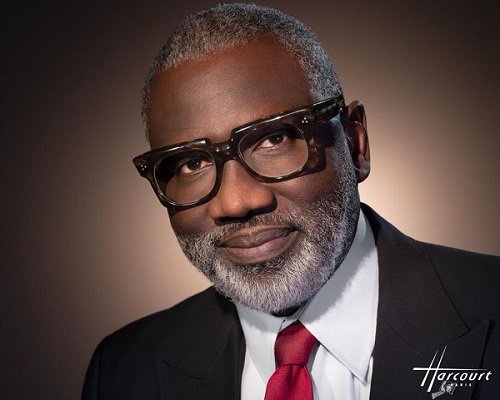
Honorary Ambassador of the Pan African Parliament for Diaspora Affairs and Euro-American Strategic Investments, and President of A2S International
BY AMBASSADOR ABDOU SAMB
Follow Ghanaian Times WhatsApp Channel today. https://whatsapp.com/channel/0029VbAjG7g3gvWajUAEX12Q
Trusted News. Real Stories. Anytime, Anywhere.
Join our WhatsApp Channel now! https://whatsapp.com/channel/0029VbAjG7g3gvWajUAEX12Q


![IT must be one of the most difficult – and exasperating – tasks in the world to be the President of a nation like Ghana. For you may travel all over4 the world, talking to the leaders of “the developed nations”, to try persuade them that the pandemic that is afflicting the world, Covid-19 (with its variants) is a truly global destroyer and thatnowhere is safe from it, until everywhere is safe. You may deploy your most eloquent language to point out that although, the scientists of the “developed countries” have managed to manufacture a vaccine that has been seen to work against the pandemic, the politicians of the “developed countries” are, contrary to undertakings they have made to the World Health Organisation (WHO) hoarding the vaccine in their countries. Reports suggest that whereas the governments of the “developed countries” are targeting 100 percent of their populace for vaccination, and getting closer to their objective every day, less than 10% of the populace of the developing countries have so far been vaccinated, as a result of a lack of vaccines. Is this fair? you ask. Air travel (you continue) has made international contacts extremely easy. And since the Covid-19 virus and its latest variant (Omicron) in particOman Ghana versus Covid-19 08 www.ghanaiantimes.com.gh GHANAIAN Times Features TUESDAY, DECEMBER 21, 2021ular, are very transmissible. So it is in everyone's educated self-interest to see that all people on the planet are fully vaccinated. As a result of your Government's efforts, you hear that plenty of vaccines have arrived in your country and you are emboldened to announce that your Government will soon be able to vaccinate its entire adult population. Then, you get the shock of your life: an intelligence report tells you that some mischievous people are spreading the fake news that if a person allows himself or herself to be vaccinated, the “vaccine will make that person vote for your governing NPP whether he/she wants to do so or not!” WHAAAAT! How does one counter such fake news? If the Government say it is not true, the conspiracy theorists shoot back, “And are you so naïve as to expect them to admit that the vaccine will make you vote for the NPP?” Wow! Are people so wicked that despite the gains that the world has already made through vaccination (such as the elimination of small pox from the world and the near-extinction of polio and yellow fever) they try to dissuade others from taking advantage of anti-Covid vaccination? Especially since people who are clever enough to invent such fake news must know of the horrible pain that Covid-19 subjects people to, before it finally kills them? What makes the anti-Covid vaccination story doubly awful is that its seeds are sown on pre-fertilised ground. In the past, some wicked scientists in the developed countries have allowed themselves to be used by their [usually racist] governments to administer harmful vaccines and other medications to people, using the lie that such interventions can save them from certain disease. One of the most devastating such deceptions occurred in the United States in 1932. Below is the horrible story as told on the OFFICIAL website of the US CENTRES FOR DISEASE CONTROL [CDC]: https://www.cdc.gov/tuskegee/timeline.htm QUOTE: THE U.S. PUBLIC HEALTH SERVICE SYPHILIS STUDY AT TUSKEGEE In 1932, the USPHS, [US Public Health Service] working with the Tuskegee Institute, began a study to record the natural history of syphillis. It was originally called the “Tuskegee Study of Untreated Syphillis in the Negro Male” (sic) [now referred to as the “USPHS Syphilis Study at Tuskegee”]. The study initially involved 600 Black men — 399 with syphillis, 201 who did not have the disease. Participants’ informed consent was not collected. Researchers told the men they were being treated for “bad blood,” a local term used to describe several ailments, including syphillis, anaemia, and fatigue. In exchange for taking part in the study, the men received free medical exams, free meals, and burial insurance (sic)! By 1943, penicillin was the treatment of choice for syphilis and becoming widely available, but the participants in the study were not offered treatment. In 1972, an Associated Press story about the study was published. As a result, the Assistant Secretary for Health and Scientific Affairs appointed an Ad Hoc Advisory Panel to review the study. The advisory panel concluded that the study was “ethically unjustified”; that is, the “results [were] disproportionately meagre, compared with known risks to [the] human subjects involved.” In March 1973, the panel advised the Secretary of the Department of Health, Education, and Welfare to instruct the USPHS to provide all necessary medical care for the survivors of the study. The Tuskegee Health Benefit Programme was established to provide these services and in 1975, participants’ wives, widows and children were added to the program. In 1995, the program was expanded to include health, as well as medical, benefits. The last study participant died in January 2004. The last widow receiving THBP benefits died in January 2009. ... I973, a class-action lawsuit was filed on behalf of the study participants and their families, resulting in a $10 million, out-of-court settlement in 1974. On May 16, 1997, President Bill Clinton issued a formal Presidential Apology [over the study.] UNQUOTE In Ghana, the fake news that the anti-Covid vaccine would make people “vote for the NPP” has already begun to cause disagreements in some households. A family known to me has had to dismiss its house-help because she obstinately refused to take the jab. To illustrate the way the way the political message contained in the fake news has been camouflaged, I offer a version of the last conversation between the head of the household and the house-help: BOSS: Hey, “A”, you are very lucky! Instead of you going around to look for the vaccinators, they are coming to our estate! HOUSE-HELP: They are coming here? B: Yes! H: But Boss, I told you that my brother took the jab and had to be admitted into hospital. B: It doesn't mean that you too will become ill if you get the jab. It affects different people in different ways. Look, as you know, I have had all my own jabs and I have never been ill – as you know! H: But Boss, if you have taken all your jabs, then you are PROTECTED, are you not? B: Yes, I am. H: In that case, even if I become infected because I have not taken the jab, I cannot transmit the disease to you and YOU will be all right? B: I can't say that! Because, as I have explained to you, the pandemic can affect different people in different ways. H: Then the jab is useless? B: Listen, I can't take any risks with such a dangerous disease. Either you take it or you leave, I am sorry. I cannot allow you to expose me and my family to the risk of catching Covid. As I reported earlier, the House-help chose to leave. Both her Boss and I are convinced that it wasn't mere logicthat made her decide not to take the jab. She was probably under the influence of a church/cult. Or political propaganda! • Omicron cases at Kotoka International Airport are amongst the unvaccinated](https://ghanaiantimes.com.gh/wp-content/uploads/2021/12/GT-8.pdf-Adobe-Acrobat-Pro-DC-4-220x150.jpg)