Saving the dawadawa tree: A northern treasure at risk
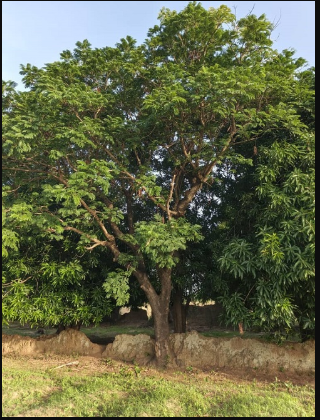
In many homes across Northern Ghana, the rich aroma of dawadawa cooking in soup is more than just the smell of food; it is the scent of culture, nutrition and livelihood.
For generations, the dawadawa tree has served as one of the most valuable economic trees in the savannah belt, supporting families with food, medicine, shade and income.
Today, however, this treasured tree is gradually disappearing due to the destructive activities of charcoal burners, bushfires, indiscriminate tree felling and climate change. If urgent steps are not taken to protect and sustain the dawadawa tree, future generations may lose one of Northern Ghana’s greatest natural resources.
The dawadawa tree, scientifically known as Parkia biglobosa, grows widely across Northern Ghana and other parts of West Africa. It produces seeds that are fermented into the popular local spice known as dawadawa, which is widely used in soups and stews.
Rich in protein, calcium, iron and essential nutrients, dawadawa remains an affordable source of nutrition for many households, especially in rural communities.
Beyond food, the tree also provides medicinal benefits. Different parts of the tree, including the bark, leaves, and roots, are traditionally used to treat ailments such as stomach disorders, wounds, and infections. The tree further contributes to environmental protection by improving soil fertility and preventing erosion.
Economically, the dawadawa business supports thousands of women in Northern Ghana who process and sell the spice in local markets. Many households depend on income generated from the harvesting and processing of the seeds.
Despite its enormous value, the dawadawa tree is under serious threat. In many communities, charcoal producers cut down the trees for fuel because hardwood species are highly preferred for charcoal production. The increasing demand for charcoal in urban centres has intensified the destruction of economic trees across the north.
Bushfires during the dry season also destroy young trees before they mature, while rapid population growth and farming expansion continue to reduce natural vegetation cover. Unfortunately, many people cut down mature dawadawa trees without replacing them.
The extinction of the dawadawa tree would have severe consequences for nutrition, livelihoods and the environment.
Rural women who depend on the trade would lose a major source of income, while families could lose an important local source of protein and essential nutrients. Environmental degradation would also worsen as tree cover declines.
To sustain the dawadawa tree, government, traditional authorities, environmental organisations and local communities must work together to promote conservation and reforestation.
One important solution is the enforcement of laws against indiscriminate tree felling and illegal charcoal production. Authorities must strengthen monitoring in vulnerable areas and impose sanctions on persons who destroy economic trees.
Tree planting initiatives should also be expanded in schools and communities across Northern Ghana. Seedlings of dawadawa trees should be distributed freely to farmers and households to encourage cultivation. Communities can establish nurseries dedicated to economic trees to ensure continuous regeneration.
There is also the need for public education on the importance of the dawadawa tree. Many people are unaware of the long-term economic and environmental damage caused by cutting down these trees. Awareness campaigns through radio programmes, community durbars and schools can help change attitudes.
Alternative livelihoods for charcoal burners must also be considered. Many people engage in charcoal production because of poverty and unemployment. Providing skills training, irrigation support and other income-generating opportunities can reduce dependence on tree cutting.
Research institutions and agricultural agencies should further invest in studies on faster-growing dawadawa varieties and improved cultivation methods to encourage commercial planting.
Traditional leaders also have a critical role to play. In many northern communities, chiefs and elders remain custodians of the land and natural resources. Community by-laws that protect economic trees can help reduce destruction and preserve the environment.
The dawadawa tree is more than just a tree. It is a source of food security, economic survival and cultural identity for many people in Northern Ghana. Allowing it to disappear would mean losing an important part of the region’s heritage and future.
Protecting the dawadawa tree is therefore not only an environmental responsibility but also an investment in nutrition, livelihoods and sustainable development.
The time to act is now before this valuable tree becomes another forgotten resource lost to human neglect.
BY GORDON WELLU