Ghana’s debt now sustainable with capacity to absorb shocks — Ato Forson
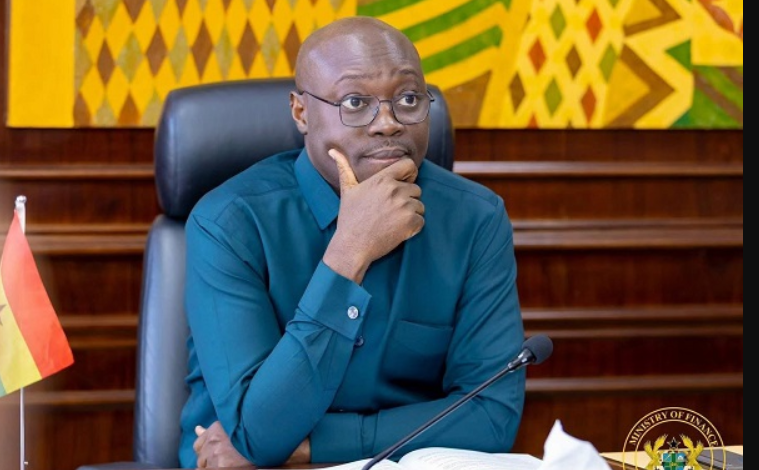
Ghana’s public debt has become sustainable and, for the first time, has sufficient capacity to absorb economic shocks, Finance Minister, Dr Cassiel Ato Forson, has announced.
He said the latest joint World Bank-International Monetary Fund (IMF) Debt Sustainability Analysis had upgraded Ghana’s debt position from “Unsustainable” in May 2023, to “Sustainable” in 2025, and now to “Sustainable with room to absorb shocks,” describing the development as a major milestone in the country’s economic recovery.
Presenting the 2026 Mid-Year Budget Review and Economic Policy Statement, on the theme: ‘Resetting for Growth, Jobs, and Economic Transformation,’ to Parliament yesterday, Dr Forson said the achievement reflected government’s commitment to prudent fiscal management and sound macroeconomic policies.
He said the improvement in the country’s debt profile had been underpinned by a sharp reduction in the public debt-to-GDP ratio, which declined from 61.8 per cent at the end of 2024 to 44.7 per cent at the close of 2025 before reaching 45.0 per cent by the end of June this year.

According to the Finance Minister, Ghana had already attained the statutory debt target of 45 per cent of GDP, years ahead of both the IMF programme timetable and the target set under the Public Financial Management Act.
Dr Forson mentioned that prudent fiscal management had also eased the burden of debt servicing on government finances.
He noted that debt service as a proportion of domestic revenue fell significantly from 55.7 per cent in 2022 to 28.8 per cent in 2025, freeing substantial resources for investment in education, healthcare, road infrastructure and other priority sectors.
The minister further announced that, for the first time since April 2014, Ghana’s external and overall risk of debt distress had improved from high to moderate, reflecting renewed investor confidence and stronger fiscal discipline.
On fiscal performance, Dr Forson said the primary balance on a commitment basis recorded a surplus of 2.5 per cent of GDP in 2025.
He added that by the end of June 2026, government had achieved a primary surplus of 0.9 per cent of GDP and remained firmly on course to attain its end-year target of 1.5 per cent.
The Finance Minister again highlighted improvements in domestic interest rates, saying the 91-day Treasury bill rate declined from 11.09 per cent in December 2025 to 5.73 per cent in June 2026, while the 182-day Treasury bill rate dropped from 12.52 per cent to 7.69 per cent over the same period.
Similarly, he indicated that the Monetary Policy Rate had fallen by a cumulative 1,300 basis points, from 27 per cent in January 2025 to 14 per cent in July 2026.
Dr Forson further explained that the declining interest rates would reduce borrowing costs for households and businesses, encourage private sector investment and support job creation.
He also reported strong external sector performance, indicating that the current account recorded a surplus of 8.3 per cent of GDP in 2025 and remained robust during the first half of 2026.
Inflation, he emphasised, had also declined sharply from 23.8 per cent in December 2024 to 5.4 per cent at the end of 2025 and remained low at 5.7 per cent in June this year.
Moreover, Dr Forson disclosed that the cedi appreciated by 40.7 per cent against the United States dollar in 2025, reversing years of depreciation and strengthening confidence in the Ghanaian economy.
BY KINGSLEY ASARE