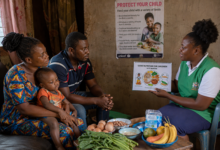
The soaring and skyrocketing food prices in Ghana
Definitely, there ought to be a way to settle the high cost of feeding in our beloved country – Ghana.
Over the years, the cost of feeding a sizable family of five alone take approximately 30-40 per cent of an average disposable income. In some cases, 50-80 per cent is absorbed for feeding depending on the income size of the family heads i.e. the father and mother. Contrary to our domestic economy in Ghana, clothing absorbs a chunk of disposable income in other jurisdictions.
Nevertheless, this canker has worsen from 2017 till now. For many, Ghana has the capacity to feed the whole of West Africa yet, our farming methods are nothing to write home about. As at now, 98 per cent of farmers in Ghana, are only into subsistent farming. Visionary, as the country enters the 24-Hour Economy policy execution, this remote farming style needs a facelift as Ghana propels gradually into Building the Ghana We Want Agenda.
For many years, the dying Ghana Food Distribution Company – GFDC established by his venerable leadership – Osagyefo Dr Kwame Nkrumah in the 1960s, which got replaced by the National Food Buffer Stock Company (NAFCO) in 2010 needs revival. However, in this era of resetting Ghana, the sitting NDC administration should consider vehemently, ways and means to put GFDC or NAFCO on the revamping desk.

This shall be one controllable source, to curb the escalating and soaring food price which has plagued the country for many years. Veritably, there must surely be a solution, notwithstanding the fact that Ghana is endowed with incongruous expanse of futile land that can feed the entire West African sub-region if the right agricultural method is embraced thus, shifting from the subsistent farming to the mechanised approach.
Candidly, in the earlier days of Ghana, Osagyefo Dr Kwame Nkrumah constructed several silos across the length and breadth of the country’s metropolis so that, food items can be bought in large quantities by the government for storage against the lean or dry season. These warehouses or silos, have been left to house rodents, reptiles and insects after his overthrown in 1966. Successive governments, found it unnecessary to foresee the importance of this structures.
However, in the foresight of the current NDC administration, the drive to resetting Ghana and making it a better place and destination for us all, the government should as a matter of urgency, consider how it is going to handle and plan for the storage of food items during the bumper harvest. Indeed, where the government takes the bold step to buy, store and sell food items to the market when needed as envisaged and visioned by Osagyefo, prices are controlled when it comes to selling as, the market will demand aftermath the wet season, making food affordable to each and every home.
This is what we’re
struggling with now
Food prices have gone beyond the roof, making it impossible for many households to enjoy three (3) square meals. As a reminder, the formula below is what many homes clinch to secluding the 3-5 per cent rich homes. An illustration, the average home feeds, “breakfast, lunch and supper” that is 1x1x1 followed by 0x1x1 which means, no breakfast; whereas the poor home 0x0x1 – thus, the family takes only supper due the increasing cost of food prices relative the steward’s income.
Frankly, the discussion on food prices is timely. Like most other people say all the time, food is one commodity which shouldn’t be expensive on the Ghanaian market but what do we see? Truly, the three (3) main determinants of food prices in the Ghanaian market are as follows:-
1. Season of the year* – during the rainy period, as the wet season is mostly called, cost of food trends downward because demand is either in equilibrium to supply or demand is lower than supply. This analogy means, there is abundant supply of food items so prices are lower. Then in the lean or dry season where there is shortage of food, prices escalate.
The instance where supply chain of food is left in the hand of the Ghanaian trader as a result of the free market economy Ghana practices, the individual business man/women decides what price to buy and what to sell relative to how the government will buy and sell. Hence making it difficult for the ordinary Ghanaian to gloat over what has been endowed the inhabitants of Ghana in the area of natural resources like fertile land. This is where the call for the Ghana Food Distribution Corporation (GFDC) or National Food Buffer Stock Company (NAFCO) intervention is most needed.
2. Cost of importation – It is true the forex fluctuation is also an attribute to food price. Regrettably however, the forex or dollar rates plummeting from GH¢15.30 earlier this year to GH¢10.22 by June 2025, had not seen any positive and significant changes or reduction in the prices of imported goods.
3. Cost of transportation – Off course, one conceives, all traders on the market tend to maximally attribute to the hikes in food cost to fuel prices at the pumps and the service cost in carrying food items from rural areas to the cities. This thinking implies – any time gasoline prices shoots up, prices of food and all other things changes in an upward direction. Interestingly, the recent 15 per cent reduction at the pumps only affected transport fares but did not cause traders to reduce their selling prices. This is the irony of the matter in contention.
Problem:
In the light the current government or the vibrant NDC administration efforts championed by the Ministry of Finance (MoF), Bank of Ghana (BoG) and other financial gurus in managing the economy to the extent of reducing fuel prices and ensuring the dollar rate plummets, market price had rather stabilised instead of reducing. The question now is, what next step will the government take to cause traders to trim or scale down prices?
Panacea/Strategy:
a. The re-institution or restoration of Ghana Food Distribution Company (GFDC) or National Food Buffet Stock Corporation (NAFCO) will create a fierce and intense competitive environment, which will drive down and controlled price in the market and thereby, lead the crusade of causing the reduction in price. This is because, where prices are significantly lower and not just lower at the GFDC outlets, many will choose to buy from there instead of paying debilitating prices the market mongers. As such, GFDC or NAFCO with government support, shall then lead the market to bringing down prices. This is the direst strategy although, Ghana is a free market economy.
b. The government must consider restructuring and improving the national rail network to reduce the lead time of transporting goods from the inter land to the cities. It is imperative to note that, rail transportation is by far cheaper, affordable and to a higher extent, faster than road, depending on the rail network and the itinerary arrangement.
So in conclusion, government of Ghana needs to work around turning part of the very high subsistent farming practices into mechanised or commercial farming methods with an effective government transportation scheme farm produce that propel the revamping of state owned Food Distribution centers, state owned storage facilities and state owned retailing to consumers if the need be as a holistic agriculture practice, while factoring recycling as by a necessary ingredient to ensuring national gains and the stabilisation of food items and food prices all year round.
The writer is Business Development Manager at Medianet
BY DANIEL K. WUVER