Tsatsu Tsikata: A legal luminary’s 50-year journey of grace, grit, and greatness
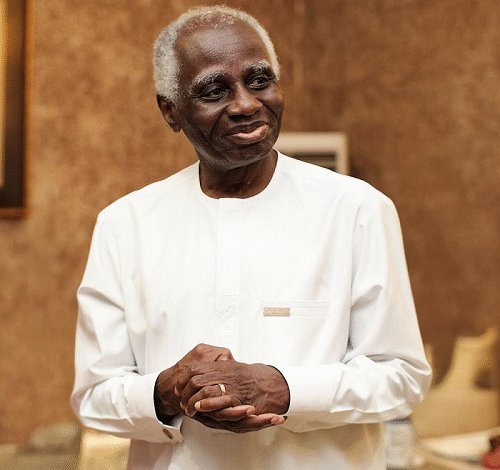
In the annals of Ghana’s legal history, few names evoke as much admiration, respect, and awe as Mr Tsatsu Tsikata. This year marks 50 years since he was called to the Ghana Bar, a remarkable milestone that provides an opportunity to reflect on the extraordinary life of a man who has left an indelible mark on the legal, academic, and political landscape of Ghana.
From prodigious beginnings to becoming one of the most formidable legal minds of his generation, Mr Tsikata’s story is not just one of brilliance, but of unwavering principles, profound resilience, and quiet dignity in the face of adversity.
Early Life and
Mfantsipim Prodigy
Born in 1950 in Keta in the Volta Region, Tsatsu Tsikata’s intellect shone brightly from a very early age. A gifted child, he was enrolled in school early and entered Mfantsipim School at the age of nine — a record that still astonishes.
His sharp intellect and love for reading, debate, and logic set him apart. His peers recall a boy whose quest for learning was unrivalled and whose humility and sense of justice were already evident. Mfantsipim did not just sharpen his mind; it helped shape the values of service and discipline that would guide him throughout his life.
Legon, Oxford and
First-Class Excellence
After Mfantsipim, Tsikata proceeded to the University of Ghana, Legon, where he enrolled at the Faculty of Law. He graduated in June 1969 with First Class Honours, and was soon on his way, with a scholarship from Legon, to Wadham College, Oxford University to pursue a postgraduate degree.
He obtained another First Class Honours degree (B.C.L, the Oxford University equivalent of a Master’s degree in Law) and then in October 1972, was appointed a Junior Research Fellow at Corpus Christi College, where he was also taught. But his heart was back home and it was on returning to Ghana that his influence would be most felt. Indeed, he took a term away from Corpus Christi, from October to December 1973, for his first stint as a lecturer at the University of Ghana, Legon. He finally returned to Legon in October 1974.
The Scholar Who Taught Judges
Tsatsu Tsikata is widely recognised as a teacher of teachers, of judges (including two Chief Justices and the current Acting Chief Justice), of Parliamentarians, (including two Speakers and a Deputy Speaker) and numerous lawyers. At the Faculty of Law, University of Ghana, he taught Ghana Legal System to first year students and Jurisprudence to third year students.
His lectures were rigorous but exciting, his standards were exacting, but students were drawn to his passion, his deep analytical insights, and his ability to connect law to life. He inspired not just academic excellence, but a commitment to justice and ethical conduct.
CEO of GNPC:
Building the
Foundations of Ghana’s
Upstream Oil Industry
It was not just in academia that Tsatsu made a mark.
In 1988, he was appointed as Chief Executive Officer of the Ghana National Petroleum Corporation (GNPC) after having been involved in a committee that, with technical assistance from the United Nations Centre for Transnational Corporations, revised the legal framework for oil exploration and production in Ghana and drafted the law that established GNPC and formulated a Model Petroleum Agreement. At GNPC, he spearheaded the strategic groundwork that would later lead to Ghana’s commercial oil and gas production. He built critical institutional capacity, negotiated complex contracts, and attracted international partnerships — all with the vision of safeguarding Ghana’s future energy interests.
His work laid the foundation for Ghana’s eventual discovery in 2007 of a major oilfield -the Jubilee Field -which has beenproducing oil and gas since November 2010. Yet, in the politics of the time, his stewardship of GNPC would become the subject of fierce controversy and even lead to imprisonment.
Political Persecution
and Imprisonment
With the change of government in 2001, the New Patriotic Party (NPP) administration led by President John Agyekum Kufuor launched an aggressive campaign targeting key figures of the Rawlings regime. Tsatsu Tsikata was accused of “willfully causing financial loss to the state” in what was widely seen in Ghana and internationally as a politically motivated vendetta arising from his close association with President Rawlings.
Tsatsu challenged the constitutionality of the “Fast Track Court” before which he had been arraigned. The Supreme Court, by a 4-3 majority decision, decided in his favour. The Government was in shock and, immediately, the Attorney-General, Nana Akufo-Addo, applied for a reviewof the decision. A new judge was appointed to the Supreme Court by President Kufuor and another Judge on medical leave outside the country was recalled. These two judges became part of the review panel of the Supreme Court to enable the overturning of the original decision.
Meanwhile, following the decision of the Supreme Court, he was now charged before a normal High Court. There, the charges were thrown out because they were based on the law on causing financial loss which did not exist at the time of the actions Tsatsu was being charged with. The Constitution does not allow for legislation to be used retroactively as a basis for criminal prosecution. Yet the Government was bent on getting Tsatsu at all costs and, after the overturning of the Supreme Court decision on the Fast Track High Court, he was again put before a Fast Track High Court, presided over by Justice Henrietta Abban, with the charges slightly amended.
Eventually, on June 18, 2008, Justice Henrietta Abban convicted and sentenced him to five years’ imprisonment though her judgment was not scheduled and Tsatsu’slawyer was not present, having notified the court that he had to travel out of the country. This was despite the fact that Justice Abban had, about a year and a half earlier, adjourned the case to await the outcome of an appeal filed against her decision granting immunity to the International Finance Corporation from testifying for the defence. She had adjourned again after the Court of Appeal affirmed her decision and Tsatsu appealed to the Supreme Court. A decision of the court was scheduled for June 25, 2018, only a week before Justice Abban’s decision to deliver judgment and imprison Tsatsu.
Tsatsu remained composed and unbowed. At the Nsawam Prison, he became a teacher and mentor to inmates, offering lessons in law, ethics, and life. Remarkably, on the day that he had a serious attack of asthma in his prison cell and had to be rushed to hospital early the next morning, he had given away his asthma medication for the use of another prisoner! His time in prison became a testament to his character: wherever he found himself, he sought to uplift others.
Refusal of Presidential Pardon and Vindication
On January 6, 2009, outgoing President Kufuor offered Tsatsu a Presidential pardon which he rejected outright even while in hospital after the severe attack of asthma in his prison cell. For him, accepting the pardon was out of the question. It would amount to an admission of guilt. His appeal against a decision he described as “a desecration of justice” was pending and he chose to fight the case to its logical conclusion. He was exonerated subsequently when the Court of Appeal, in November 2016, overturned his conviction and acquitted and discharged him on all counts.
Through it all, Tsatsu held no bitterness. “I harbour no hatred,” he has said. It was a powerful moral victory that reinforced his stature as a man of principle.
Private Legal Practice
and Mentorship
Since returning to private practice, Tsatsu Tsikata has continued to make a significant impact on Ghana’s legal field. His mastery, particularly, of constitutional law, human rights law, criminal law, commercial law, as well as land law, has earned him a reputation as one of the most formidable advocates in the country.
His role in landmark cases — including two election petitions and constitutional interpretation matters — continues to shape jurisprudence in Ghana. In the recent trial of Mr Gyakye Quayson, MP for Assin North, in which he was lead counsel for the MP, Tsatsu’s submission of no case, after the prosecution closed its case, led to his client being acquitted and discharged.
Beyond his courtroom triumphs, Tsatsu is a mentor to a new generation of lawyers, activists, and thought leaders who draw from his example of courage and scholarship.
Family Life
Behind the public persona is a man of deep personal commitments. Tsatsu is married to Esther Cobbah, a leading communications strategist, CEO of Stratcomm Africa and, currently, President of the Institute of Public Relations (IPR) Ghana and on the Board of the International Public Relations Association (IPRA). Their union is one of mutual respect, shared values and commitment to professional excellence.
Tsatsu often talks –and has written -about Esther’s extraordinary care and support during his time in prison. The Free Tsatsu Campaign, which she organised, captured national attention while the praise vigils she held every month with family and friends at the Asbury Dunwell Church, where they worship, were powerful expressions of their faith.
A Living Legacy
As he marks 50 years at the Bar, Tsatsu Tsikata stands tall as a symbol of intellectual power, moral integrity, and personal resilience. He has been tried in the court of public opinion, subjected to political persecution, and yet he has emerged stronger, his reputation intact.
He remains a beacon for those who believe that the law must be a tool for justice, not vengeance; that scholarship must serve society; and that integrity, no matter how tested, is non-negotiable.
In a society that often favours expediency over principle, Tsatsu Tsikata’s life reminds us that greatness is not just about success — it is about standing firm when the storms rage.
Conclusion
Fifty years at the Bar is no ordinary milestone. For Tsatsu Tsikata, it is a celebration of service, sacrifice, and a life in the defence of truth and justice. He has given Ghana not only the gift of his genius but also the inspiration of his unwavering spirit. And for that, generations will remember him — not just as a lawyer, but as a legend.
BY PETER MARTEY AGBEKO