When Prophecy Becomes Politics: False Predictions, Broken Trust, the Cost to Society
In every election season in Ghana, politics does not walk alone. It is closely associated with religion, prophecy, prayer, and spiritual interpretation. From radio studios to church pulpits, from social media livestreams to night vigils, political contests are often wrapped in spiritual language. Leaders are “anointed,” opponents are “rejected,” and outcomes are declared “settled in the spirit.”
Yet, against this backdrop, a troubling pattern has become increasingly visible: the rise of false political prophecies, especially during intra-party and inter-party elections. The recent New Patriotic Party (NPP) presidential primaries once again exposed this phenomenon, as numerous prophecies confidently predicted outcomes that did not materialise.
The result was not merely embarrassment for the prophets involved; it was chaos, confusion, disillusionment, and a further erosion of trust in both religion and democratic processes.
The Dangerous Fusion of Prophecy and Partisan Politics
Prophecy, in biblical tradition, is meant to call people back to truth, justice, repentance, and obedience to God. It was never designed to serve as a political opinion poll or campaign strategy. Yet today, prophecy is often used as a tool of political persuasion — a means of validating personal preferences, tribal loyalties, or financial interests.

The Bible issues a stern warning about this misuse:
“The prophet who presumes to speak a word in My name that I have not commanded him to speak… that prophet shall die.”
— Deuteronomy 18:20
While modern society no longer enforces ancient penalties, the moral seriousness remains. When prophecy is weaponised in politics, it shifts from divine guidance to human manipulation.
During the recent NPP presidential primaries, some prophets announced the winners weeks in advance, invoking God’s name to support specific aspirants. Supporters treated these declarations as spiritual guarantees. When the results contradicted the prophecies, confusion followed. Some questioned the credibility of the electoral process. Others blamed sabotage, spiritual warfare, or alleged manipulation. A few quietly lost faith not only in the prophets but also in God Himself.
How False Prophecies Breed Chaos
False prophecies do not occur in isolation; they possess tangible social repercussions.
First, they impair political discernment. When citizens are informed that “God has already chosen,” the process of critical thinking is hindered. Policies, competence, integrity, and historical performance become subordinate to spiritual proclamations. Democratic principles are jeopardised when voters relinquish their decision-making autonomy to prophetic certainty.
Second, they fuel political tension and suspicion. When outcomes differ from prophecy, accusations follow — rigging, betrayal, spiritual attacks, or conspiracy. In tightly contested internal elections, this can fracture party unity and poison post-primary reconciliation.
Third, they damage social trust. Religion in Ghana has long been a stabilising force. But repeated prophetic failures risk turning sacred spaces into arenas of ridicule. Scripture warns:
“When a prophet speaks in the name of the Lord, if the word does not come to pass… that is a word the Lord has not spoken.”
— Deuteronomy 18:22
When such words repeatedly fail, the credibility of religious leadership weakens, and society grows more cynical.
The Psychological Toll on Followers
For many believers, prophecies are not entertainment; they are taken seriously — emotionally and spiritually. Some supporters invest financially, emotionally, and psychologically in prophetic declarations. When these fail, the aftermath can include confusion, anger, despair, and spiritual doubt.
The Bible cautions against blind dependence on human voices:
“Do not put your trust in princes, nor in a son of man, in whom there is no help.”
— Psalm 146:3
Replacing critical civic engagement with prophetic dependence creates a fragile faith and a fragile democracy.
When Prophets Get It Wrong — and Refuse Accountability
Perhaps the most troubling aspect is not that prophets err — biblical figures like Nathan and Jonah experienced moments of correction — but that many modern prophets refuse accountability.
Failed prophecies are often explained away with vague spiritual language: “The people did not pray enough,” “God changed His mind,” or “It happened in the spirit.”
Yet Scripture does not support such evasions. The prophet Jeremiah lamented:
“They speak visions of their own minds, not from the mouth of the Lord.”
— Jeremiah 23:16
True prophecy embodies humility, correction, and responsibility. False prophecy breeds excuses and deflection.
The Role of the Media and Social Platforms
Modern technology has amplified this problem. A prophecy once shared within a small congregation now travels instantly across Facebook, TikTok, WhatsApp, and radio stations. Algorithms reward sensational predictions, not sober restraint.
A single inaccurate prophecy can reach millions, shaping expectations and emotions far beyond its origin.
James warns:
“Not many of you should become teachers… for we who teach will be judged more strictly.”
— James 3:1
In the digital age, this warning applies more than ever.
A Call to Discernment, Not Despair
The solution is not to abandon faith or silence religion from public life. Ghana’s spiritual heritage remains a strength. But discernment must replace blind acceptance.
The Apostle John advises:
“Beloved, do not believe every spirit, but test the spirits to see whether they are from God.”
— 1 John 4:1
It is incumbent upon believers to scrutinise prophecies rather than simply commend them. Political parties should avoid delegating their internal democratic processes to prophetic endorsements. Religious leaders are called to regain the courage to speak truth without the anticipation of gaining power.
Restoring the Sacred and the Civic
Politics must remain accountable to institutions, laws, and citizens. Prophecy must remain accountable to Scripture, humility, and truth. When these boundaries blur, both suffer.
The chaos that follows false political prophecies — confusion, division, suspicion, and spiritual fatigue — is a warning sign. Society pays a heavy price when God’s name is casually attached to human ambition.
As Jesus Himself cautioned:
“By their fruits you shall know them.”
— Matthew 7:16
Ultimately, truth does not fear scrutiny. Faith does not fear democracy. And prophecy, when genuine, does not compete with ballots — it calls hearts back to righteousness.
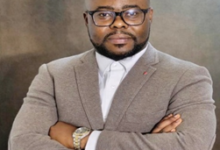
By Nana Dr Sifa Twum
Follow Ghanaian Times WhatsApp Channel today. https://whatsapp.com/channel/0029VbAjG7g3gvWajUAEX12Q
Trusted News. Real Stories. Anytime, Anywhere.
Join our WhatsApp Channel now! https://whatsapp.com/channel/0029VbAjG7g3gvWajUAEX12Q