Africa Dyslexia Organisation inducts new Ambassadors
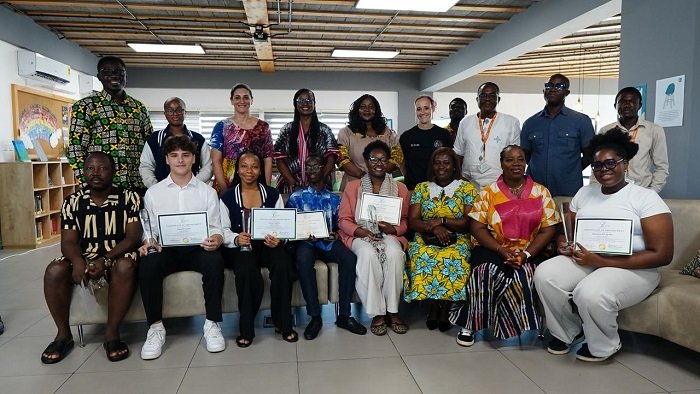
THE Africa Dyslexia Organisation (ADO) has inducted a new cohort of Ambassadors to champion advocacy, reshape public perception, and promote inclusive systems for individuals with dyslexia across education, workplaces, and society.
The initiative forms part of the organisation’s broader strategy to address what it describes as a “hidden learning crisis,” where many individuals with learning differences remain unidentified and unsupported, thereby limiting their full potential.
The Ambassador Programme, which comprises Youth Dyslexia Ambassadors and International Dyslexia Ambassadors, brings together individuals who will leverage their lived experiences to influence how dyslexia is understood and addressed.
The newly inducted Youth Dyslexia Ambassadors are Abriana Atswei Adjoor Ablorh, Fawaz El Assaad, Imara Agyepong-Mtunga, Ameera Sedzro, Dominic Yoofi-Hene Pobee, Mawuena Afi Mensah Apreku, and Hammond Appiah Kudi Kwaku.


The International Dyslexia Ambassadors include Frances Akinde, Aaron Dante Phillips, Ama Asamoah, and Surama King.
Speaking at the induction ceremony, the Executive Director of ADO, Ms Rosalin Abigail Kyere-Nartey, said dyslexia had long been misunderstood and often wrongly associated with low intelligence, leading to stigma and missed opportunities.
She explained that dyslexia was not a limitation, but a difference in how individuals process information, think, and solve problems.
Ms Kyere-Nartey noted that the Ambassador Programme was designed not as a symbolic initiative, but as a structured leadership platform that places responsibility on participants to drive awareness, influence systems, and contribute to inclusive environments.
“We are moving from awareness to responsibility,” she stated, adding that the programme sought to reposition dyslexia within broader discussions on education, human capital development, and societal progress.
She further emphasised the need to recognise diverse ways of thinking, particularly in a rapidly evolving global environment that demands creativity, adaptability, and problem-solving skills.
The Executive Director urged the Youth Ambassadors to use their voices to promote understanding within their schools and peer groups, while encouraging the International Ambassadors to extend advocacy efforts into workplaces and global platforms.
Also addressing the gathering, a Board Member of ADO and Director of Al-Rayan International School, Dr Fatma Odaymat, highlighted the disconnect between inclusive practices in some schools and the realities within wider society.
She noted that although progress had been made in supporting learners with dyslexia in certain educational institutions, communities, workplaces, and policy frameworks remained largely unaccommodating.
Dr Odaymat observed that many individuals with learning differences continued to face emotional, psychological, and social challenges beyond the classroom.
She called for a more holistic approach to inclusion, stressing that sustainable progress required collaboration across educational systems, communities, and institutions.
Drawing from personal and generational experiences, Dr Odaymat indicated that individuals with dyslexia often develop resilience and alternative approaches to problem-solving, enabling them to thrive despite systemic barriers.
She urged the ambassadors to take up advocacy roles, particularly for those whose voices are not heard, and to help create environments that recognise and support diverse learning abilities.
The Ambassador Programme is expected to build a network that connects lived experiences with public discourse and drives systemic change, as the organisation continues to promote awareness, inclusion, and opportunity for persons with dyslexia in Ghana and beyond.
BY CLIFF EKUFUL
Follow our WhatsApp Channel now! https://whatsapp.com/channel/0029VbAjG7g3gvWajUAEX12Q