National Schools Awards launched to boost learning outcomes
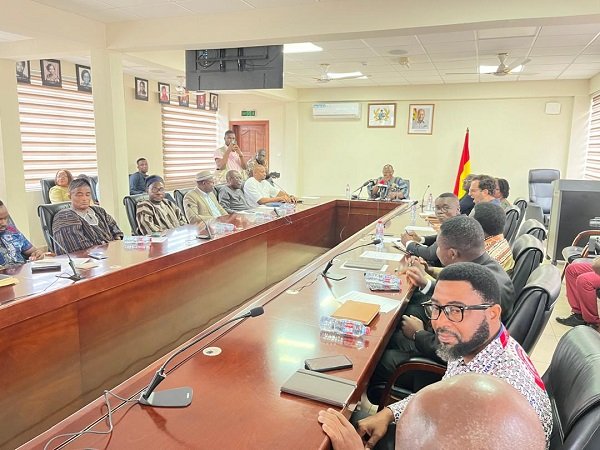
The maiden edition of the National Schools Awards (NSA), under the Ghana Accountability for Learning Outcomes Project (GALOP), has been launched in Accra by the Deputy Minister for Education, Dr Clement Apaak.
The awards scheme is aimed at promoting excellence and improving learning outcomes in basic schools across the country.
Being implemented by the National Schools Inspectorate Authority (NaSIA), the initiative is expected to recognise schools that demonstrate measurable improvements in teaching, instructional leadership, school management and learner achievement.
Launching the scheme on Wednesday, Dr Apaak said the initiative underscores the government’s commitment to building a more equitable, accountable and high-performing education system.


He indicated that although Ghana has made significant progress in expanding access to education, the focus has now shifted from increasing enrolment to improving learning outcomes.
According to him, every child must acquire the knowledge, skills, values and competencies needed to succeed in life and contribute meaningfully to national development.
Dr Apaak said the government remains committed to eliminating learning poverty, reducing disparities in educational opportunities and ensuring that quality education is accessible to every child, regardless of location or socio-economic background.
He explained that the Ministry of Education is implementing reforms aimed at strengthening instructional leadership, improving school governance, enhancing equity and inclusion, and promoting evidence-based decision-making across the sector.
Dr Apaak stressed that quality assurance remains central to the country’s education transformation agenda, noting that continuous assessment and measurement are critical to improving school performance.
He observed that GALOP has contributed significantly to improving learning outcomes through interventions that have strengthened school leadership, supported teachers and enhanced instructional practices, particularly in underserved schools.
The Deputy Minister said the awards would establish a transparent framework for recognising schools based on verifiable improvements rather than perceptions.
He added that the initiative is expected to encourage continuous improvement, innovation and accountability, while motivating schools to achieve higher standards.
According to him, schools will be assessed on measurable indicators, including instructional leadership, teaching effectiveness, school management and learner achievement, in line with the government’s data-driven approach to improving foundational literacy and numeracy.
Dr Apaak commended NaSIA for strengthening quality assurance through inspections and evaluations, describing the Authority as a key partner in driving educational improvement.
He also expressed the government’s appreciation to development partners for supporting GALOP, noting that their collaboration has enhanced the implementation of reforms aimed at improving learning outcomes.
Dr Apaak announced that the government intends to expand the National Schools Awards beyond the GALOP programme to cover all public and private pre-tertiary schools.
He said the move would help build an education system anchored on fairness, transparency, accountability and excellence.
The Inspector-General of Schools at NaSIA, Prof. Tahiru Salifu Azeko, said the awards scheme could not have come at a better time.
He noted that the initiative is intended to improve learning outcomes and strengthen performance across schools.
BY CLIFF EKUFUL
Follow our WhatsApp Channel now! https://whatsapp.com/channel/0029VbAjG7g3gvWajUAEX12Q