WFP graduates 70 youth under CODE4FOOD Security Fellowship
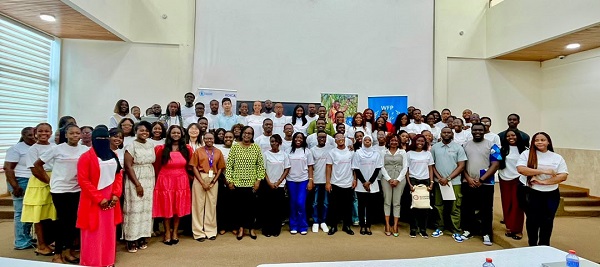
The United Nations World Food Programme (WFP) has graduated its first cohort of 70 young innovators under the inaugural CODE4FOOD Security Fellowship Programme aimed at equipping participants with advanced digital skills to support food security and sustainable agricultural development.
The programme provided the fellows with five months of intensive training in data analytics, artificial intelligence, machine learning and digital innovation, enabling them to develop practical solutions to challenges within Ghana’s food systems and drive innovation in agriculture.
The graduation on Friday , formed part of the CODE4FOOD Security Programme Demo Day organised by WFP in partnership with the Korea International Cooperation Agency (KOICA), the Ministry of Communication, Digital, Technology and Innovations (MoCDTI), and Blossom Academy in Accra.
The fellowship graduated the first cohort of young innovators under the programme, which seeks to empower youth with technology driven solutions while supporting Ghana’s digital transformation agenda.


Speaking at the event, the Country Director of WFP Ghana, Aurore Rusiga, said innovation and technology were critical to building food systems that were efficient, inclusive, sustainable and resilient to shocks.
According to her, Ghana’s food systems continued to face interconnected challenges, including unpredictable weather patterns, market inefficiencies, post harvest losses, rising production costs and limited access to timely information.
She said such challenges required a rethinking of how agricultural produce was produced, stored, processed, transported and marketed, stressing that young people must play a central role in transforming the sector.
“These realities demonstrate why young people, with their creativity, energy and familiarity with technology, must be at the heart of the transformation,” she said.
Ms Rusiga commended the participants for successfully completing the intensive programme, describing their achievement as a reflection of discipline, commitment and determination.
She also praised Blossom Academy, trainers, mentors and technical experts for delivering a rigorous and industry relevant training programme that prepared participants for opportunities within the digital economy.
Ms Rusiga said the projects demonstrated the participants’ ability to translate knowledge into practical solutions capable of strengthening food systems, improving livelihoods and enhancing agricultural productivity.
The WFP Country Director assured that WFP and its partners would continue to create pathways for graduates to access employment and entrepreneurial opportunities.
She expressed appreciation to the government of the Republic of Korea and KOICA for supporting the initiative, noting that their investment would strengthen Ghana’s capacity to harness digital innovation for food security and sustainable development.
Ms Rusiga encouraged the graduates to continue upgrading their skills, adapt to emerging technologies and apply their knowledge responsibly to help build a future ready workforce capable of transforming agriculture and strengthening food security in Ghana.
The fellows developed capstone projects that applied digital technologies to address food security challenges, including post harvest losses, market inefficiencies and limited access to agricultural data.
The projects were showcased during the event and assessed by a panel of judges and stakeholders, after which outstanding participants were recognised with awards in various categories.
According to the stakeholders, 16 participants had secured employment before the formal completion of the fellowship, demonstrating the programme’s strong link between digital skills development and job creation.
BY STEPHANIE BIRIKORANG
Follow our WhatsApp Channel now! https://whatsapp.com/channel/0029VbAjG7g3gvWajUAEX12Q