100 farmers receive training in cashew fruit processing
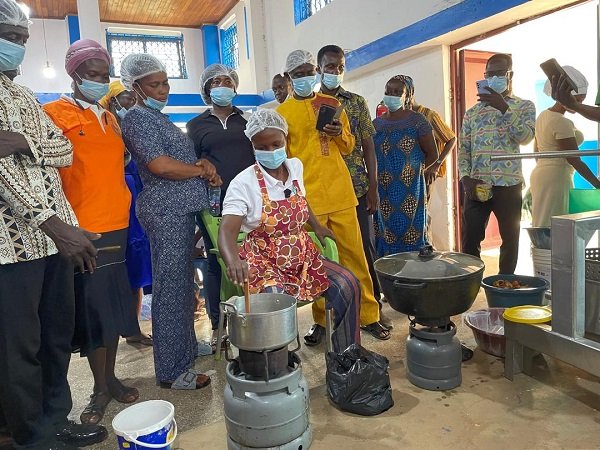
About 100 smallholder cashew farmers in the Bono Region have received hands-on training in cashew fruit processing as an alternative source of livelihood and income diversification.
The farmers were taken through the practical processes involved in adding value to cashew apples into products such as juice and jam.
The training covered harvesting, sorting, washing, chopping, juice extraction, preservation and packaging.
The beneficiaries were drawn from major cashew-growing areas including the Jaman North, Jaman South, Banda and Tain districts.


The programme, organised by Cashew Watch Ghana in collaboration with the Tree Crops Development Authority (TCDA), formed part of the implementation of the “Amplifying the Voices of Cashew Farmers Project,” funded by the Star Ghana Foundation.
The training was held in two sessions in Sampa of the Jaman North District and Nsawkaw of the Tain District.
The initiative sought to help farmers maximise the economic value of cashew harvests to improve their incomes and livelihoods.
Cashew experts indicate that the cashew apple constitutes about 90 per cent of the whole fruit, yet large quantities go to waste annually due to limited processing skills, inadequate technology and lack of market linkages.
Speaking at the programme, the Value Chain Officer in charge of the Wenchi Zone of the TCDA, Mr Dwobeng Nyantakyi, said the authority remained committed to partnering stakeholders to promote the growth and sustainability of the cashew industry.
He noted that value addition remained a critical component in improving farmer incomes and increasing foreign exchange earnings for the country.
“TCDA commends Cashew Watch Ghana for the initiative because value addition is a key catalyst that can improve the fortunes of farmers and generate more revenue for the country,” he stated.
The facilitator for the training, Ms Kate Obour, said cashew fruits possessed enormous nutritional and economic value, and should not be left to waste.
According to her, cashew apples are rich in Vitamin C, antioxidants and other nutrients which make them suitable for the production of beverages, jam, wine, animal feed and other industrial products.
She encouraged farmers to embrace processing opportunities to reduce post-harvest losses and create additional streams of income.
One of the beneficiaries, Madam Bertha Tiwaa, described the initiative as timely and beneficial to farmers.
She urged cashew farmers to form strong cooperatives in order to enable them to mobilise resources, access credit and expand their businesses.
Madam Tiwaa said this would also help reduce excessive borrowing among farmers, a situation she noted had pushed some producers into financial distress.
Another beneficiary from Suma-Ahenkro, Mr Isaac Koosono, said it was the first time he had received practical training in cashew fruit processing.
He described the programme as insightful and transformative, and appealed to the government and development partners to support farmers with basic processing equipment and certification to enable them to venture into commercial production.
FROM DANIEL DZIRASAH, SAMPA
Follow our WhatsApp Channel now! https://whatsapp.com/channel/0029VbAjG7g3gvWajUAEX12Q