Ghana performs only 10 per cent of cataract surgeries required annually, a rate far below the 30 per cent target recommended by the World Health Organisation (WHO).
According to the Head of the Eye Care Unit of the Ghana Health Service (GHS), Dr Hornametor Afake, the country currently performs about 30,000 cataract surgeries each year, although it needs to undertake 68,000 to meet its national target and reduce the growing burden of blindness.
“Cataract is the leading cause of blindness in Ghana. It accounts for about 55 per cent of all blindness in Ghana, affecting roughly 165,000 people, yet only a fraction of those who need surgery to restore their sight receive it,” he said.
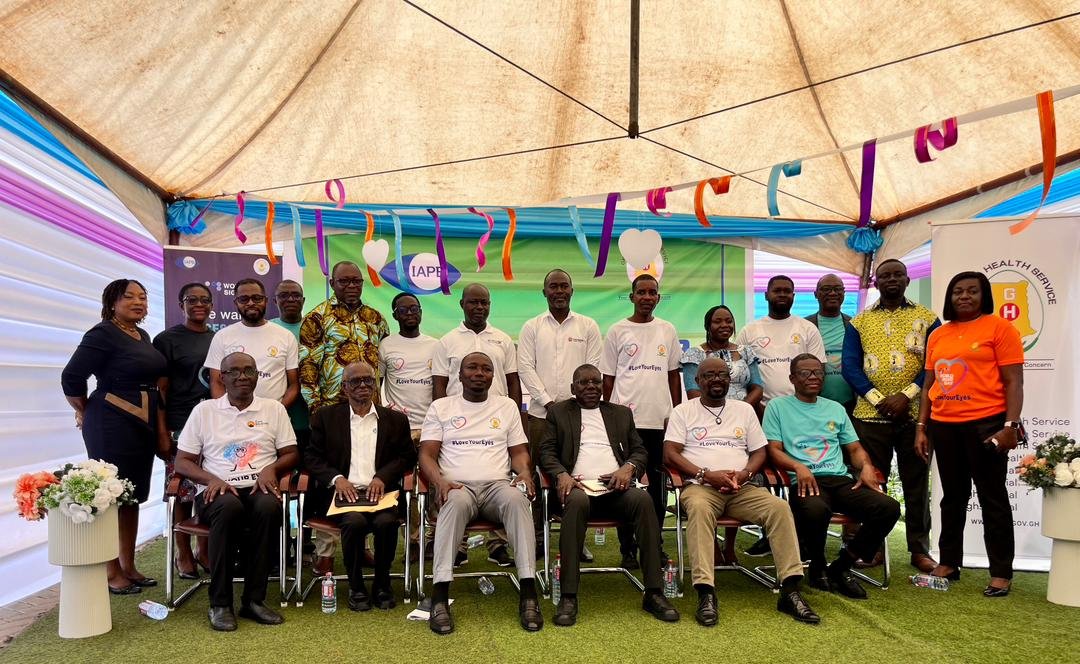
Speaking at an event to mark World Sight Day last Friday, under the theme Increasing access to quality eye care in Ghana, Dr Afake disclosed that more than 250,000 Ghanaians are blind, while another 360,000 live with severe visual impairment.


“Nearly 68 per cent of Ghanaians have little or no access to essential eye care services, and this is a serious concern that must be addressed,” he said.
Beyond cataract, he noted that glaucoma accounts for 19.4 per cent of blindness in Ghana, posterior eye diseases—including diabetic retinopathy—make up 12.9 per cent, and corneal opacity accounts for 11.2 per cent.
Dr Afake expressed concern over the limited number of eye specialists in the country and the uneven distribution of professionals. “Ghana has only 140 ophthalmologists currently, representing a ratio of one specialist to 240,000 people,” he said.
Additionally, the country has only 570 optometrists, 900 ophthalmic nurses, and 800 opticians. Six regions, he revealed, still have no ophthalmologist, highlighting a major urban-rural disparity in access to eye care.
He called for greater investment in training, equipment, and equitable deployment of professionals to underserved areas.
“We have the human resource capacity, but we need to equip facilities and provide incentives to ensure services reach everyone who needs them. Sight is life, and access to eye care is access to opportunity. Together, through innovation and commitment, we can ensure that every Ghanaian enjoys the gift of vision,” he urged.
In a statement read on his behalf, the Director-General of the GHS, Dr Samuel Kaba Akoriyea, said Ghana has made significant progress in advancing eye health, becoming the first country in sub-Saharan Africa to eliminate trachoma as a public health threat — a milestone that reflects collective vision, partnership, and perseverance.
He highlighted other achievements, including the expansion of cataract surgical services, strengthened school eye health programmes, and the training of more ophthalmologists, optometrists, ophthalmic nurses, and other professionals than ever before.
Dr Akoriyea proposed a review of the National Health Insurance Scheme (NHIS) to cover spectacles and low vision devices, noting that the economic burden of vision loss costs the nation hundreds of millions of cedis annually in lost productivity.
The Director of the Technical Coordination Directorate at the Ministry of Health, Dr Hafez Adams Taher, encouraged Ghanaians to take personal responsibility for their eye health through regular screening and preventive care, while calling for stronger collaboration among stakeholders to promote affordable and accessible eye care nationwide.
BY ABIGAIL ANNOH
🔗 Follow Ghanaian Times WhatsApp Channel today. https://whatsapp.com/channel/0029VbAjG7g3gvWajUAEX12Q
🌍 Trusted News. Real Stories. Anytime, Anywhere.
✅ Join our WhatsApp Channel now! https://whatsapp.com/channel/0029VbAjG7g3gvWajUAEX12Q