Discipline in our schools: A national wake-up call
The recent spate of indiscipline in some of Ghana’s schools has become too serious to ignore. Reports of students vandalising school property, assaulting teachers, bullying colleagues, engaging in examination malpractice, fighting, and other acts of misconduct have generated widespread concern among parents, educators and the general public.
These incidents are more than isolated acts of youthful exuberance. They point to a deeper challenge that requires honest national reflection and collective action. Although many of the widely reported cases have occurred in Senior High Schools, concerns about declining discipline are being expressed across the educational spectrum, from basic schools to tertiary institutions.
Recognising the urgency of the situation, the Ministry of Education has announced plans to convene a National Dialogue on Discipline in Schools to bring together key stakeholders to examine the causes of indiscipline and identify practical, long-term solutions.
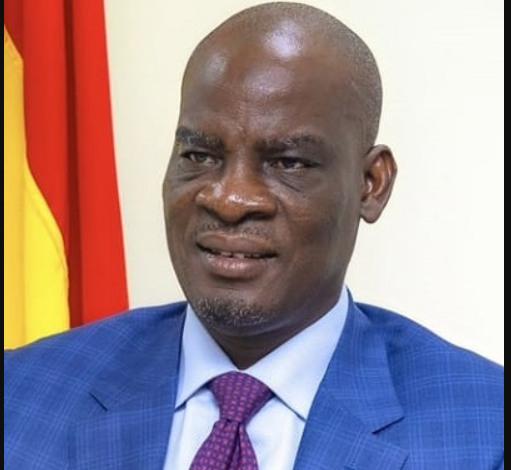
Addressing the issue on the floor of Parliament, the Minister for Education, Hon. Haruna Iddrisu, underscored the urgency of the challenge, stating: “There is a growing problem of indiscipline in our schools, and we must take decisive steps to address it.” His remarks reinforce the need for a collective national response and reflect the Ministry’s commitment to working with stakeholders to restore discipline across Ghana’s educational institutions.
More than a school problem
Education is intended to shape character as much as it imparts knowledge. When discipline begins to erode, the very purpose of education is threatened.
The Ministry of Education has rightly noted that responsibility cannot rest on schools alone. Parents, religious bodies, traditional authorities, communities, policymakers, the media and civil society all have important roles in raising responsible young people.
Today’s learners are growing up in a rapidly changing world. While technology and social media have created enormous opportunities for learning and innovation, they have also exposed children and young people to influences that sometimes conflict with the values schools seek to promote.
Peer pressure, misinformation, cyberbullying and harmful online content have become new challenges that educators and parents must confront together.
The Joy FM conversation
The national discussion gained further momentum during a recent edition of Ghana Connect on Joy FM, where host Michael Papa Nii Asharley brought together education experts, university administrators, policy analysts, PTA representatives and students to examine the growing challenge of indiscipline in schools.
The discussion revealed broad agreement that the problem is complex and cannot be attributed to a single cause.
One recurring concern was the apparent decline in respect for authority. Several participants observed that many teachers now feel constrained in enforcing discipline because of increasing parental interference, fear of complaints and uncertainty about the limits of disciplinary measures.
Others argued that while students have rights that must always be protected, those rights should be accompanied by responsibilities. Respect for teachers, school rules and fellow students remains fundamental to creating a safe and productive learning environment.
The panel also highlighted the importance of teacher professionalism. Participants agreed that teachers must uphold the highest ethical standards, noting that any inappropriate relationships or unethical conduct involving teachers undermine public confidence and weaken the moral authority of the profession.
Another issue that featured prominently was parental responsibility. Several speakers maintained that schools often receive children whose behavioural challenges originate long before they enter the classroom. They urged parents to become more actively involved in character formation rather than leaving that responsibility solely to teachers.
This raises an equally important question: does the indiscipline witnessed in many Senior High Schools actually begin at that level, or is it merely a continuation of behaviours that were not adequately addressed during the formative years of basic education?
Increasingly, many educators believe that the roots of the problem lie much earlier in a child’s educational journey, where attitudes towards authority, responsibility and self-discipline are first formed.
The shift away from corporal punishment and other forms of physical correction in both basic and secondary schools has also changed the disciplinary landscape. While this policy reflects a commitment to protecting children’s rights and promoting more positive approaches to behaviour management, many teachers have found themselves relying on alternative disciplinary measures that are often inadequately resourced or inconsistently implemented.
This should not be interpreted as suggesting that the abolition of corporal punishment is itself responsible for rising indiscipline. Rather, it underscores the urgent need to strengthen evidence-based alternatives, including effective behaviour management strategies, well-resourced guidance and counselling services, and comprehensive character education.
Greater attention must therefore be directed at the basic education level, where values, respect for authority, self-discipline and responsible conduct are first cultivated. Intervening early offers the greatest opportunity to prevent behavioural challenges from becoming entrenched and eventually manifesting more seriously at the secondary and tertiary levels.
Looking Beyond Punishment
One of the more debated aspects of the discussion was whether existing disciplinary policies remain effective.
While some participants supported the return of regulated corporal punishment, others argued that discipline should instead be strengthened through counselling, mentorship, consistent enforcement of school rules and positive behavioural interventions.
Regardless of differing opinions, there was broad consensus that schools require clear disciplinary frameworks that are fair, lawful, age-appropriate and consistently applied.
Many also stressed the need to strengthen guidance and counselling services at all levels of the education system to help learners address behavioural, emotional and psychological challenges before they escalate into acts of misconduct.
Suggested solutions
The proposed National Dialogue presents an opportunity to move beyond public outrage towards practical reforms.
Among the measures that deserve serious consideration are:
* Reviewing school disciplinary policies to ensure they are effective, balanced and consistently enforced.
* Strengthening guidance and counselling units across basic, secondary and tertiary institutions.
* Deepening parental involvement through stronger Parent-Teacher Associations and regular engagement with schools.
* Reinforcing ethical standards within the teaching profession and dealing firmly with misconduct.
* Expanding character education, civic responsibility, leadership training and peer mentoring programmes.
* Promoting responsible use of social media and digital platforms among learners.
* Providing teachers and school leaders with regular training in classroom management, conflict resolution and child protection.
* Encouraging closer collaboration between the Ministry of Education, the Ghana Education Service, schools, religious organisations, traditional leaders, security agencies and civil society.
* Introducing stronger early-intervention programmes at the basic school level to identify and address behavioural challenges before they become deeply rooted.
A shared responsibility
Discipline cannot be legislated into existence. It is cultivated at home, reinforced in school and sustained by society.
When parents model integrity, teachers lead by example and communities uphold positive values, children and young people are far more likely to develop the discipline, respect and sense of responsibility needed to succeed in life.
The Ministry of Education’s decision to initiate a National Dialogue is therefore a timely and welcome intervention. It provides an opportunity for honest reflection and for stakeholders to develop a common vision for restoring discipline across Ghana’s educational institutions.
The dialogue should also recognise that restoring discipline is not simply about responding to crises in Senior High Schools. It requires building strong foundations from the earliest years of education through consistent values formation, positive behaviour support and active collaboration between homes, schools and communities.
The future of the nation depends not only on producing academically successful learners but also on nurturing responsible, respectful and ethical citizens. Achieving that goal requires a renewed commitment from every segment of society.
BY MADELEINE INSAIDOO
The Writer is Head of Public Relations, Ministry of Education
Follow our WhatsApp Channel now! https://whatsapp.com/channel/0029VbAjG7g3gvWajUAEX12Q