What began as the refusal of the lowest denominations of the Ghanaian cedi, the one and five pesewas, has now escalated into a widespread rejection of the 10 and 20 pesewa coins.
In many communities, traders, commercial drivers, and small-scale retailers are increasingly declining to accept these coins in everyday transactions.
While large shopping malls and formal retail outlets continue to use them as change, open markets, trotro drivers, pure water sellers, and operators of provision shops are opting out. The reason, they say, is simple: it is difficult to reuse the coins in subsequent transactions.
The trend has been reported across the country but it is very dominant in the major cities of the country.


Customers attempting to pay with 10 or 20 pesewa coins often face outright refusal, leading to arguments between buyers and sellers.
Vida Agyeiwaa, a provision shop operator at Gakorpe, explained her decision: “I used to accept the coins from customers, but when I try to give them back as change, they refuse to take them. I have accumulated a lot of these coins and do not know what to do with them, so I have also stopped accepting them,” she said.
The transport sector is feeling the pinch too. Andrew Nortey, Sports Editor of The Ghanaian Times, recounted witnessing a disagreement at Kwame Nkrumah Circle between a taxi driver and a passenger over the coins.
“The passenger refused the 10 and 20 pesewa coins the driver offered as change, saying she could not use them for other transactions. Even though the driver insisted they were legal tender, the disagreement continued until bystanders stepped in,” he said.
Similarly, Gordon Wellu, the Night Editor of The Ghanaian Times, shared his own frustrating experience. He tried to buy a boiled egg for GH¢3.50 at Neoplan Station using coins, including two 20 pesewa and one 10 pesewa.

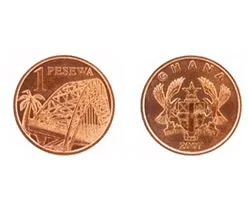
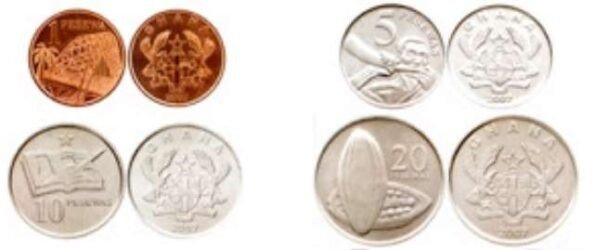
“I paid with GH¢2 and GH¢1 coins, plus the smaller coins, but the seller refused to accept them. I had already started eating the egg when she reluctantly took the coins after I explained I had no other way to pay,” he said.
Prince Addo Frimpong, a student at UniMAC, described repeated humiliation when using lower-denomination coins.
“Once I tried to pay for food, but the seller refused, saying other traders reject these coins, and she cannot afford to run at a loss. On another occasion, I had to plead for several minutes before a storekeeper agreed to take them,” he said.
The Bank of Ghana, when contacted, reiterated that all coins and banknotes remain legal tender under the Currency Act, 1964 (Act 242), and must be accepted for transactions. Refusal is not permitted.
The Bank cautioned that rejecting smaller denominations could lead to price rounding and higher minimum costs, further contributing to inflationary pressures. It acknowledged, however, that inflation reduces the usefulness of low-value coins over time, increasing demand for higher denominations.
To tackle the issue, the Bank said it would step up public education and engage traders, transport operators, and market associations to reinforce the obligation to accept all denominations. It also plans to work with financial institutions to improve coin distribution and recirculation, while encouraging pricing practices that accommodate smaller denominations.
The Bank expressed confidence that these measures would ensure smooth currency circulation, prevent unnecessary price increases, and safeguard overall price stability.
Economist and Professor of Finance at the University of Ghana Business School and Nova Business School Africa, Professor Godfred Alufar Bokpin, attributes the rejection to prolonged economic turbulence and high inflation.
“Since the third quarter of 2021, inflationary pressures peaking at 54.1 per cent in December 2022 have eroded the purchasing power of small currency units, making them less useful in daily transactions,” he said.
Prof. Bokpin explained that in times of high inflation, lower denominations gradually lose relevance because they cannot meet basic transactional needs.
He also noted that carrying large quantities of coins is cumbersome, and lower-value notes like GH¢1 wear out faster than higher denominations, making them less desirable to use.
The economist warned that refusing smaller denominations can fuel inflation.
“When traders reject lower units, prices are often rounded up to the nearest higher denomination, driving up the overall cost of goods and services. This affects pricing behaviour, as traders adjust their prices based on the widely accepted denominations,” he said.
He recommended a balanced approach: “While phasing out lower denominations could simplify transactions, it may also push prices higher. Sustained public education and financial literacy campaigns are needed to encourage acceptance of all legal tender, even though inflation has significantly reduced the practical value of these coins.
BY KINGSLEY ASARE
Follow our WhatsApp Channel now! https://whatsapp.com/channel/0029VbAjG7g3gvWajUAEX12Q