EU urges stronger regional collaboration to tackle rising security threats
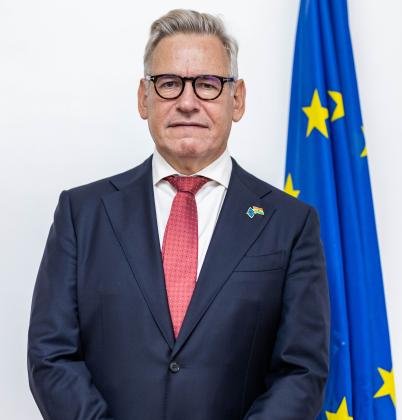
The European Union (EU) has called for enhanced collaboration among governments, security agencies and peacebuilding institutions across West Africa to address the growing threat of violent crime, insecurity and other emerging security challenges in the sub-region.
It said effective coordination, timely information-sharing and collective action remain essential to preventing conflict and strengthening peace and security systems in Ghana and the wider West African region.
The call was made at the opening of a two-day Technical Capacity Building Training on the NCCRM Data Hub in Accra yesterday.
The training brought together representatives from security agencies, the National Peace Council, local peace committees, ECOWAS and development partners to strengthen technical capacity in data-driven early warning and rapid response systems.


Addressing participants, the EU Programme Officer for Governance and Security, Mr Davide Messina, said the complexity of today’s threats—including violent extremism, communal conflicts, organised crime and resource-based disputes—required a more coordinated and integrated regional response.
“This wide range of threats facing Ghana and the wider region underscores a fundamental reality: no single institution and no purely reactive approach is sufficient,” he stated.
He explained that the engagement forms part of the €29 million Enhancing Peace and Security in Ghana (EPSG) project, jointly funded by the EU, Germany and Denmark under the Team Europe initiative.
According to him, the project supports Ghana’s conflict prevention and early warning systems through institutional strengthening and improved data infrastructure.
Mr Messina further reaffirmed Ghana’s position as a key security partner, noting that nearly 30 security-related interventions are currently underway in the country, including training programmes and the provision of military equipment valued at about €50 million.
He said the training also focuses on the operationalisation of the NCCRM Data Hub, a strategic platform designed to strengthen Ghana’s early warning and response architecture through improved collection, validation, analysis and dissemination of human security data.
The Data Hub, he explained, covers five thematic areas: security, terrorism and maritime security; governance and human rights; crime and criminality; health and pandemics; and social, economic and environmental issues.
The Coordinator of the National Centre for Coordination of Early Warning and Response Mechanism (NCCRM), Colonel Emmanuel Sampson, stressed the importance of reliable, high-quality data in producing accurate intelligence for decision-making.
He noted that the effectiveness of early warning systems depends not only on technology but also on the capacity of institutions and personnel to manage and share information efficiently.
The ECOWAS Commission representative, Mr Emmanuel Lawan Ghana, described the Data Hub as a “strategic investment” rather than a short-term initiative, emphasising its importance in evidence-based decision-making and strengthening national response systems.
The three-day training is expected to equip participants with practical skills in data governance, cybersecurity, information validation, reporting standardisation and sustainable data management practices.
It also seeks to improve coordination among peace and security institutions, reduce delays in information-sharing and enhance overall response efficiency.
The NCCRM, operating under Act 1070, reaffirmed its mandate to coordinate early warning activities in Ghana, stressing the importance of evidence-based intelligence in addressing emerging security threats.
BY CLIFF EKUFUL
Follow our WhatsApp Channel now! https://whatsapp.com/channel/0029VbAjG7g3gvWajUAEX12Q