THE Minister for the Interior, Muntaka Mohammed-Mubarak, has reaffirmed government’s commitment to strengthening preventive security measures as Ghana prepared to transition into Phase Two of the Coastal States Stability Mechanism (CSSM).
He said although Ghana continued to be recognised as a beacon of peace and stability within West Africa, the country remained exposed to emerging threats, particularly the spread of violent extremism from the Sahel, and must act proactively to safeguard its gains.
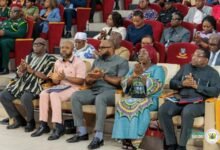
Mr Mohammed-Mubarak made the remarks at the Ghana National Senior-Level Strategic Dialogue under the CSSM in collaboration with the National Security Authority held in Accra on Monday.
He stressed that Ghana’s stability was the result of deliberate policy choices, sustained vigilance, and strong collaboration with international partners, and not by chance.

The Minister noted that the growing spread of terrorism and violent extremism across the Sahel and its gradual movement towards coastal states posed a real and pressing concern, requiring a coordinated national and regional response.
He described the CSSM as a timely and strategic intervention, aligning with Ghana’s whole-of-government and whole-of-society approach to addressing security threats through strengthened service delivery, community resilience, and enhanced security provision.
Mr Mohammed-Mubarak underscored the need to include critical institutions such as the National Peace Council and the Ghana Refugee Board in security coordination efforts, noting that their roles were essential in addressing conflict prevention and migration-related challenges.
He disclosed that the Peace Council had been tasked to develop a national security map to identify conflict hotspots and introduce a peace index to rank communities based on stability, while the Refugee Board was implementing an agricultural project to manage land use among refugees and prevent tensions with host communities.
The Minister further highlighted concerns over porous borders, revealing that although Ghana had about 48 approved entry points, there were more than 200 unapproved routes, increasing the risk of undocumented movements.
Mr Mohammed-Mubarak commended development partners, particularly the governments of the United Kingdom, Germany, and the Netherlands, for their continued support, noting that Phase Two of the CSSM would run until 2029.
The National Security Coordinator, COP Osman Abdul-Razak, in his remarks said the dialogue marked a critical transition from Phase One to Phase Two of the CSSM, aimed at assessing progress and shaping a unified national strategy.
He said over 50 activities had been implemented under Phase One, focusing on strengthening community resilience, improving service delivery, and enhancing trust between communities and security agencies.
COP Abdul-Razak emphasised the need for clear prioritisation of interventions, particularly in vulnerable border communities, and called for stronger coordination among security agencies, local authorities, and peace-building institutions.
He noted that while Ghana remained stable, it must not be complacent, stressing that prevention must remain the country’s primary strategy while maintaining readiness to respond to emerging threats.
The Chief of Mission of the International Organisation for Migration, Fatou Diallo Ndiaye, had commended the Government of Ghana for its strong leadership in advancing the Coastal States Stability Mechanism, emphasising that national ownership and coordinated partnerships were essential to sustaining peace, strengthening resilience and guiding the programme’s next phase.
BY STEPHANIE BIRIKORANG
Follow our WhatsApp Channel now! https://whatsapp.com/channel/0029VbAjG7g3gvWajUAEX12Q