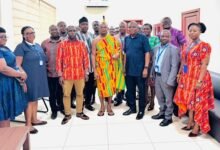
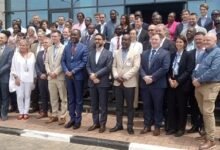
Invest more in STEM for girls — Mission ShakthiSAT participants
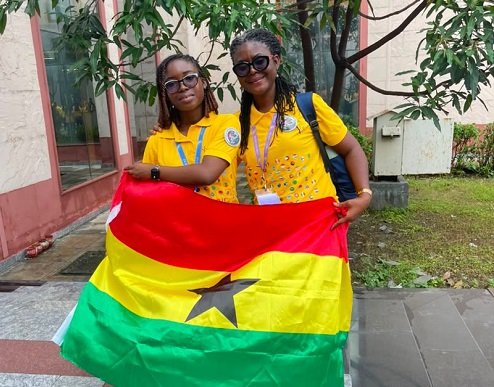
Ghanaian participants in the global Mission ShakthiSAT programme have called for increased investment in science, technology, engineering and mathematics (STEM) education to equip more girls with the skills needed to shape the country’s future workforce.
They said sustained investment in STEM would give girls greater access to practical learning opportunities and prepare them for careers in emerging technologies.
The participants made the call after returning to Ghana from a 10-day satellite engineering and space science programme in India.
The Mission ShakthiSAT Ambassador for Ghana, Dr Diana Amoni Ntewusu, said the experience had demonstrated the importance of exposing girls to practical STEM opportunities from an early age.

Dr Ntewusu, a researcher at the Science and Technology Policy Research Institute (STEPRI) of the Council for Scientific and Industrial Research (CSIR), said such opportunities could inspire more girls to pursue careers in science, engineering and technology.
She participated in the programme alongside 18-year-old Winifred Abrokwah, a Level 200 Biomedical Engineering student at the University of Ghana, whom she mentored throughout the programme.
Held from August 22 to 31, 2026, the programme brought together about 12,000 girls aged between 14 and 18 from 108 countries for practical training in satellite technology, engineering, innovation and space science.
The initiative, organised by Space Kidz India, has been described as the world’s first global all-girls lunar satellite mission.
Dr Ntewusu said inadequate funding had made it difficult to secure Ghana’s participation in the programme, including identifying participants and providing the devices and internet data required for the online selection process.
She said the challenge continued even after Ms Abrokwah was selected, with a supporter eventually purchasing her ticket to India, while she secured funding for her own participation from various sources, including support from her institute.
Dr Ntewusu therefore urged the government and the private sector to support programmes that exposed young people to the practical skills needed by industry and the future workforce.
She said the programme had also provided an opportunity for women leaders and coordinators from different countries to network and exchange ideas on promoting girls and women in science, leadership and innovation.
For Ms Abrokwah, the programme provided an opportunity to complement her independent study of space science with practical experience.
She said the training exposed participants to satellite technology, engineering and other areas that would have been difficult to access in Ghana.
According to her, the programme provided extensive knowledge within a short period, covering areas that could have taken much longer to learn through conventional classroom instruction.
Ms Abrokwah said she planned to share the knowledge she had gained with colleagues interested in space science and use the engineering kits provided during the programme to demonstrate how satellites were built.
She also intends to introduce younger pupils at her mother’s school to space science, saying the subject was not widely taught at the primary and secondary school levels in Ghana.
Ms Abrokwah encouraged other girls to take advantage of similar opportunities, describing space science as an exciting field with applications in areas including national development.
BY STEPHANIE BIRIKORANG
You can now read the *Ghanaian Times* and *The Spectator* newspapers digitally on [TimesNewsPlus](https://timesnewsplus.com/newspapers).
Follow our WhatsApp Channel now! https://whatsapp.com/channel/0029VbAjG7g3gvWajUAEX12Q