
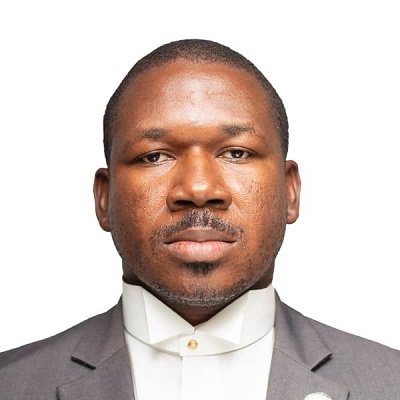
The Legal Aid Commission Ghana in the Upper West Region is grappling with severe staffing and logistical challenges in the face of rising demand for its services among indigent residents seeking access to justice.
Speaking in an interview, Head of the Commission in the region, Lawyer Crispin Wura-sey Ziekah, told Times Reporter that the institution remains a critical pillar of Ghana’s justice system, which is rooted in constitutional provisions designed to ensure fairness and equity.
“Legal aid is a construct of the constitution,” he explained, citing Article 294.
“It was envisioned to support citizens who may want to pursue justice but lack the financial means to hire a lawyer.” he added.

He noted that the Commission’s mandate has expanded beyond constitutional matters to cover a wide range of legal services for the poor and vulnerable.
The Commission operates through three main divisions, the Alternative Dispute Resolution (ADR), Citizens Advisory, and Public Defender units.
However, most cases handled in the region fall under ADR and public defense.
Under ADR, the Commission mediates disputes such as landlord-tenant disagreements, debt recovery, insurance claims, and land conflicts.
According to Lawyer Crispin, trained mediators help disputing parties reach amicable solutions without resorting to litigation.
“We guide parties to resolve their issues themselves so that relationships are preserved,” he said.
He added that the Commission boasts of high success rate in mediation, with most clients leaving satisfied and relationships intact, even in sensitive family disputes.
On the criminal justice front, the Public Defender division represents individuals who cannot afford legal counsel.
These include suspects at police stations and accused persons standing trial in court.
“We do not limit ourselves to specific offences,” Lawyer Crispin said.
“From minor cases to serious crimes like murder, we provide representation when individuals cannot afford a lawyer.” he stressed.
He further noted that legal aid lawyers are frequently appointed by courts, particularly in serious criminal trials, to ensure due process.
Despite these contributions, the Commission faces significant challenges that threaten its effectiveness.
The most pressing issue, according to Lawyer Crispin, is inadequate staffing. The entire region, with 11 districts, is currently served by just one lawyer.
“I am the only lawyer here,” he revealed.
“It is extremely difficult to cover district courts in places like Tumu, Lawra and Nandom while also handling High Court cases.” He lamented.
He stressed that at least two to three lawyers are needed to ensure continuity and efficiency in service delivery.
Logistical constraints further compound the problem. Limited transport and resources make it difficult to extend services to remote districts, leaving many accused persons without legal representation.
“This means some people go through criminal trials alone, even when their liberty is at stake,” he said.
He warned that unrepresented accused persons are often pressured into pleading guilty, sometimes resulting in harsh sentences due to mandatory minimum penalties.
The issue of prolonged remand also emerged as a major concern.
Lawyer Crispin recounted cases where inmates had spent over a year in custody without trial.
“One inmate has been on remand for 16 months without appearing in court,” he disclosed.
This, he described as unfair and unacceptable.
He questioned delays in investigations, arguing that suspects should not be detained indefinitely without trial.
Office infrastructure poses another challenge. The Commission operates from an upper floor, making access difficult for physically challenged clients.
In some cases, staff are forced to meet clients in borrowed office spaces.
Despite these hurdles, Lawyer Crispin maintained that the Commission continues to deliver impactful services, citing cases where long-term inmates have regained freedom through legal intervention.
He called on government, philanthropists, and the public to support the Commission through funding and contributions to its legal aid fund.
He stressed that strengthening the Commission is essential to ensuring equal access to justice across the Upper West Region.
FROM NAZIRU ALHASSAN, WA
Follow our WhatsApp Channel now! https://whatsapp.com/channel/0029VbAjG7g3gvWajUAEX12Q
