Toxic Air, Blocked Airways – The toll of Ghana’s poor air quality on asthmatics
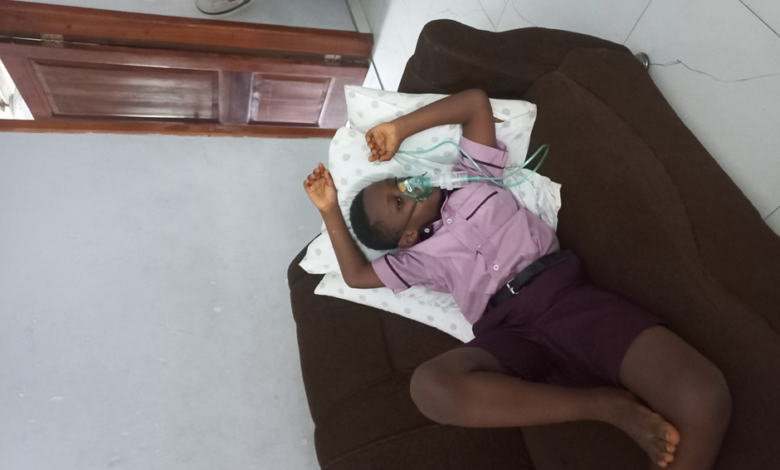
Little Myles has battled chronic asthma since he was two years old. Four years on, the boy lives with his single mother, Bernice, along the Pokuase-Nsawam highway, where prolonged road construction has blanketed nearby communities in dust for years.
Combined with vehicle emissions, cooking fumes and smoke from waste burning, every breath Myles takes is a risk.
Experts say Ghana’s worsening air quality is fuelling a growing public health crisis. But for people living with asthma – a condition in which inflamed airways make breathing difficult – the burden is heavier, deeply personal and often life-threatening.
“Every day is a prayer,” Bernice says. (The Ghanaian Times is withholding last names to protect the child from stigma.) “I don’t know where he will go. I try to protect him, but it’s not always possible. I just pray God sees him through each day.”

Despite following a strict routine – keeping a toiletry bag stocked with face masks, inhalers, tissues, soap and sanitiser, and ensuring regular nebuliser treatments after school – Myles’ condition remains precarious.
“Almost every two weeks, we are at the hospital,” she says. “Sometimes we miss an entire school term. It is exhausting — financially, emotionally and psychologically. And society doesn’t make it easier,” says Bernice who has had to quit her corporate job and now relies on personal shopping and cooking jobs alongside the benevolence of others, to care for her son.
Myles’ story is far from unique. It reflects the experiences of many asthmatic children in Ghana whose conditions, experts say, are deteriorating because of environmental pollution.
Asthma is a chronic respiratory disease marked by inflamed and narrowed airways, causing wheezing, breathlessness and chest tightness. . If the airways narrow completely, the sufferer can die.
Globally, more than 260 million people live with asthma, according to the World Health Organisation, with an estimated 1,000 deaths recorded daily.
Nearly all of those deaths occur in low- and middle-income countries like Ghana, where cases are often underdiagnosed and access to healthcare remains limited.
The Ghana Health Service estimates that about three out of every 100 Ghanaians — roughly one million people — live with asthma, with more than 80,000 new cases recorded annually.
Children like Myles are among the most vulnerable. Reports estimate that one in 10 children worldwide lives with asthma, while one in every 10 paediatric hospital admissions is asthma-related.
Although asthma can be triggered by allergens, infections and weather conditions, experts say environmental pollution is increasingly becoming a dominant driver.
Air pollution levels in cities such as Accra have risen in recent years.
As one of Africa’s fastest-growing cities, Accra continues to grapple with poor waste management, weak regulation of vehicle emissions and low adoption of clean cooking fuels, exposing millions to hazardous air.
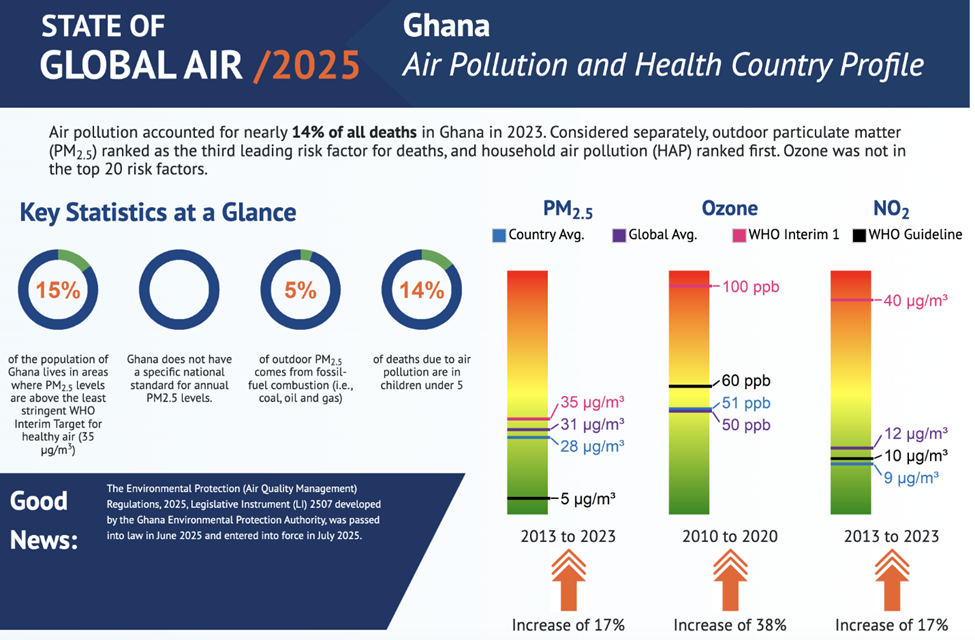
According to the 2025 State of Global Air report, concentrations of the most dangerous air pollutants rose by 17 per cent between 2013 and 2023, with outdoor air pollution ranked as the world’s third leading risk factor for death.
“Respiratory conditions are becoming more severe,” says Dr Woedem Tettey, a public health physician specialist at the Greater Accra Regional Hospital.
“We are seeing more respiratory infections and a rise in non-allergic asthma due to exposure to environmental irritants like smoke and fumes.”
She says emerging evidence suggests prolonged exposure to polluted air may be driving asthma even among people with no family history of the condition, sometimes beginning as early as pregnancy.
“Research indicates that four to five people die from asthma daily in Ghana,” Dr Tettey says, adding that; “Air pollution is undermining gains in the treatment and management of chronic diseases.”
Final-year student of the Kwame Nkrumah University of Science and Technology, Daniel Ntiri, recalls growing up in a household where all four siblings, including himself, battled asthma.
Born to an asthmatic mother, Daniel says regular hospital admissions, missed classes and social isolation defined much of their childhood.
“My siblings and I used to alternate between hospitals. My mother was always attending to one of us because of an attack. Those were very difficult moments,” he says.
Although Daniel says he now better understands his triggers and manages attacks by avoiding unsafe environments and always carrying an inhaler or face mask, he worries that not every child survives severe asthma attacks.
Asthma is only one of the many health impacts linked to air pollution in Ghana, says Dr Louisa Matey, Director of Health for the Accra Metropolitan Area.
She says air pollution is increasingly recognised as a major risk factor for non-communicable diseases rapidly rising in Ghana, including hypertension, cardiovascular diseases, stroke, cancer, diabetes, infertility and asthma.
For asthmatics, Dr Matey says the effects can be immediate and severe; reduced lung function, frequent attacks, increased medication use and higher hospital admissions, especially among children whose lungs are still developing.
She joins growing calls for stricter enforcement of environmental laws, cleaner transport systems and better urban planning to reduce asthma-related illnesses and deaths.
“There is no reason for people to die prematurely from asthma triggers,” she says. “Why should asthmatics here die before age 40, while people in other countries live full lives?
“It is because our environment is a major trigger, and the situation is dire. We must take air pollution seriously and ensure that existing laws are enforced,” says Dr Matey
Experts say Ghana’s response to air pollution remains fragmented, spread across environmental regulation, fuel standards and urban planning initiatives, with the Environmental Protection Agency (EPA) leading national efforts.
Although a recent amendment to the Environmental Protection Act gives the Authority greater powers to enforce laws on open waste burning and urban air quality management, experts say implementation remains weak.
Some are calling for a comprehensive national clean air policy to coordinate existing efforts.
Beyond policy, however, lies the growing financial burden of asthma care.
“Treatment costs are rising and families are struggling. More children are having to depend on inhalers which are overly expensive and not subsidised due to frequent attacks,”says Anthea Awo Duker, Chief Executive Officer of the Asthma and Allergies Foundation Ghana.
According to her, gaps in asthma coverage under the National Health Insurance Scheme continue to force many patients and caregivers to pay huge sums out of pocket to access care.
“Inhalers for both relief and prevention are often expensive, while lifesaving nebulisers are available in only a few facilities. Even where the machines exist in regional and district hospitals, patients frequently have to buy their own accessories,” she says.
Madam Duker is calling for stronger advocacy, policy reforms and improved asthma care management to protect patients’ lives.
For caregivers like Bernice, addressing policy and healthcare gaps is urgent. But she believes simple interventions such as increased public education on asthma could also make a significant difference.
“If we understand that we are not alone in the environment, we will behave differently,” she says.
“Smoke from waste burning or cooking with fossil fuels could be choking someone else to death. If people understand asthma triggers, the consequences of their actions and how to offer basic help during an attack, they will be more responsible and help save lives.”
For now, Bernice, like many Ghanaian parents of asthmatic children, begins each day wondering whether her child will survive it.
This story was produced in collaboration with New Narratives with funding support from the Clean Air Fund. The Fund had no influence over the story’s content.
BY ABIGAIL ANNOH
Follow our WhatsApp Channel now! https://whatsapp.com/channel/0029VbAjG7g3gvWajUAEX12Q