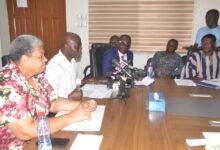
The Director of Field Operations of the United Party, Hopeson Adorye says mining in Ghana is not illegal, but it becomes unlawful when miners operate outside the areas approved under their licences.
Speaking on Joy news today, while commenting on the conviction of the Ashanti Regional Chairman of the New Patriotic Party (NPP), Bernard Antwi Boasiako, popularly known as Chairman Wontumi, Mr. Adorye said the prosecution successfully proved its case in court.
According to him, the trial, which lasted about nine months, established beyond reasonable doubt that illegal mining activities had taken place on the land in question.
Mr. Adorye said Chairman Wontumi admitted that the land belonged to him and claimed he had allowed some people to carry out land reclamation there.


He, however, said a prosecution witness from Chairman Wontumi’s company testified that the activities on the land were illegal mining and not land reclamation.
Mr. Adorye explained that mining itself is permitted under Ghana’s laws, provided operators work only in locations approved by the relevant authorities.
He said mining becomes illegal when operators move into forest reserves, water bodies or other unauthorized areas without approval.
According to him, some miners obtain licences to operate in designated locations but later move to different sites that are not covered by their permits.
He said there have been instances where security officers inspected mining licences and discovered that the permits presented were issued for entirely different locations.
Mr. Adorye further stated that the former Minister for Lands and Natural Resources, Samuel Abu Jinapor, had publicly indicated that Akonta Mining did not have a permit to operate in the area where the alleged illegal mining took place.
He added that the issue had also attracted national attention after former President Nana Addo Dankwa Akufo-Addo publicly commented on illegal mining during a public event.
Mr. Adorye maintained that the court’s judgment showed that the prosecution had presented sufficient evidence to prove its case.
By: Jacob Aggrey