New app launched to help landlords comply with rent advance rules
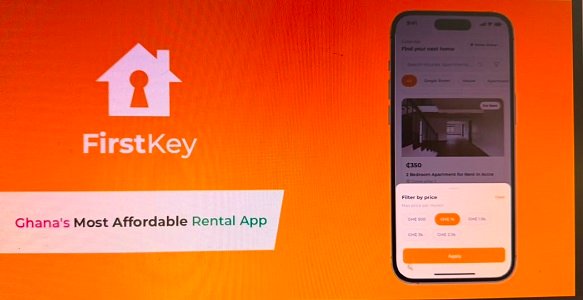
As thousands of prospective tenants continue to grapple with illegal rent demands despite the government’s six-month rent advance directive, a Ghanaian property technology company has launched a mobile application to help landlords and agents comply with the law.
The application, known as the FirstKey App, developed by Ownkey (ownkey.com), Ghana’s leading verified real estate marketplace and property technology company, is designed to ensure that only property listings that comply with the law are published on its platform, while supporting the Rent Control Department’s efforts to enforce the rent advance directive.
The Chief Executive Officer of Ownkey, Mr Ilyas Ibrahim, disclosed this in an interview with the Ghanaian Times in Accra on Wednesday, saying the success of the application would depend largely on information provided by tenants and accommodation seekers.
Mr Ibrahim acknowledged that not all landlords and agents could be onboarded immediately but expressed confidence that with the cooperation of accommodation agents and prospective tenants, the platform would help improve compliance.


He said Ownkey would also seek the Rent Control Department’s support to encourage more landlords to register on the platform and strengthen compliance with the law.
Mr Ibrahim said the initiative was intended to promote transparency in the rental market and protect tenants from unlawful rent demands while supporting landlords to remain compliant. “FirstKey App covers every rental listed below GH₵2,500 a month, the segment most exposed to exploitation regardless of how a property was presented. All of this is to protect tenants and ensure they are not exploited,” Mr Ibrahim said.
“FirstKey App is, therefore, seen as one concrete example of the kind of private-sector contribution the President was asking for, an affordable housing platform built around the same Act 220 standard.”
Ghana’s Rent Act 1963 (Act 220) has capped advance rent at six months for over 60 years, but weak enforcement, driven in part by both tenants and landlords being reluctant to use the Rent Court, allowed demands of one to two years’ advance rent to become common practice in a market shaped by a roughly 1.8 million-unit housing deficit.
BY NORMAN COOPER
Follow our WhatsApp Channel now! https://whatsapp.com/channel/0029VbAjG7g3gvWajUAEX12Q