The National Seed Council has called for stronger seed production, certification and traceability systems to improve farmers’ access to quality planting materials.
The call was made when the Council engaged stakeholders in the Upper West Region as part of a regional tour to assess challenges and opportunities in the seed value chain.
The engagement, held in Wa yesterday, brought together seed producers, dealers, inspectors and other agricultural stakeholders.
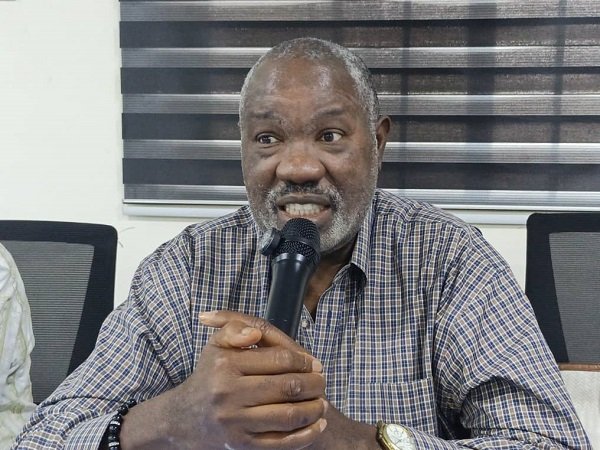
The Director of the Plant Protection and Regulatory Services Directorate (PPRSD) at the Ministry of Food and Agriculture (MoFA) and Member-Secretary of the Council, Mr Eric Bentsil Quaye, said four members of the Council had been selected to engage stakeholders following its constitution earlier this year.


He said the Council, established under the law governing the seed, fertiliser and plant protection councils, was the highest decision-making body on seed matters and had nine members drawn from public and private institutions.
Members are appointed by the President for four-year terms.
Mr Quaye said the current members were appointed in May and sworn in to support the development of the seed sector.
He said the regional tour, which began in Tamale and continued through the Savannah Region before reaching the Upper West Region, was intended to assess seed production, distribution and certification and obtain feedback from stakeholders at the field level.
“The National Seed Council aims to evaluate the capacity of our local seed growers, assess the efficiency of our distribution networks and scrutinise the strictness of our certification framework,” Mr Quaye said when reading a speech on behalf of the Council’s Chairman.
Mr Quaye said the Council was also examining infrastructure gaps, including the need for modern seed processing plants and cold storage facilities, as well as financing constraints facing private seed enterprises.
He identified digitisation, including electronic seed tracking and authentication, as an opportunity to strengthen the sector.
He said the Council was seeking to make climate-smart varieties available to farmers and streamline the release and registration of new varieties.
Mr Quaye said efforts were also underway to speed up the multiplication of breeder seed into foundation and certified seed and promote newly released varieties among farmers.
He said the Ministry of Food and Agriculture, under the Feed Ghana Programme, was implementing measures including support for irrigation and tomato production.
The ministry was also partnering research institutions to develop tomato varieties suited to sustained production, he added.
With support from the Japan International Cooperation Agency (JICA), three seed facilities are expected to receive modern seed-conditioning equipment, with the facilities expected to be available from 2027.
Mr Quaye said the ministry was also strengthening seed traceability to enable farmers to identify the source of seed packages.
The Upper West Regional Director of Agriculture, Mr Huudu Abu, however, identified inadequate transport for seed inspectors as a practical challenge affecting seed certification in the region.
He said inspectors needed to visit seed fields at least two to three times for each producer, but the regional inspection team lacked a reliable means of transport to carry out the work effectively.
Mr Abu appealed to the Council to consider addressing the challenge, saying effective inspection was critical to ensuring the production of quality seeds.
An agronomist with the Savannah Agricultural Value Chain Development Project, Mr Christopher Yirkaare Akai, said the project had supported land development, extension services and inputs for smallholder farmers producing maize, soybean and rice.
He said the project had also supported the Savannah Agricultural Research Institute to develop a soybean variety that had been approved at the National Variety and Release Committee level as material for consideration for release.
Mr Akai said the variety was intended to address harvesting challenges by enabling combine harvesters to cut closer to the ground.
FROM NAZIRU ALHASSAN, WA
Follow our WhatsApp Channel now! https://whatsapp.com/channel/0029VbAjG7g3gvWajUAEX12Q