
Zandvoort’s Last Lap: Why Formula 1’s 2026 Dutch Grand Prix Matters
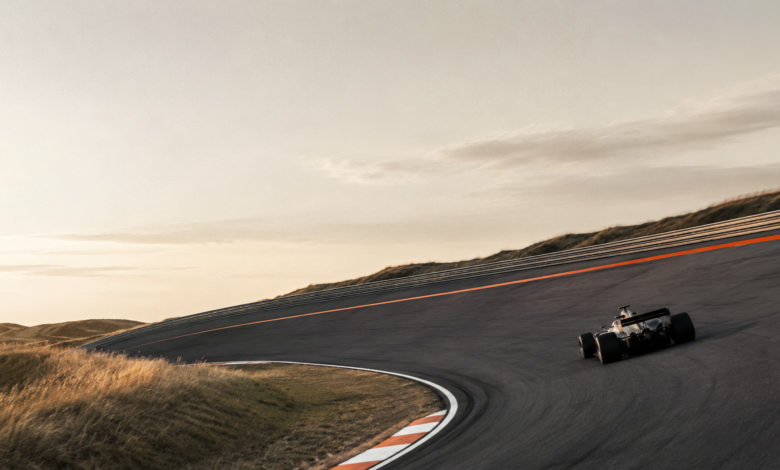
Zandvoort is not returning in 2026; it is saying goodbye. Formula 1 came back to the Dutch dunes in 2021 after a 36-year absence, and the 21–23 August weekend is the final event on the current calendar after the promoter chose not to pursue another extension. The organiser bills it as the 40th Dutch Grand Prix held at the circuit, although four early editions predated the Formula 1 World Championship. In championship terms, the 2026 race will be Zandvoort’s 36th Dutch Grand Prix — and its first Sprint weekend.
Kimi Antonelli reaches the summer break with 219 points, 50 ahead of Lewis Hamilton and 59 clear of George Russell. The format adds pressure: teams have only one practice before Sprint Qualifying, yet parc fermé ends after the Sprint and begins again when Grand Prix qualifying starts. Saturday therefore provides a second opportunity to revise the setup, although there is no additional practice in which to test those changes.
The Farewell Is a Promoter’s Decision
Zandvoort first hosted a World Championship race in 1952, appeared on and off the schedule until 1985, and was initially due to return in 2020. The pandemic delayed that comeback until 2021. The 2026 weekend will be the sixth race of the modern run and the last one currently contracted.
Formula 1 and the promoter discussed several options, including annual and rotating arrangements, before the organiser decided to finish after 2026. That makes this a confirmed calendar exit, not proof that the circuit can never return under a future agreement.


The local timetable places first practice and Sprint Qualifying at 12:30 and 16:30 on Friday. The 24-lap Sprint starts at 12:00 on Saturday, followed by Grand Prix qualifying at 16:00. The 72-lap race is scheduled for 15:00 local time on Sunday; all published times remain subject to change.
Banking, Wind and a 4.259-Kilometre Lap
The circuit measures 4.259 km, while the Grand Prix covers 72 laps and 306.587 km. Tarzan is the heavy-braking first corner and a primary overtaking point. The progressive banking at Hugenholtz reaches 18 degrees, while the final Arie Luyendyk corner rises from 15 to 18 degrees and launches the cars onto the main straight at high speed.
Tarzan itself is not one of the circuit’s 18-degree banked corners. The two steeply banked turns permit different lines, but the circuit still punishes a car that slides its front tyres or lacks rear stability on entry.
Coastal wind can shift between sessions, and gusts affect braking and balance differently around the lap. Sand, track temperature and a short lap also compress qualifying traffic: one slow car in the wrong sector can spoil a flying lap before pure pace becomes relevant.
The Sprint Rewrites the Information Cycle
A Sprint weekend replaces preparation time with competitive evidence. After one practice, teams commit to a setup for Sprint Qualifying and the 24-lap Sprint. The short race then reveals tyre degradation, overtaking difficulty and wind sensitivity in traffic, but it does so with a lighter fuel load and without the strategic demands of a 72-lap Grand Prix.
Parc fermé restrictions apply from the start of Sprint Qualifying until the Sprint. They begin again when a car first leaves the pit lane in Grand Prix qualifying and continue until Sunday’s race. Teams may therefore change setup between the Sprint and qualifying, but a Saturday adjustment is still a calculated response rather than something verified in another practice session.
Six Drivers Define the Pre-Race Order
The championship standings after Hungary provide the clearest starting point:
- Kimi Antonelli — 219 points;
- Lewis Hamilton — 169;
- George Russell — 160;
- Charles Leclerc — 138;
- Lando Norris — 128;
- Max Verstappen — 109.
Antonelli controls a useful points cushion, while Hamilton and Russell apply the nearest mathematical pressure. Norris arrives after winning the Hungarian Grand Prix. Verstappen sits sixth but has won three times at Zandvoort, from 2021 to 2023, so his record through the fast, banked sections remains more informative than his championship position alone.
Why In-Play F1 Markets Move So Quickly
The live section at https://rolsbet-et.com/aa/live should be read as a current market screen, not as a prediction model. F1 prices can change after a yellow flag, a tyre choice, a delayed pit stop, a weather update or an improved sector time. A television feed may reach the viewer after a trading system has already processed the same event. Before making a selection, check the exact settlement rule for classified finish, fastest lap, driver head-to-head and Sprint markets. Fast movement confirms that new information or trading activity reached the market; it does not prove that the revised price offers value.
Bonus Terms Belong in the Pre-Race Check
Race-weekend promotions may be limited by sport, market, minimum odds, number of selections, turnover requirement or expiry. The applicable conditions at https://rolsbet-et.com/aa/bonus/rules should be checked before an eligible adult deposits or places a qualifying bet. Read the required turnover, deadline, stake contribution and withdrawal conditions as one package rather than judging the offer by its headline amount. A promotion has little practical value when completion depends on markets or stakes outside the user’s normal plan. Declining it is reasonable when the timing or expected variance does not fit the betting budget.
Weather and Strategy Can Break the Forecast
Zandvoort’s narrow layout can trap a faster car in traffic, while an early Safety Car can turn an expected one-stop race into an improvised sequence. Wind changes aerodynamic balance, rain moves the crossover between slicks and wet-weather tyres, and a badly timed stop can erase several laps of pace.
A useful pre-race forecast should state its assumptions instead of naming a guaranteed winner. Recheck the official weather forecast, Sprint tyre evidence, grid penalties and any post-qualifying changes that trigger a pit-lane start before treating Friday’s order as Sunday’s answer.