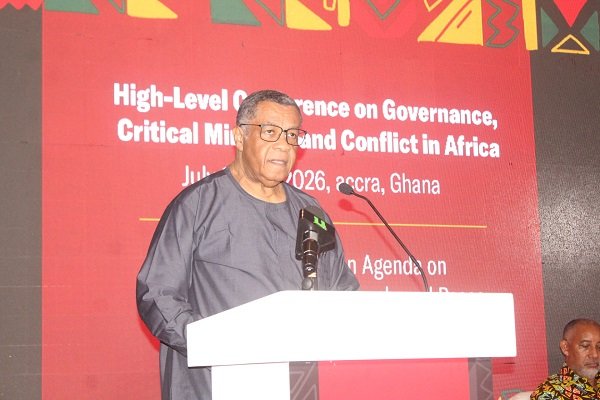
President John Dramani Mahama has urged African governments to place the African Continental Free Trade Area (AfCFTA) at the centre of their development strategies to accelerate the continent’s growth.
He stressed that the agreement must serve as a catalyst for industrialisation and economic transformation, rather than become another unfulfilled continental pact.
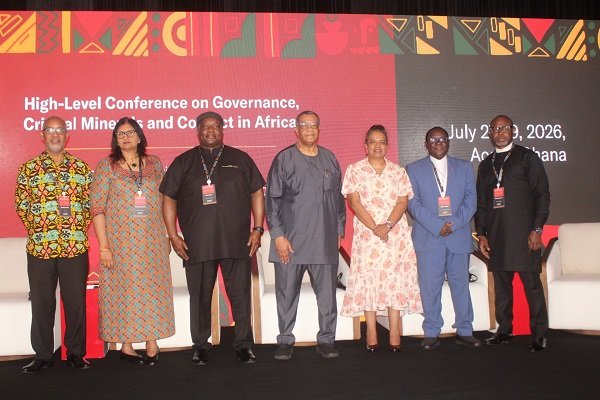
President Mahama made the call in a speech read on his behalf by the Senior Presidential Advisor on the 24-Hour Economy Policy, Mr Goosie Tanoh, at the opening of a High-Level Conference on Governance, Critical Minerals and Conflict in Africa in Accra yesterday.
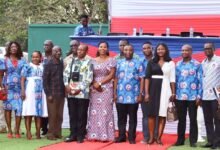
The three-day conference, organised by the Open Society Foundations (OSF), has brought together government officials, policymakers, development partners, researchers and civil society actors to examine how Africa can responsibly harness its critical mineral resources to promote peace, strengthen democratic governance and drive sustainable economic transformation.


The conference is on the theme: “Towards an African agenda on governance, critical minerals and peace.”
In his address, President Mahama said Africa stood at a defining moment in its history, as the global transition to clean energy and advanced technologies had placed the continent’s critical minerals at the centre of international demand.
He noted that although Africa possessed vast deposits of minerals such as lithium, cobalt, graphite, manganese and rare earth elements, it continued to export raw materials while importing finished products, thereby denying its people the full economic benefits.
“The world will certainly use Africa’s minerals. The question is whether Africa will use them to build its own industries, create decent jobs and strengthen peace, or remain a bystander while others benefit from our finite resources,” he stated.
President Mahama emphasised that AfCFTA provided a unique opportunity for Africa to develop integrated regional value chains to support mineral processing, battery manufacturing, steel production and other downstream industries.
He explained that no single African country possessed all the critical minerals required for industrial development, making regional cooperation essential.
“We do not need 54 separate and incomplete mineral value chains. We need competitive regional chains that connect mines to refineries, refineries to component plants, factories to African markets and African products to the world,” he said.
Citing an African Development Bank study, the President said increased processing of critical minerals could boost Africa’s processed mineral exports by US$32 billion, add US$24 billion to continental GDP and create about 2.3 million decent jobs.
He added that Ghana’s industrialisation agenda, supported by the proposed 24-hour economy policy, sought to link mineral resources to reliable energy, technology, skills development and export markets.
President Mahama further stressed that industrialisation must be underpinned by strong governance, transparent licensing, fair taxation, environmental protection and meaningful community participation.
He said women, young people and artisanal miners must be fully integrated into the mineral value chain to ensure that the benefits of resource development were widely shared.
The Acting Chief Executive Officer of the Millennium Development Authority (MiDA), Mr Alexander Kofi-Mensah Mould, cautioned that Africa’s growing critical minerals industry could become another resource curse if governance was neglected.
He stressed that the continent’s success would depend not only on the abundance of its natural resources, but also on the strength of institutions established to manage them.
“The difference has never been the resource itself. The difference has always been governance,” Mr Mould emphasised.
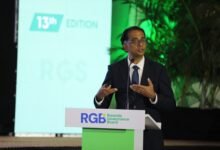
For her part, the President of the Open Society Foundations, Ms Binaifer Nowrojee, said accountable institutions, transparency and citizen participation were essential if Africa’s mineral wealth was to translate into peace and shared prosperity.
She urged African governments to strengthen democratic governance, protect civic space and promote responsible investment, adding that the transition to a greener global economy must also advance fairness, justice and sustainable development across the continent.
BY KINGSLEY ASARE
Follow our WhatsApp Channel now! https://whatsapp.com/channel/0029VbAjG7g3gvWajUAEX12Q