Africans must go…. but to where?
The troubling scenes unfolding in South Africa, where fellow Africans are being harassed, beaten, threatened, and told to “go back home,” are unsettling to every conscience across this continent.
As the June 30 ultimatum by vigilante groups such as ‘March and March’ approaches, the urgency and ugliness of the situation demands a simple but profound question: if Africans must go, then where should they go to?
Though almost like a rhetorically flourish, the question is rooted in reality, history, and the future we claim to seek as Africans.
In many ways, Africa is confronting itself through the despicable scenes unfolding from South Africa. The borders that now define who belong and who does not were never organically ours. They were imposed by the colonists, drawn to serve the administrative and extractive interests of these powers.

But today, we invoke those same artificial lines with renewed vigor, using them to justify exclusion and division against our own bloods.
In doing so, we risk entrenching a fragmented identity pushed on us to undermine our collective potential. Needless to say, before these borders, Africans moved, traded, and lived across vast spaces defined more by culture and coexistence than by rigid territorial barriers. That history must count for something, including for the young South Africans who grew up knowing just the four continents of their country, and now claiming unconsciousness of the continental toil that went into freeing the country from the shackles of Apartheid.
Immigration is economic induced
The demand for Africans to leave South Africa is an attempt to elevate nationality above a shared continental identity. Moreso, it is an attempt to ignore the fact that migration within Africa, just as is the case globally is not an anomaly, but a natural response to uneven development. People move in search of opportunity, security, and dignity and these conditions remain inconsistently distributed across our continent.
In the case of Africans’ immigration into South Africa, it is because economic opportunities exist, where locals are unable or unwilling to take advantage of. Jobs, businesses and social openings that locals find unattractive and considered juicy to other Africans, motivating many to settle there in an attempt to make a living.
This is not peculiar to South Africa. In Ghana, just like Nigeria, many Africans relocate temporarily or permanently to school, work or run businesses in the spirit of taking advantage of opportunities to grow.
Thus, telling these people, who are filling a void to “go back home” without addressing the structural imbalances that drive migration is not a policy. Instead, it is a brushed attempt to deflect responsibility and that amounts to kicking the can down the road.
Foreigners aren’t the problem
There is no denying that unemployment and inequality in South Africa, particularly among the youth, are serious and urgent challenges.
But as has been widely discussed, to frame fellow Africans as the cause of these problems is both inaccurate and dangerous. It risks misdiagnosing the issue while fueling social tensions that benefit no one, but the aspirations of the colonists for our great continent.
The frustrations of young South Africans are legitimate, but their redirection toward vulnerable migrants only deepens the crisis rather than resolving it.
More importantly, the push to expel African migrants represents a step backward at a time when Africa must move forward, together. The continent finds itself at a pivotal geopolitical moment. The world is competing for access to Africa’s vast reserves of critical minerals and natural resources.
Whether it is gold from Ghana, cobalt and copper from the Democratic Republic of Congo, lithium from Zimbabwe, or bauxite from Guinea, Africa sits at the center of global supply chains. And with the electric vehicle and defence technologies evolution at its peak, Africa remains the ‘go to’ continent for mineral resources to feed the rest of the world.
This moment offers an opportunity not only for resource extraction, but for industrialization, value addition, and shared prosperity.
Yet such an opportunity cannot be fully realized in isolation. It cannot be realized in a continent where young people, who should be pushing Africa’s leaders to synchronize policies and build a prosperous Africa, rather resorting to arms and vigilantism against their fellow brethren.
Instead, it requires coordination, integration, and unity. African economies must increasingly speak to one another, through trade, through business linkages, and through harmonized policies. Initiatives like the African Continental Free Trade Area were designed precisely to break down internal barriers and foster intra-African commerce.
But that vision becomes hollow if, at the same time, Africans are made to feel unwelcome in African markets.
Weakening our bargaining power
If we fragment ourselves along national lines, we weaken our bargaining power globally. We compete against each other instead of collaborating. We make it easier for external actors to dictate terms, just as the balkanization of Africa in the 18th century sought to achieve. A divided Africa cannot optimise its resource wealth. A united Africa can, hence the setting up of the African Union.
As a businessman, it is also worth noting that there is also a practical economic dimension that must not be ignored. African migrants in South Africa are not merely job seekers. They are entrepreneurs, traders, and service providers. In many communities, they sustain small businesses, facilitate trade networks, and contribute to local economies.
Their abrupt removal, as is currently happening will not automatically translate into employment for South Africans as has been widely discussed, including by one of the country’s top politicians, Julius Malema.
On the contrary, it may lead to the closure of informal enterprises, disruptions in supply chains, and reduced economic vibrancy in already struggling areas.
Then comes the broader question of South Africa’s position on the continent as this spectacle gathers momentum.
For decades, South Africa has been viewed as a gateway economy, one that attracts investment, tourism, and talent from across Africa and beyond. That reputation is built not only on economic strength, but on openness and inclusivity. Sustained hostility toward fellow Africans risks eroding that standing and weakening South Africa’s appeal as a continental hub. Beyond that reputational damage comes the ripples on economic activities, including investments with potential implications on jobs for the youth and social nets for the poor.
A chance to remedy
Thus, at this critical juncture, leadership matters. Watching African governments coordinate repatriation flights for thousands of citizens is despicable to say the least. It unwinds the visions and successes of true Africans like Dr Kwame Nkrumah and Nelson Mandela who saw through the colonists’ attempt to divide and rule Africa.
However unfortunate, South Africans still have a chance to try to remedy the situation. As the June 30 deadline draws near, it is essential that the government engages constructively with the youth, address grievances through legitimate channels, and firmly reject any descent into mob action or unlawful expulsions. The rule of law must prevail, but so too must the principles of dignity, fairness, and African solidarity.
Africa cannot afford a spectacle of mass deportations or widespread unrest. Such scenes would reverberate far beyond South Africa’s borders, deepening divisions and undermining confidence in the continent at a time when unity is most needed.
Ultimately, the question before us is not just about migration but about identity and direction. Do we see ourselves primarily as citizens of separate, competing states, or as part of a broader African project, the one that transcends colonial-era boundaries in pursuit of shared progress?
The idea that expelling fellow Africans will resolve our economic challenges is misguided. It closes doors at a time when we should be opening them among ourselves.
And if Africa is to thrive in a rapidly changing global order, it must do so as a cohesive force, not as a collection of inward-looking enclaves, handed us by outsiders.
So again, we must ask: if Africans must go, where should they go to?
Surely not away from one another. Neither as Ghanaians sacked from Nigeria or Nigerians sacked from South Africa or African viewed less a citizen in any African country.
Instead, we must forged forward towards deeper integration, stronger cooperation, and a renewed commitment to the idea that, despite our diversity, we are one people with a shared destiny.
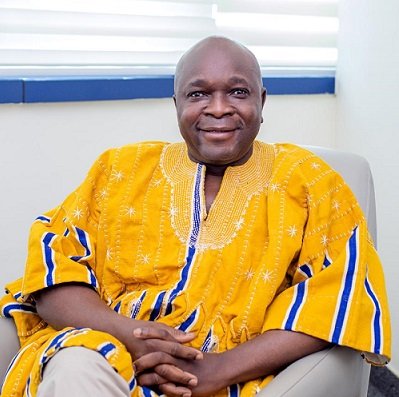
The writer is a Ghanaian businessman and philanthropist.
BY SEIDU AGONGO
Follow our WhatsApp Channel now! https://whatsapp.com/channel/0029VbAjG7g3gvWajUAEX12Q