Forensics in Sexual, Gender-Based Violence: A critical role in justice, healing
Sexual and Gender-Based Violence (SGBV) remains a pervasive global issue, affecting millions of individuals across cultures, communities and socioeconomic backgrounds. Beyond the immediate trauma inflicted on survivors, SGBV often has long-lasting physical, psychological and legal consequences. The forensic investigation of sexual assault plays a central role in bridging the gap between victim experiences and justice outcomes. Through proper forensic examinations, evidence collection, documentation and multidisciplinary coordination, the criminal justice system gains the objective scientific tools needed to identify perpetrators, corroborate survivor accounts, and build legally sound cases.
What is forensic examination in sexual assault?
A forensic medical examination is a structured, highly detailed clinical and forensic process conducted by trained professionals on a sexual assault survivor or suspect. It is not merely a physical check-up; it serves a dual purpose: to address the medical needs of the survivor and to collect, document, and preserve evidence that could prove or disprove elements of the alleged crime. For survivors, the examination must be performed with informed consent, compassion and privacy, ensuring that medical needs, such as injury treatment, STI prophylaxis, emergency contraception and psychological support are integrated as part of care. The forensic component involves collecting biological and physical evidence that may be pivotal during criminal investigation and prosecution.
The types and purposes of forensic evidence


Forensic evidence in sexual assault investigations includes a range of biological samples and physical findings collected from the victim, suspect, and crime scene. Various specialised training postulates evidence is inclusive of:
a. Biological samples (e.g., semen, saliva, blood, sweat, vaginal fluid, urine, hair etc.),
b. Foreign material on body surfaces or clothing,
c. Swabs from body orifices and skin,
d. Photographic documentation of injuries and scene,
e. DNA reference standards,
f. Clothing and trace evidence (Fiber, glass, paints, soil, fingerprints, blood, etc.),
g. Documentation of genital and non-genital injuries,
h. Behavioral observations and documented statements, etc.
Each type of evidence plays a role beyond simply collecting material, it helps reconstruct the sequence of events, establish the presence or absence of force or contact, identify or exclude suspects, corroborate testimonies or demonstrate transfer of materials from suspect to victim or vice versa.
Forensic examination of survivors: Care and evidence
In most jurisdictions, a victim will report to the nearest police station, where a police medical report form are issued. Thereafter, a survivor will seek medical care involving a standard Sexual Assault Medical Forensic Examination (SAFE). This is usually conducted by a clinician with specialised training in forensic evidence collection, sometimes referred to as a Sexual Assault Medical Examiner (SAME) and a Sexual Assault Nurse Examiner (SANE). A Sexual Assault Forensic Examination may include but not limited to:
a. Taking a detailed medical and forensic history.
b. Comprehensive forensic physical examination.
c. Photographing and documenting injuries.
d. Collecting biological and trace evidence into a standardised forensic kit.
e. Addressing medical needs and facilitating follow-up services.
f. Providing supportive care and referrals for psychological support, etc.
Importantly, these examinations must be performed with sensitivity and respect to the survivor’s dignity, ensuring that trauma is minimised and consent is central to all procedures.
Forensic examination of suspects: Evidence versus rights
While the forensic examination of a survivor focuses on both medical care and evidence collection, the examination of a suspect is primarily forensic. Its purpose is to identify and preserve any evidence that may link the suspect to the alleged assault. This may include biological evidence under nails, on skin, clothing or body orifices and other trace materials consistent with the survivor’s account. Suspect examinations must respect legal rights and procedural requirements. They may only be conducted when the suspect consents, when a search warrant or court order is obtained or when there is a lawful basis, such as incident to arrest. Even when a full examination is not possible, investigators can often collect non-intimate samples like buccal swabs under certain protocols. It is essential that suspect examinations be conducted separately from survivor exams to prevent contamination and secondary trauma to the victim.
Forensic evidence: Impact on investigations and justice
The significance of forensic evidence in sexual assault cases cannot be overstated. Properly collected, preserved and analysed evidence can:
a. Identify or exclude potential suspects.
b. Corroborate victim or witness statements.
c. Demonstrate presence of force or lack of consent.
d Link physical evidence from the victim to the suspect and crime scene.
e. Strengthen prosecution cases and increase conviction likelihood.
However, research has shown that while DNA and other forensic evidence can be powerful, they are not always present or decisive in every case. The impact of such evidence depends on collection timing, investigative practices and the quality of forensic analysis. The evolving forensic field continues to improve techniques and tools such as bioinformatics, advanced DNA profiling and improved sampling that increase the probability of obtaining probative evidence even in complex cases.
Multidisciplinary coordination: A key to efficiency
Successful sexual assault investigations require seamless collaboration among multiple professionals. Forensic examiners must coordinate with law enforcement, legal practitioners and victim advocates to ensure evidence integrity and survivor support. Standardised reporting forms, evidence storage protocols and clear lines of communication help maintain chain-of-custody and uphold legal standards. Training and community protocols that prioritise timely forensic examinations, while respecting medical and legal rights are essential for maximising evidence recovery. These ensure that all parties involved are equipped to respond ethically and effectively.
Victim support and ethical considerations
For survivors, forensic examinations are not just legal mechanisms, but they are deeply personal and potentially re-traumatising medical encounters. Best practices emphasise trauma-informed care, confidentiality and survivor autonomy. Evidence collection should never be a prerequisite for medical treatment or access to care. Laws in some jurisdictions explicitly prohibit requiring victims to engage with law enforcement in order to receive forensic examinations at no cost. Under these frameworks, survivors can obtain necessary medical care and preserve evidence without pressure to cooperate with criminal proceedings, fostering a supportive environment that prioritises their health and dignity.
Conclusion: Forensics as a pathway to justice
Forensic examination in cases of Sexual and Gender-Based Violence (SGBV) is a delicate balance of science, law, and human dignity. It provides investigators with objective evidence while ensuring survivors receive compassionate care. By integrating best practices, multidisciplinary coordination and ethical principles, forensics becomes a powerful tool that serves both justice and humanity. In societies striving to end SGBV, robust forensic systems help ensure perpetrators are held accountable and survivors are supported, believed and empowered on their path to healing. S.T.A.R.T. Forensic Aid in Ghana, End Violence Against Women International (EVAWI), International Academy for Certified Disaster, Emergency Management and Forensic Professionals (IACDECFP-UK) as well as the Royal College Faculty of Forensics and Legal Medicine provide a practical approach in Sexual Assault Forensic Examination (SAFE).
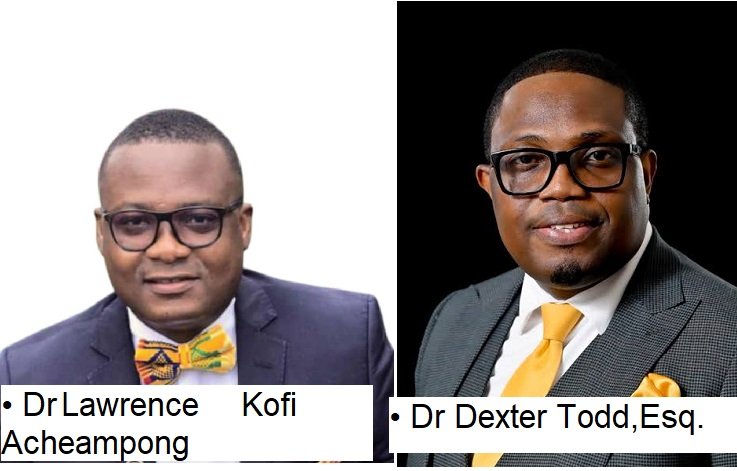
Written by Dr Lawrence Kofi Acheampong, Dr Dexter Todd, Esq., Nicole Rhonda Cole & Dr Stacy Nwodo. (Acheamponglawrence13@gmail.com)
Join our WhatsApp Channel now! GHANAIANTIMES OFFICIAL WHATSAPP CHANNEL

GHANAIANTIMES OFFICIAL WHATSAPP CHANNEL