From filth to fortune: How Ghana’s Community Service Bill can finally clean Accra
For years, I have watched with growing concern as the sanitation crisis in our capital, Accra, deepens. The gutters choked with plastic, the heaps of refuse at Agbogbloshie, Kaneshie, Kwame Nkrumah Circle and our beaches tell a story of a beautiful city slowly being buried under its own waste.
We have tried many things: the monthly National Sanitation Day, the evacuation levies, the engagement of private waste collectors and the ‘Operation Clean Your Frontage’ campaign. The results have been mixed at best, disappointing at worst. Yet we keep doing the same things, deploying the same strategies and somehow expecting a different result. As the old saying goes, that is the definition of insanity.
We cannot continue on this path. I believe we have just been handed a golden opportunity, perhaps the closest we have ever come to a sustainable solution, and we are not paying attention. I refer to the Community Service Bill recently signed by the President. For many, this bill is seen narrowly as a penal reform, an alternative to custodial sentences for minor offenders. That is true, but it is much more than that. If we choose to see it differently, it is a national human resource waiting to be harnessed for development. It is free, organised labour that can be deployed for the public good, emerging from the misfortune of others who have fallen foul of the law.
We have quietly told ourselves that we have lost the fight against filth. We whisper it to ourselves when we hold our noses to walk past a drain. We have normalised it. Once in a while, when cholera breaks out or the rains flood the city because the drains are blocked, we pretend to be concerned. We organise press conferences, issue threats, clean for a week and then return to business as usual. It has become, frankly, hogwash.
But what if we did it differently this time?
A small voice, perhaps a voice of conscience and common sense, keeps telling me: if this community service scheme is well managed, well structured and provided with the right logistics and tools, we will be on the verge of eradicating the sanitation problem in Accra permanently. This problem can be consigned to the history books.
Imagine this model: under the supervision of the Department of Social Welfare, the Judicial Service and the Metropolitan, Municipal and District Assemblies (MMDAs), persons sentenced to community service are formed into well-kitted, trained and supervised Sanitation Brigades. They are not left to wander. They are provided with gloves, boots, wheelbarrows, shovels, tricycles and compactors. They are assigned to specific electoral areas, working from 6 a.m. to 2 p.m., to desilt gutters, clear refuse heaps, clean markets, scrub pavements and maintain public spaces. They are identifiable, accountable and their service is tracked.
This is not forced labour; it is lawful, corrective service sanctioned by the courts and recognised worldwide as best practice. It restores dignity to the offender by allowing them to pay back society, and it restores cleanliness to society.
Yes, initially, this will be capital-intensive. You cannot send people to clean without tools. You need personal protective equipment, trucks, coordination centres, supervisors and health screening. The state alone cannot bear this cost, especially given our current fiscal constraints.
This is where stakeholder commitment must come in. This must be seen as a Corporate Social Responsibility (CSR) project of national importance.
The banks, which benefit from a clean and healthy economy; the oil companies and mining companies, whose operations impact the environment; the telecommunications companies, which have branded every corner of this city; the multimedia houses, which shape public perception; and the multinational corporations that call Accra home must all come together to fund and support this initiative.
They can adopt a district. A bank can provide 50 sets of personal protective equipment and two trucks for Ablekuma Central. A telecommunications company can fund the logistics for Ayawaso West. A mining company can sponsor the recycling and composting component. The media can provide the publicity and social re-engineering needed to make citizens appreciate the work being done. It is a game changer because it solves three problems at once.
First, it solves the sanitation problem with a constant, reliable workforce.
Second, it solves the prison overcrowding problem. Our prisons were not built to hold people who failed to pay a traffic fine or who committed a minor nuisance offence.
Third, it addresses the problem of public attitudes. When people see offenders cleaning gutters as punishment, it becomes a powerful deterrent against indiscriminate littering. It carries a moral lesson that no amount of preaching has achieved.
Accra wants to be a modern capital. It cannot be modern with filth. We host the African Continental Free Trade Area Secretariat. We welcome investors and tourists daily. What impression does filth give?
The Community Service Bill should not be allowed to become just another law on paper. The Ministry of Local Government, Decentralisation and Rural Development, the Ministry of Interior, the Attorney-General’s Department and the Office of the Head of Local Government Service must sit together now and develop a comprehensive implementation framework with sanitation at its core.
This is the time to make use of community service for the public good. This is the time to turn our misfortune into a fortune for the city.
We have lost too many battles against filth quietly. Let us win this war openly, together.
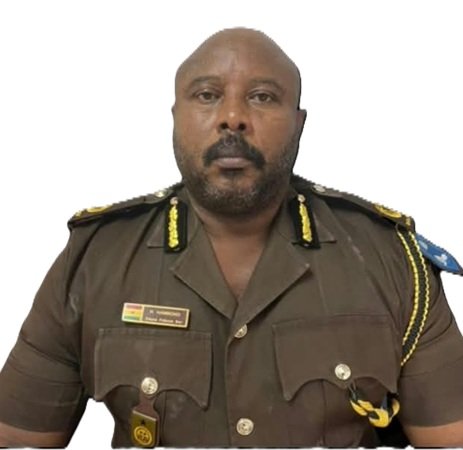
BY HARRY HAMMOND
The writer is an Assistant Director of Prisons.
Email: gozaro007@gmail.com
SKIP THE QUEUE, TAP THE NEWS

Read the Ghanaian Times and The Spectator newspapers from the comfort of your device via TimesNewsPlus.
Discover more
Mahama biography
Breaking news alerts
Buy Maps
Follow our WhatsApp Channel now! https://whatsapp.com/channel/0029VbAjG7g3gvWajUAEX12Q