Ghana’s ocean gamble: Can marine protection and coastal livelihoods coexist?
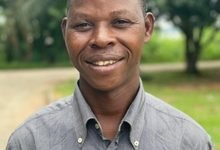
FOR Kofi Armah, a 48-year-old fisherman at Butre in the Western Region, the day starts before dawn.
He checks his canoe, looks through his nets and heads to sea, not knowing how much fish he will bring home.
Some days, the catch is enough to pay for fuel, food and support his family. On other days, he returns with so little that the cost of the trip takes much of what he has earned.
Armah told The Ghanaian Times that fishermen now had to travel farther in search of fish, which he linked partly to declining catches and illegal, unreported and unregulated fishing.


For him, fishing is more than a job. It is how he supports his family and pays for everyday needs.
He said he understood the need to protect the marine environment and rebuild fish stocks, including the establishment of a Marine Protected Area (MPA), but was worried about what restrictions could mean for families that depend almost entirely on fishing.
“If they tell us not to fish in an area, we will obey, but what are we going to eat? We have children in school. We have families to take care of,” he said.
His concern is shared by others whose livelihoods depend on the fish brought ashore.
Ama Aidoo, 38, a fish processor at Butre, buys, processes and sells fish. She said poor catches had affected her business as fish became harder to obtain and prices increased.
“When I spend more to buy fish, my profit becomes smaller. Therefore, the MPA gives me mixed feelings,” she said.
Aidoo said she supported efforts to protect breeding grounds and restore fish stocks, but livelihood support should also cover women who depend on the fisheries value chain.
Kobina Eshun, a net mender, also depends on fishing activity. “A torn net must be repaired before a canoe can return to sea. My earnings come from the same fishing activity that government is now seeking to regulate,” he said.
A transporter, Ekow Abban, said he also depended on good fish landings to make a living.
“When fish landings are good, I have enough cargo. When catches fall, I spend more time waiting and make fewer trips,” he said.
Their experiences show how deeply coastal livelihoods are tied to fishing. Any restrictions on fishing could affect not only fishermen but also processors, net menders, transporters, traders and other businesses along the fisheries value chain.
That dependence comes against growing pressure on Ghana’s fish stocks.
A 2025 stock assessment by researcher Lawrence Issah Braimah estimated fishing mortality at 0.72, compared with 0.20 associated with maximum sustainable yield.
The assessment also estimated that 14,462 canoes were fishing, compared with 9,000 considered sustainable.
The figures raise a difficult question for Ghana: how can the sea be protected without undermining the incomes of people whose lives depend on it?
It is against this backdrop that Ghana declared the Greater Cape Three Points Marine Protected Area on April 14, 2026.
The MPA covers 703.86 square kilometres and involves 21 coastal communities. It forms part of Ghana’s efforts to protect marine ecosystems and contribute to the global target of conserving at least 30 per cent of land and ocean areas by 2030.
At the declaration ceremony, the Minister of Fisheries and Aquaculture, Emelia Arthur, said the MPA would be managed through different zones.
She said controlled fishing would be allowed in some areas, while ecologically sensitive areas would receive stronger protection.
The zoning approach, she said, was intended to balance the restoration of marine resources with the livelihoods of communities that depend on fishing.
But for coastal communities, the success of the MPA will also depend on what happens to their incomes.
Joojo Solomon, head of the artisanal fishers, said livelihood programmes should reflect the realities of coastal communities and cover people beyond fishermen.
He suggested ecotourism as one possible option, with community members trained as tour guides and supported to develop businesses linked to tourism and the coastal environment.
Prof. Berchie Asiedu, Deputy Executive Director (Technical) of the Fisheries Commission, said the management plan being developed would consider the livelihoods of people within the fisheries value chain.
He said support would target fishers and others whose incomes depend on fishing, particularly those affected by restrictions in protected areas.
He said possible interventions could include skills training and alternative livelihood opportunities.
The aim, he said, was to protect the marine environment without cutting off the incomes of people who depend on fisheries.
Dr Evans Kwasi Arizi, Chair of Ghana’s MPA Technical Advisory Committee, said the approach would seek to maintain fishing opportunities for communities that depend on the sea, with certain fishing methods allowed in designated zones.
Hook-and-line fishing, he said, had been identified as one method that could be allowed within such zones.
At Busua, Nana Frederick Ekow, Chief Fisherman, said fishers needed clear information about where they could fish and what methods they could use.
He said clear information would help fishermen plan their activities and adjust to the new arrangements.
At Dixcove, canoe owner and fisherman Fiifi Amonoo said the immediate concern was how the arrangements would work in practice.
He said fishermen needed information on the zones, permitted fishing methods and restrictions as the MPA moved towards implementation.
He also urged authorities to ensure that promised livelihood support reached affected households, particularly young people.
Mr Stephen Kankam, Deputy Director of Hen Mpoano, said the success of the initiative would depend largely on how well the livelihoods of coastal communities were protected as management plans were developed.
He said communities whose livelihoods depended on fishing needed to be involved in decisions on how the marine area was managed.
He also called for viable alternative livelihood opportunities for people likely to be affected by restrictions.
Without such support, he said, the measures could deepen the economic difficulties of fishing households and weaken community support for the initiative.
Lessons from elsewhere
Ghana is not the first country to face the challenge of balancing marine conservation with the livelihoods of fishing communities.
Kenya, the Philippines and Senegal have used different approaches to marine protection, with varying experiences.
Research in Kenya has found improvements in fish size, biomass and potential economic value in some protected areas. Other studies, however, have documented income, food and social costs for communities affected by fishing restrictions.
In the Philippines, research on fishing households around marine protected areas found that some full-time and seasonal fishers experienced income declines during the first one to three years after the areas were established.
In Senegal, research on the Joal-Fadiouth Marine Protected Area found differences between formal zoning arrangements and existing patterns of resource use. It also identified gaps in the representation of some resource users in management structures.
The experiences provide lessons for Ghana as it begins its own marine protection programme.
Beyond the 21 communities covered by the MPA, other fishing communities are watching closely.
Edward Afful, a fisherman from Apam in the Central Region, said the success of the Greater Cape Three Points MPA could influence whether other fishing communities would accept similar marine protected areas.
He said communities would want to see the MPA properly implemented and producing results, including improvements in fish stocks and support for people who depended on fishing.
For Armah and other fisherfolk along Ghana’s coast, the hope is that protecting the sea will not come at the cost of the livelihoods built around it.
The test for Ghana will therefore involve both the health of its marine resources and the ability of coastal communities to continue making a living as efforts to restore the sea take effect.
BY BENEDICTA GYIMAAH FOLLEY
You can now read the *Ghanaian Times* and *The Spectator* newspapers digitally on [TimesNewsPlus](https://timesnewsplus.com/newspapers).
Follow our WhatsApp Channel now! https://whatsapp.com/channel/0029VbAjG7g3gvWajUAEX12Q