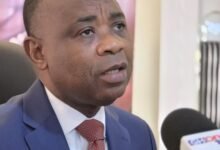
GHS warns of family planning service disruptions over contraceptive shortages
Ghana faces the risk of disruptions to family planning (FP) services following shortages of essential contraceptive commodities across the country, the Ghana Health Service (GHS) has warned.
The Programme Manager for Family Planning at the GHS, Dr Doris Amarteifio, said the country had less than one month’s stock of some key contraceptives due to declining donor support and limited domestic financing.
Speaking at a high-level stakeholders’ summit on strengthening family planning programmes and commodity security in Accra yesterday, she said Ghana depended on development partners to procure 11 family planning commodities, with six months’ stock considered the minimum requirement.
“Currently, Ghana is in crisis when it comes to family planning commodity security. Some of our commodities have less than one month’s stock,” she said.


The meeting, co-organised by MSI Reproductive Choices Ghana and the United Nations Population Fund (UNFPA), brought together policymakers, development partners, academia and civil society organisations to discuss sustainable solutions to improve FP services and secure contraceptive supplies.
Dr Amarteifio said Depo-Provera, one of the country’s most widely used injectable contraceptives, was almost out of stock, while male condoms had about one and a half months’ supply remaining. Female condoms, she added, had about two months’ stock.
She explained that Ghana’s family planning programme had lost about 45 per cent of its commodity financing following the exit of the United States Agency for International Development (USAID).
Before its withdrawal, USAID funded 45 per cent of contraceptive commodities, while UNFPA contributed 40 per cent, the Government of Ghana five per cent, and the West Africa Health Organisation (WAHO) and other partners the remainder.
Although government has increased its contribution to 20 per cent, Dr Amarteifio said the country continued to face shortages because of procurement delays, clearance challenges at the ports and declining donor support.
She also cited myths and misconceptions about contraceptives, fear of side effects, provider bias, inadequate youth-friendly services and low male involvement as factors limiting family planning uptake.
Dr Amarteifio called for increased domestic investment to reduce reliance on donor funding, stressing that family planning helps prevent unintended pregnancies, improves maternal and newborn health and contributes to national development.
A consultant and lecturer at the Kofi Annan International Peacekeeping Training Centre (KAIPTC), Dr Godfred Bonnah Nkansah, proposed a national family planning revenue reinvestment policy and a dedicated investment fund to finance contraceptive procurement, provider training and monitoring.
The Country Director of MSI Reproductive Choices Ghana, Dr Demi Letsa, urged the private sector to support family planning as part of its corporate social responsibility, describing access to contraceptives as essential to improving maternal health, educational outcomes and socio-economic development.
BY ABIGAIL ANNOH
Follow our WhatsApp Channel now! https://whatsapp.com/channel/0029VbAjG7g3gvWajUAEX12Q