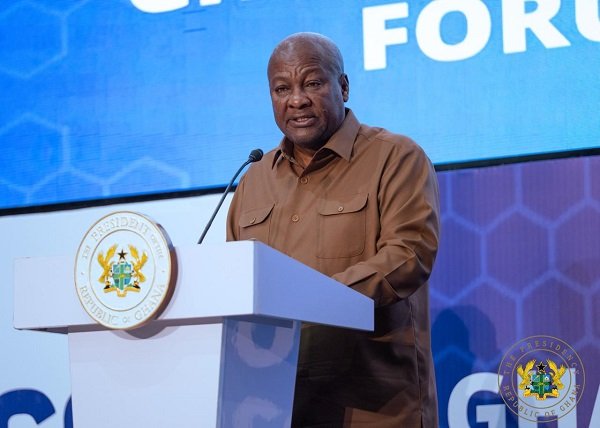
PRESIDENT John Dramani has disclosed that he has directed the Attorney-General and Minister for Justice to draft a State Asset Protection Bill for onward presentation to Parliament for consideration.
The President also disclosed that Cabinet has approved the National Ethics and Anti-Corruption Plan for the next five years for Parliamentary approval.
He explained that the rationale behind the State Asset Protection Bill was to end the indiscriminate disposal of state asset by political actors without recourse to due process.
“It will provide guidelines under which any state assets can be disposed, including lands, buildings, factories, and industries, so that no government capriciously disposes of state assets,” he said.

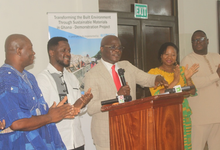
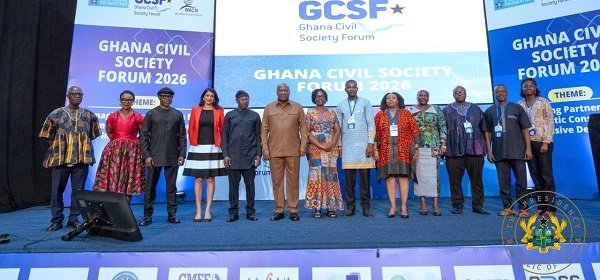
He made this announcement in Accra yesterday when he opened the 4th Ghana Civil Society Forum.
The Forum was on the theme “Reimagining Partnerships for Democratic Consolidation and Inclusive Development”.
Convened by Star-Ghana, participants included Institute of Democratic Governance, Centre for Democratic Development, Ghana Anti-Corruption Coalition, Transparency International Ghana, amongst others.
President Mahama reiterated his administration’s commitment to transparent and accountable governance anchored in citizen participation.
According to him, the role of civil society in shaping the democratic space could not be underestimated.
In the face of dwindling financing, he said the time had come for CSOs and government to build sustainable national systems capable of financing development, empowering citizens, strengthening democratic governance, and improving livelihoods irrespective of changes in the global environment.
To this end, President Mahama proposed four new development compacts – greater domestic resource mobilisation; stronger institutions of state as anchors of democracy; greater accountability for development outcomes; and stronger partnerships across society and local ownership of development processes.
For too long, he noted that Africa’s development conversation had often been framed around what its external partners could do but the changing global environment must challenge it to ask “what can we do for ourselves?”
The changing financing environment, the President stressed required innovation because the future of development financing could not depend exclusively on grants and traditional aid flows.
“We must embrace new models (by) encouraging local philanthropy, leveraging technology to mobilise resources, strengthen social enterprises and impact investment ecosystems, unlock the potential of our Ghanaian diaspora, and encourage responsible private sector participation in development.”
“As government, we remain committed to creating the policy environment necessary for innovation, transparency, accountability, and sustainable financing. The objective is clear: to build institutions capable of sustaining development long after external support has dried up,” he assured.
Alhaji Ibrahim Tanko, convener of the forum, said realities demanded that CSOs paused, reflected, and rethink on how to respond to global circumstance.
Though Ghana is celebrated as a beacon in democratic governance, he said beneath that success lies challenges that required the urgent attention of all.
BY JULIUS YAO PETETSI