Japan’s debt crisis deepens as borrowing costs hit 30-year high
Japan’s borrowing costs have hit a 30-year high as traders bet its central bank will raise interest rates to rescue the sinking yen.
The country’s 10-year bond yield rose by more than 0.05 percentage points to as much as 2.93 per cent on Monday, the highest since 1996.
The yield on 30-year bonds climbed a similar amount to 4.06 per cent, near a record high posted in May.
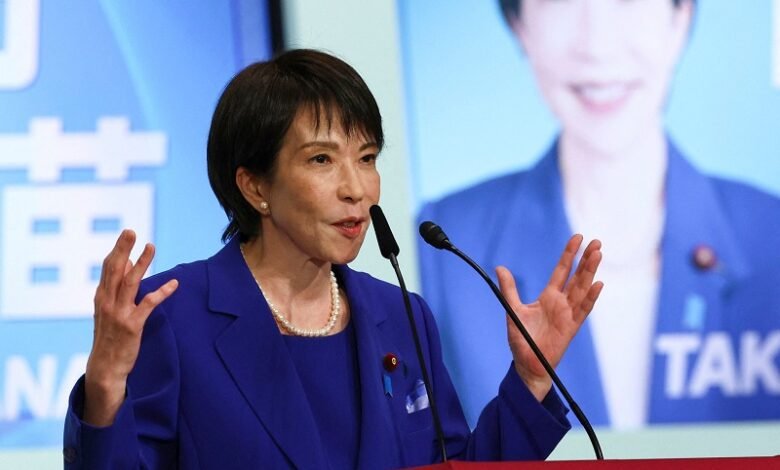
The rising yields will drive up borrowing costs for Sanae Takaichi, the Japanese prime minister, just as she ramps up spending and cuts taxes to buoy the country’s struggling economy.


Economic growth unexpectedly slowed to 0.3 per cent in the three months to June 30, the cabinet office reported on Monday, kept afloat only by a 2.6 per cent surge in government spending.
The Bank of Japan may have to raise interest rates even as the economy slows, because the plummeting yen could trigger faster inflation and rock global bond markets.
Traders are betting that the Bank of Japan will raise interest rates again in September. The previous increase, in June, took the benchmark rate to its highest since 1995. Inflation hit 1.7 per cent that month, the highest so far this year.
“The BOJ and markets have seemingly grown more concerned about the risk of an inflation overshoot,” said Koichi Sugisaki, of Morgan Stanley MUFG Securities.
The bond sell-off could make it harder for Ms Takaichi to support the economy with higher spending and tax cuts.
The government’s debt-to-GDP ratio is already 249 per cent, and has barely shifted since its recent peak during the Covid-19 pandemic.
“A low-level debt crisis is already under way,” said Robin Brooks, of the Brookings Institution, a Washington-based think tank.
He posted on Substack that the Bank of Japan’s bond-buying programme, which aims to stop yields rising too far, just shifted the debt problem onto the currency rather than addressing the underlying issue.
“Depreciation pressure on the yen is just a symptom of too much debt,” he said.
The yen hit a 40-year low against the US dollar last month. The Trump administration fears that a persistently weak yen will distort currency and bond markets, potentially driving up the US government’s own borrowing costs.
The US treasury has even sold off some of its own stock of euro to buy yen and push the currency higher. This intervention, combined with Japan’s own yen-buying, triggered a four per cent gain in the currency’s value against the US dollar. But the yen has since fallen almost two per cent as the effect of the intervention has worn off.-Telegraph
Follow our WhatsApp Channel now! https://whatsapp.com/channel/0029VbAjG7g3gvWajUAEX12Q