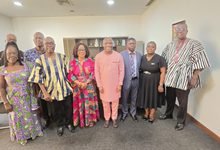
Journalists urged to uphold accuracy amid rising misinformation
Journalists in the country have been urged to uphold the principles of responsible journalism by ensuring accuracy, fairness and truth in their reportage, as misinformation and disinformation continue to pose serious threats to both national and global economies.
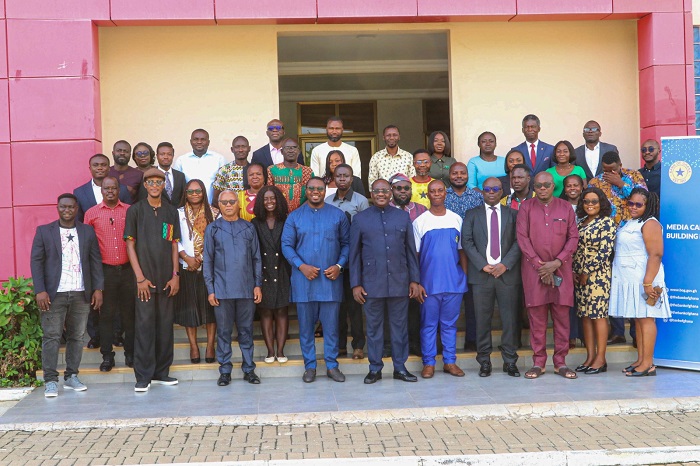
The call was made during a two-day media capacity building workshop organised for journalists from the Eastern, Ashanti, Central and Volta regions.
Speaking on the role of the media, the Director of Communications at the Bank of Ghana (BoG), Mr Bernard Otabil, emphasised that journalists played a critical role in shaping public understanding of economic issues and national policies.
He explained that while inflation figures and economic data might appear abstract, the way journalists communicated such information could significantly influence public perception and national outcomes.


He noted that not everyone read the Monetary Policy Report, but even a brief media engagement could have far-reaching consequences for the country.
Mr Otabil further indicated that the workshop, which started on Wednesday and ended on Thursday, formed part of the Bank of Ghana’s efforts to ensure that the media accurately interpreted and reported on economic issues, monetary policy decisions and their implications.
He pointed out that statistics alone did not tell the full story, explaining that behind every economic figure was a human being whether a farmer in Techiman, a manufacturer in Tema, a trader in Kejetia or a start-up owner in Accra.
According to him, the responsibility of the media was to bring these human stories to life and clearly explain how policy decisions, including changes in the monetary policy rate, affected access to credit, the cost of doing business and employment opportunities, particularly for the youth.
Mr Otabil urged journalists to go beyond simply reporting headlines and instead position themselves as strategic partners in national development.
He stressed the need for the media to simplify complex policies, fairly interrogate data and highlight not only challenges but also opportunities in sectors such as manufacturing, agriculture and exports.
He cautioned against the spread of fake news, warning that misinformation and disinformation could damage markets, affect a country’s ratings and influence economic decisions.
Mr Otabil explained that inaccurate information, especially on issues such as foreign exchange rates, could lead individuals and businesses to take wrong decisions.
He cited the example of spare parts dealers who rely on foreign exchange, noting that they could make costly errors if they acted on false information.
He further stressed that journalists had a duty to ensure that every report was factual and grounded in truth.
Mr Otabil also observed that in an era where information travelled rapidly, false reports could spread widely before corrections were made, and such corrections might never reach the same audience.
FROM AMA TEKYIWAA AMPADU AGYEMAN, KOFORIDUA
Follow our WhatsApp Channel now! https://whatsapp.com/channel/0029VbAjG7g3gvWajUAEX12Q