Rector urges curriculum reform in technical universities
From SAMUEL AGBEWODE, HO
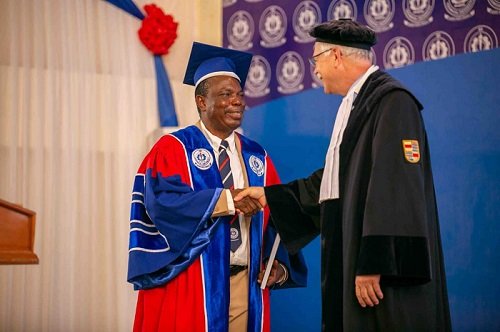
The Rector of Wittenborg University of Applied Sciences in the Netherlands, Professor Doctor Ron Tuninga, has called on technical universities in Ghana and across Africa to develop curricula that are relevant to the development needs of their societies.
He said there was the need for technical university education to become more innovative in the era of Artificial Intelligence (AI), to enable Ghana and other African countries to leverage technology in addressing their development challenges.
Professor Tuninga made the call while delivering the seventh Vice-Chancellor’s Distinguished Lecture at Ho Technical University (HTU) on the theme: “Business Practice, Education and Research in the Era of AI: Implications for Technical Universities in Ghana.”


He emphasised that technical universities must adopt innovative approaches in designing programmes that respond directly to societal needs.
The Rector further stressed the importance of developing ethical AI frameworks, noting that such systems must rely on unbiased data and reflect local realities, including language and cultural contexts.
He explained that technical university education in Ghana and Africa should focus on addressing the challenges faced by businesses and organisations through targeted research into emerging opportunities and constraints.
Professor Tuninga noted that institutions could not continue to operate in the same way and expect meaningful growth, stressing the need for continuous transformation.
He pointed out that although AI would drive growth, there must be effective collaboration between humans and technology, adding that Ghana and Africa must ensure that AI applications remain relevant to local development priorities.
He also underscored the continued importance of human capabilities such as critical thinking, analytical skills and emotional intelligence, which he said could not be replaced by AI.
According to him, graduates must acquire new and relevant skills to remain competitive in the evolving job market, noting that future employers would look beyond mere technical knowledge of AI.
The Vice-Chancellor of HTU, Professor Ben Q. Honyenuga, said the university remained committed to leading research efforts aimed at addressing development challenges in Ghana and beyond.
He indicated that HTU would continue to promote innovation and train students to become critical thinkers capable of solving problems and competing globally.
From SAMUEL AGBEWODE, HO
Follow our WhatsApp Channel now! https://whatsapp.com/channel/0029VbAjG7g3gvWajUAEX12Q