VSD rolls out mass rabies vaccination
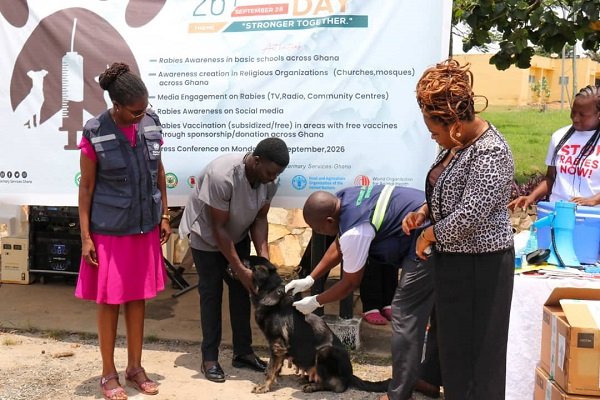
The Veterinary Services Directorate (VSD) has launched a mass rabies vaccination campaign targeting 25,000 dogs and cats in high-risk areas across the country.
The exercise, which runs throughout September as part of activities marking Rabies Awareness Month, is expected to boost Ghana’s efforts to achieve zero human deaths from dog-mediated rabies by 2030.
Speaking at the launch in Accra yesterday, the Chief Veterinary Officer (CVO), Dr Emmanuel Allegye-Cudjoe, said vaccines would be distributed across all 16 regions, with each region expected to receive approximately 1,000 doses for use in identified high-risk areas.
He said Greater Accra, the Ashanti, Upper East, Upper West, Western and Western North regions had been identified as areas requiring particular attention because of reported rabies cases.


“For instance in Greater Accra, we have lots of rabies cases from the coastal areas, in the Ashanti Region, Upper East, Upper West and the Western and Western North regions which have some high-risk areas, so we will focus on these areas,” he stated.
Dr Allegye-Cudjoe said prescribed vaccination fees would apply after September and urged pet owners to take advantage of the free vaccination period by taking their dogs and cats to the nearest veterinary centre for “free or subsidised vaccination.”
He expressed concern about the continued loss of lives, particularly children, to rabies, despite the disease being highly preventable through timely vaccination and appropriate care.
“Once clinical symptoms appear in an infected person or animal, the disease is virtually 100 per cent fatal, with no effective cure at that stage. Although rabies cannot be cured after symptoms develop, we have the means to prevent it before it claims a life,” he noted.
The CVO said annual rabies vaccination was not only a public health safety requirement but also a legal obligation under Ghana’s local government bye-laws.
“Every year, you are supposed to do it. Some people just do it in the first or second year of having their pets and forget. You are supposed to vaccinate every year,” he urged.
“Compliance protects your family, community and especially children from rabies,” Dr Allegye-Cudjoe said, calling for collective action to strengthen enforcement, community mobilisation, advocacy, financing and the provision of logistics.
The Acting Director of Health Promotion at the Ghana Health Service (GHS), Mrs Mabel Kissiwah Asafo, said rabies remained a serious but preventable public health threat.
“Rabies remains a serious but preventable public health threat and vaccination especially in high-risk areas is the most cost-effective measure to prevent human rabies deaths,” she said.
She reaffirmed the GHS’s commitment to the country’s One Health framework and said the Service would continue to work closely with the veterinary, environmental and other relevant sectors to eliminate dog-mediated human rabies.
A representative of the World Health Organisation (WHO), Dr Sally-Ann Ohene, commended Ghana for the initiative and stressed the need for stronger collaboration among communities, veterinary professionals, healthcare workers, civil society organisations and government agencies.
She said the success of the campaign should be measured not only by the number of dogs vaccinated, but also by the strength of partnerships, public awareness and the number of lives protected.
Rabies is a fatal viral disease that causes inflammation of the brain and is transmitted through the saliva of infected animals, usually through bites or scratches.
An estimated 59,000 people, mostly children in Africa and Asia, die from the disease each year.
In 2024 alone, the WHO reported that Ghana recorded 265 human deaths from rabies. END
BY ABIGAIL ANNOH
You can now read the *Ghanaian Times* and *The Spectator* newspapers digitally on [TimesNewsPlus](https://timesnewsplus.com/newspapers).
Follow our WhatsApp Channel now! https://whatsapp.com/channel/0029VbAjG7g3gvWajUAEX12Q