A Historic milestone at 69
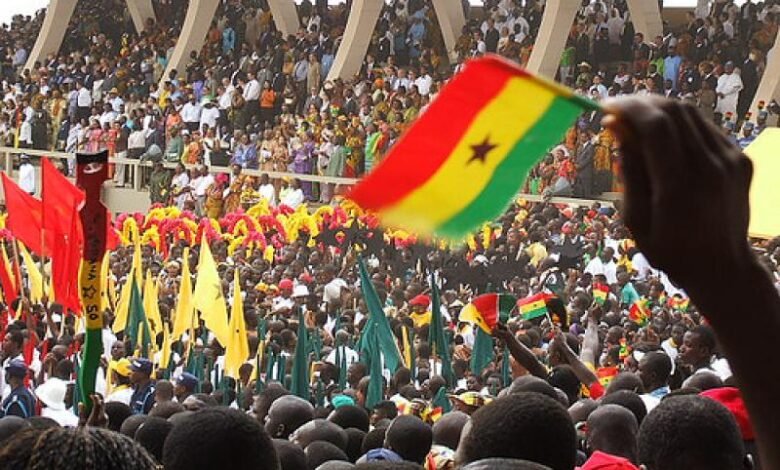
ON Friday, March 6, 2026, Ghana will mark 69 years of independence from British colonial rule, a historic milestone that reminds citizens of the sacrifices, resilience and vision that birthed the nation. From the proclamation of self-determination led by Kwame Nkrumah and his compatriots to the present democratic dispensation, the Ghanaian story has been one of struggle, hope and renewal.
Theme
This year’s anniversary comes at a time when the country is experiencing a period of renewed macroeconomic stability after weathering one of the most turbulent economic crises in its history. The theme: ‘Building Prosperity, Restoring Hope,’ resonates strongly with the current national mood.
Strong economic recovery

Ghana’s economic recovery over the past year has been notable. After inflation soared to alarming levels and peaking at 54.1 per cent at the end of 2022 and remaining elevated at 23.8 per cent in December 2024, the rate has declined sharply to 3.3 per cent in February 2026, according to data from the Ghana Statistical Service (GSS). The steady fall in inflation over 13 consecutive months signals a measure of price stability that has brought relief to households and businesses alike.
The Ghana cedi, which had experienced severe volatility during the height of the crisis, has also stabilised considerably. The local currency’s improved performance has restored confidence in the economy and reduced pressure on import-dependent sectors. For the ordinary citizens, the impact is tangible. Petrol prices, which once climbed to GH¢15.20 per litre, have fallen to about GH¢10.70 per litre. Food inflation has declined significantly, easing the burden on families struggling to make ends meet.
Encouraging macroeconomic indicators
President Mahama during the 2026 State of the Nation Address last Friday described the current state of the economy in hopeful terms.
He said, “The nation is on the runway. It is in take-off mode, and you are all advised to fasten your seatbelts. The journey continues. But the direction is set. And the hope is real,” he stated, underscoring the administration’s confidence in the recovery path.
Indeed, macroeconomic indicators suggest measurable progress. Ghana’s Gross Domestic Product (GDP) is projected to reach $113 billion in 2025, up from $83 billion at the end of 2024, placing the country among the top 10 largest economies in Africa.
Average GDP growth (the value of goods and services produced in a country within a particular year) for the first three quarters of 2025 stands at 6.1 per cent. The primary surplus (a situation where the government total revenue exceeds expenditures in a given year) has reached 2.6 per cent of GDP, surpassing the 1.5 per cent target, while the fiscal deficit has narrowed to 3.1 per cent, below the projected 3.8 per cent.
From debt default to recovery path
These gains follow a dark chapter in Ghana’s economic history. On December 19, 2022, the country declared a debt default, placing a moratorium on both domestic and external debt repayments. It was a sobering moment that underscored the depth of the crisis. The subsequent debt restructuring process was complex and protracted, with significant repayments scheduled between 2025 and 2028.
Through a combination of fiscal consolidation, bilateral negotiations and the establishment of sinking funds, Ghana has made headway in restructuring its obligations. Public debt reportedly declined by GH¢82.1 billion, from 61.8 per cent to 45.3 per cent of GDP. The settlement of a $709 million Eurobond ahead of schedule, contributing to $1.4 billion in debt service for 2025, further strengthened the country’s credibility.
International rating agencies have taken notice. Fitch Ratings, Moody’s and Standard & Poor’s have all upgraded Ghana’s credit ratings, marking a rare triple upgrade and signalling renewed investor confidence.
Industrialisation as the anchor of growth
While these achievements are commendable, history teaches that stability can be fragile if not anchored in structural transformation. Ghana has experienced periods of relative economic calm before.
Between 2017 and 2019, under the leadership of former President, Nana Addo Dankwa Akufo-Addo, fiscal discipline and policy reforms helped stabilise the economy after earlier difficulties. Yet subsequent shocks—including global headwinds and domestic vulnerabilities—exposed underlying structural weaknesses.
The central question, therefore, is how to ensure that today’s stability becomes tomorrow’s sustained prosperity.
The answer lies in industrialisation and value addition. For decades, Ghana has relied heavily on exporting raw commodities such as gold, cocoa and crude oil. This model leaves the economy vulnerable to global price fluctuations and limits job creation. To build a resilient economy, the country must move up the value chain.
Establishing local processing plants for cocoa, gold refining, petrochemicals and agro-products would not only increase export earnings but also create employment opportunities for the growing youth population. Special economic zones, coupled with incentives for local manufacturers, can stimulate industrial growth. Industrialisation must not remain a slogan; it must become a coordinated national agenda supported by infrastructure, financing and skills development.
Modernising agriculture for productivity
Modernising agriculture is equally critical. Agriculture remains a major employer, yet productivity levels are often low due to limited irrigation, inadequate storage facilities and weak supply chains. Investing in advanced irrigation systems, mechanisation and agro-processing can reduce post-harvest losses and increase export value. By linking farmers to processing factories, Ghana can strengthen rural economies and reduce poverty.
• A scene at independence celebration in Ghana
Infrastructure and AfCFTA opportunities
Infrastructure development is another pillar. Stable and affordable energy is indispensable for industrial growth. Frequent power disruptions and high tariffs undermine competitiveness. Expanding renewable energy sources, upgrading transmission networks and ensuring cost-reflective yet fair tariffs will provide the backbone for manufacturing and services.
In terms of transport infrastructure, roads, rail and ports, must also be modernised to facilitate trade within the framework of the African Continental Free Trade Area (AfCFTA). Digital infrastructure, including broadband expansion and ICT hubs, can position Ghana as a technology and innovation centre in West Africa.
Fiscal discipline
Equally important is financial sector reform and sustained fiscal discipline. The recent gains in debt reduction and deficit management must be consolidated. Broadening the tax base, improving public financial management and enhancing transparency in public procurement will increase revenue without overburdening citizens. Borrowing should be strategic and tied to productive investments that yield measurable returns.
Human capital development
On human capital, development underpins all these efforts, education and technical training must align with the needs of a modern economy. Expanding technical and vocational education and training (TVET), strengthening science and technology programmes and fostering partnerships between industry and academia will equip the workforce with relevant skills.
The private sector, particularly small and medium enterprises (SMEs), must be empowered. Access to affordable credit, streamlined business registration processes and incentives to formalise informal enterprises that can drive inclusive growth. Entrepreneurship should be nurtured not only as a survival strategy but as a pathway to innovation and wealth creation.
No discussion of sustainable development is complete without addressing corruption. Stronger institutions, transparent governance and strict enforcement of anti-corruption laws are essential to ensure that national resources are used judiciously. Citizens cannot be asked to tighten their belts while public funds are mismanaged. Accountability must remain at the heart of governance.
From political freedom to economic independence
As Ghana celebrates its 69th anniversary, the occasion should be both commemorative and reflective. If the nation were a human being, it would have been on retirement by now under the Labour Law. Yet countries do not retire; they evolve. The task before Ghana is to transform its current macroeconomic stability into lasting structural change.
The sacrifices of the independence generation demand no less. Ghana is endowed with abundant natural and human resources. What remains is disciplined management, visionary leadership and collective commitment to national development.
“Building Prosperity, Restoring Hope” must transcend rhetoric. It must translate into factories that hum with activity, farms that thrive with modern technology, classrooms that produce skilled innovators and institutions that uphold integrity.
Only then will Ghana’s sovereignty be fully realised, not merely as political independence, but as economic self-reliance and shared prosperity for all.
BY KINGSLEY ASARE
Join our WhatsApp Channel now! GHANAIANTIMES OFFICIAL WHATSAPP CHANNEL

GHANAIANTIMES OFFICIAL WHATSAPP CHANNEL
WhatsApp Channel https://whatsapp.com/channel/0029VbAjG7ggvWajUAEX12Q