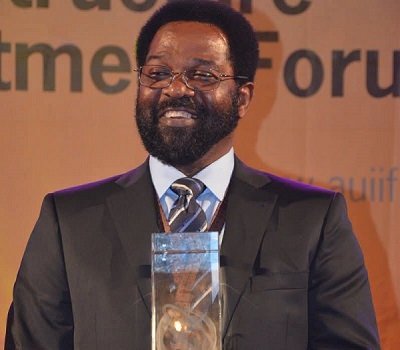
Former Accra Mayor and Ablekuma South MP, Dr Alfred Okoe Vanderpuije, has revealed that Accra’s waste management challenges became worse after waste transfer stations in the city were closed.
Speaking in an interview at TV3 on Sunday August 2, 2026, he said that during his tenure as Mayor, all waste management companies operating in Accra were registered and given contracts to collect refuse.
According to him, operators of tricycles, popularly known as “aboboyaa,” were required to take waste to designated transfer stations, where waste management companies would collect it and transport it to final disposal sites.
“We developed the transfer stations so that aboboyaa operators would collect refuse and bring it there, and the waste management companies would take it to the final destination,” he stated.


Dr Vanderpuije said the system worked during his time in office and that all the transfer stations remained operational until the recent floods.
He expressed concern that some aboboyaa operators are now dumping refuse indiscriminately while local assemblies fail to enforce sanitation regulations.
He said his administration gave strict instructions that waste should only be dumped at approved transfer stations.
The former mayor also revealed that the Accra Metropolitan Assembly had developed a broader waste and drainage improvement plan known as the “Conti Project.”
According to him, the project included the construction of scientifically engineered waste management centres, the reconstruction of old drainage systems, dredging of major drains such as the Odaw, and improvements to roads linked to waste disposal facilities.
He argued that if the project had been fully implemented, Accra would have had a more effective and modern waste management system.
Dr Vanderpuije blamed the current situation partly on a lack of continuity in policy implementation after his tenure ended.
Asked why later interventions had not solved the problem, he said governments had failed to adopt a comprehensive approach.
“We have not done a comprehensive approach,” he said, explaining that drainage, refuse collection, waste disposal and road infrastructure should be addressed together rather than separately.
He raised concerns about the current administrative structure of Accra, which has been divided into several metropolitan and municipal assemblies.
According to him, stronger coordination is needed among the assemblies, led by the Greater Accra Regional Coordinating Council and the responsible minister, to develop and implement a unified waste management strategy for the capital.
By: Jacob Aggrey