BoG calls for careful, contextualised reporting on central bank activities
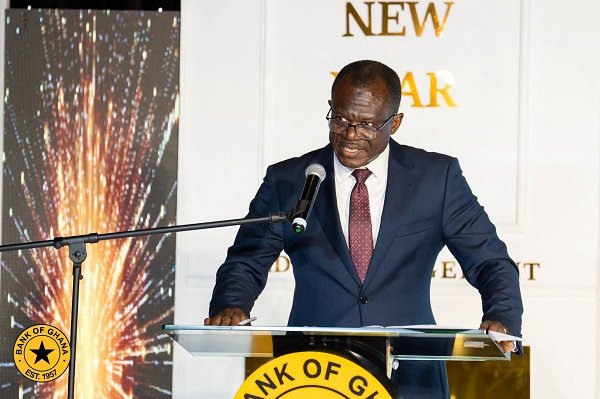
The First Deputy Governor of the Bank of Ghana (BoG), Dr Zakari Mumuni, has urged the media to be circumspect in their reportage on the central bank, stressing that confidence in the financial system and the broader economy depends on how economic information is communicated.
“Central banking is built on trust, and trust is built on communication,” Dr Mumuni stated at the Governor’s New Year Media Engagement held in Accra last Friday.
He noted that every media headline, analysis, and story sent a signal to the public and markets, shaping expectations and influencing behaviour.
According to him, the issue was not whether the media should report on the Bank of Ghana, but how those reports were framed and contextualised.


“Does the story illuminate or inflame? Does it build understanding or amplify fear? Does it strengthen confidence or unintentionally weaken it?” he said, and affirmed the Bank’s respect for media freedom and the responsibility that came with it,” he said.
Dr Mumuni explained that how the Bank’s actions were reported could have real consequences for households, businesses, investors, and markets.
He emphasised that accuracy, balance, and context are critical, not for the Bank’s image, but for the national interest.
“Sensationalism can amplify anxiety. Incomplete context can distort understanding. But responsible reporting can stabilise expectations and strengthen confidence. This is not about silencing criticism; it is about recognising that in macroeconomics, perception often precedes reality,” he said.
The First Deputy Governor stressed that communication itself was a policy tool, noting that words shape expectations, expectations shape behaviour, and behaviour moves markets.
He added that history showed that economies across the world had been stabilised or destabilised by how economic information was communicated.
DrMumuni described the media as more than observers of economic events, saying they were transmitters of confidence and shapers of public sentiment.
He reiterated the Bank of Ghana’s mandate was to ensure price stability, explaining that a stable cedi translated into predictable import prices, moderated transport costs, and greater certainty in the cost of essentials such as food, rent, school fees, and medicines.
According to him, Ghana operates a managed floating exchange rate regime, where daily currency movements are normal and reflect market trading rather than crisis.
He cautioned that reporting such movements without context could trigger fear-driven behaviour, unnecessary demand surges, and increased volatility—ultimately weakening confidence in the currency.
“When reporting is measured and contextual, calm is reinforced, rational behaviour prevails, and markets function more efficiently,” he said.
DrMumuni also addressed reports on central bank losses, noting that central banks worldwide may incur losses during periods of crisis as a result of policy decisions taken in the public interest, not financial recklessness.
He cautioned that failing to explain this distinction could erode public trust.
“The thrust of policy must not be lost inflation has fallen sharply, reserves have been rebuilt, and the cedi has strengthened. These are the outcomes that ultimately matter to citizens,” he said.
He urged the media to partner in building trust, supporting economic stability, and advancing Ghana’s collective progress.
BY KINGSLEY ASARE
Follow Ghanaian Times WhatsApp Channel today. https://whatsapp.com/channel/0029VbAjG7g3gvWajUAEX12Q
🌍 Trusted News. Real Stories. Anytime, Anywhere.
✅ Join our WhatsApp Channel now! https://whatsapp.com/channel/0029VbAjG7g3gvWajUAEX12Q