DBG pledges to help transform oil palm industry… as it launches 5th anniversary celebration

Development Bank Ghana (DBG) yesterday launched activities to mark its fifth anniversary with the pledge to help transform Ghana’s oil palm industry from smallholder farms into processing giants.
The bank said the initiative was aimed at ensuring that a crop cultivated in the country for generations became a major driver of industrial growth, job creation and exports, while increasing the production and consumption of locally grown and processed palm oil.
The two-day anniversary celebration, scheduled for November 16 and 17, 2026, will highlight DBG’s journey and impact over the past five years and reaffirm its commitment to supporting the growth of Ghana’s private sector.
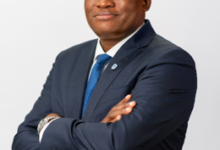
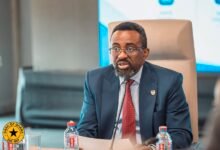
Speaking at the media launch in Accra, the Chief Executive Officer of DBG, Professor Randolph Nsor-Ambala, said the bank’s work was anchored on promoting sustainable and inclusive economic growth.

“At DBG, we are focused on enabling businesses to grow, scale up and contribute meaningfully to Ghana’s economic transformation. Our journey over the past five years reflects a strong commitment to impact and partnership,” he said.
Prof. Nsor-Ambala noted that the bank continued to collaborate with financial institutions and development partners to expand access to credit, particularly for underserved segments of the economy.
As part of its forward strategy, he said DBG would deepen its reach, strengthen partnerships and scale up its impact in priority sectors.
“We will double down on women. More than half of everything we have financed has reached businesses led by women, and we are nowhere near done. The years ahead will bring financing deliberately designed around women entrepreneurs.
“We will also push far beyond this capital city. Development that stops at the edge of Accra is development postponed, and we intend to see our financing at work in all 16 regions of Ghana,” he stated.
Prof. Nsor-Ambala said the bank would continue to work with its development partners to finance Ghana’s green transition and support clean energy and climate-smart industries.
Since its establishment in November 2021, he said DBG had played a pivotal role in addressing long-standing financing gaps by providing long-term funding to participating financial institutions (PFIs), enabling increased lending to key sectors of the economy and fostering sustainable development.
Over the past five years, Prof. Nsor-Ambala indicated that the bank had supported businesses in sectors such as agriculture, manufacturing and services, contributing to job creation, improved productivity and economic resilience.
According to him, DBG had so far invested GH¢2.5 billion in 997 enterprises across the country through 21 participating financial institutions.
Drawing parallels with successful development banks around the world, Prof Nsor-Ambala said Germany established KfW in 1948 to help rebuild the country after the devastation of war by financing homes, factories and power infrastructure.
“Nearly 80 years later, KfW has become one of the largest development banks in the world and today stands as a partner behind this institution,” he said.
He also cited the example of Singapore, which established the Development Bank of Singapore (DBS) in 1968 to support its industrialisation agenda, indicating that “Today, the world knows it simply as DBS, the largest bank in Southeast Asia and one of the most respected banks globally.”
“We intend to walk the same road. Our ambition is to complete each assignment and take on more challenging responsibilities until Ghana has a banking system that finances development as a matter of course in every region and for every serious enterprise,” he said.
BY KINGSLEY ASARE
Follow our WhatsApp Channel now! https://whatsapp.com/channel/0029VbAjG7g3gvWajUAEX12Q