Building inflation drops to 3.9% in January —GSS

YEAR-on-year inflation in the building and construction industry declined to 3.9 per cent in January 2026, down from 4.4 per cent recorded in December 2025, the Government Statistician, Dr Alhassan Iddrisu, has announced.
He said the January figure marked the ninth consecutive month of decline in year-on-year (YoY) inflation in the sector, reflecting sustained moderation in the prices of construction inputs.
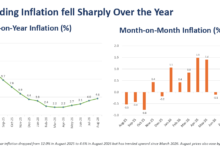
Speaking at a news conference in Accra yesterday, Dr Iddrisu explained that the Prime Building Cost Index (PBCI) rose to 132.4 in January 2026 from 127.4 in January 2025, translating into a YoY inflation rate of 3.9 per cent.
He noted that this represented a 0.5 percentage point drop from the December 2025 rate of 4.4 per cent, and a 19.8-percentage point decline from the 23.7 per cent recorded in January 2025.

“This means that, on average, the prices of building materials increased by 3.9 per cent between January 2025 and January 2026,” he said.
On a month-on-month (MoM) basis, however, building inflation rose to 1.1 per cent in January 2026, from negative 0.2 per cent in December 2025.
Dr Iddrisu indicated that the general price level of building materials increased by 1.1 per cent between December 2025 and January 2026.
At the group level, the Government Statistician said labour recorded a YoY inflation rate of 5.4 per cent in January 2026, down from 10.7 per cent in December 2025, and on a month-on-month basis, labour prices declined by 4.1 per cent.
Dr Iddrisu said materials recorded a YoY inflation rate of 3.5 per cent in January 2026, up from 2.7 per cent in December 2025, with prices increasing by 2.3 per cent month-on-month.
Inflation for plant and equipment, he said, eased to 4.2 per cent in January 2026 from 5.6 per cent in December 2025, while prices in that category rose by 2.9 per cent on a monthly basis.
At the sub-group level, Surface Finishes recorded the highest year-on-year inflation rate of 10.8 per cent, while Cement registered the lowest at negative 6.6 per cent. Ten out of the 23 sub-groups recorded inflation rates above the national average of 3.9 per cent.
Dr Iddrisu explained that the PBCI measured changes in the overall cost of constructing buildings over time, tracking key inputs such as materials, labour and plant, using 2023 as the base year set at 100.
He said the revised index covered 406 items grouped into 23 sub-groups and is based on four building models: a single-storey four-bedroom house, a four-storey hostel facility, a single-storey six-unit classroom block, and a five-storey office block.
Data are collected monthly across all 16 regions and disseminated to guide investors, developers, contractors and policy makers in budgeting, contract negotiations, and monitoring inflation trends.
He advised households to phase building projects carefully to take advantage of moderating prices, while businesses could consider locking in contracts.
BY KINGSLEY ASARE
Join our WhatsApp Channel now! https://whatsapp.com/channel/0029VbAjG7g3gvWajUAEX12Q

Follow the latest videos and updates on the official YouTube channel of Ghanaian Times.