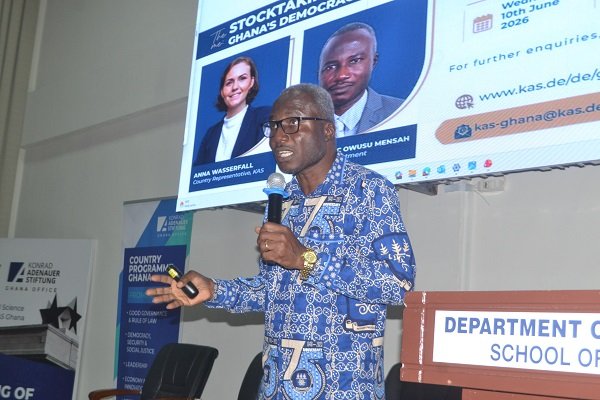
A study by the Department of Political Science at the University of Ghana has called for greater transparency in governance and stronger accountability institutions to deepen democratic governance in the country.
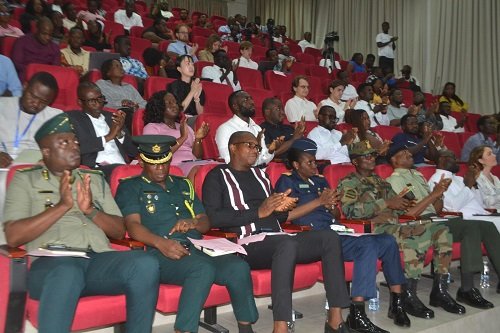
The study also recommended increased financial and logistical support for key governance and anti-corruption institutions, including the Electoral Commission (EC), the Commission on Human Rights and Administrative Justice (CHRAJ), the National Commission for Civic Education (NCCE), and the National Media Commission (NMC), to enhance their effectiveness and boost public confidence.
Presenting the report, the Head of the Department of Political Science in Accra yesterday, Prof. Isaac Owusu Mensah, indicated that policymakers should focus on strengthening existing accountability institutions rather than introducing new laws.
He explained that equipping such institutions with the necessary resources would enable them to carry out their mandates effectively and contribute to improved governance outcomes.


Prof. Owusu Mensah also called for reforms in political party financing, including the establishment of a public Elections Fund to be financed through a portion of national revenue.
He said the proposed fund would help reduce excessive private influence on political parties and promote transparency and fairness in the electoral process.
The report further urged development partners and the diplomatic community to intensify support for anti-corruption initiatives as part of efforts to consolidate democratic governance and strengthen institutional accountability.
The Country Representative, Anna Lena Sabroso Wasserfall, described the study as timely and relevant, stressing that democracy should not be taken for granted.
She explained that democratic governance was an evolving process that must continually respond to the needs and aspirations of citizens in order to maintain public confidence and legitimacy.
“Democracy is not static. It changes and evolves based on how well it responds to the needs of citizens,” she stated.
Ms Wasserfall noted that rising political discontent, declining trust in institutions and economic challenges across West Africa and other parts of the world were creating conditions that could make alternative forms of governance appear attractive to some segments of the population.
She, however, cautioned against drawing conclusions based solely on public perceptions, emphasising the need for evidence-based research in shaping policy decisions and democratic reforms.
According to her, rigorous research and informed public discourse remained essential for strengthening democratic institutions, enhancing accountability and sustaining public trust in governance.
BY NELLY QUARCOOPOME
Follow our WhatsApp Channel now! https://whatsapp.com/channel/0029VbAjG7g3gvWajUAEX12Q