GHANA has identified four priority areas to accelerate the implementation of the United Nations (UN) New Urban Agenda to promote inclusive, resilient and sustainable cities.
The areas are affordable and inclusive housing; integrated urban development and spatial planning; urban infrastructure and local economic development; and climate-resilient cities supported by stronger urban governance.
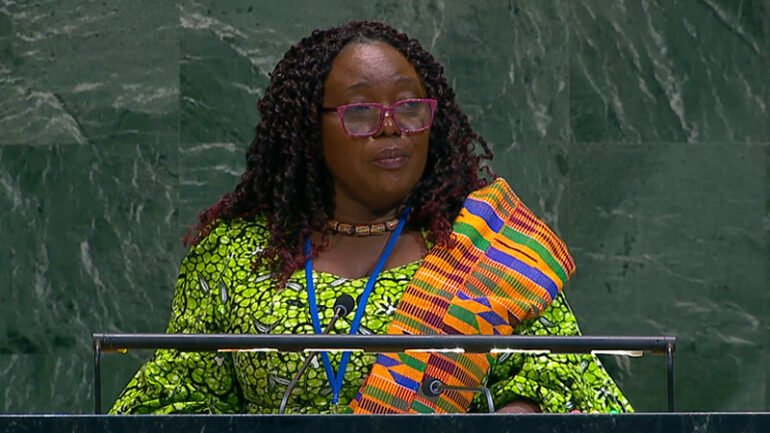
Deputy Minister of Local Government, Chieftaincy and Religious Affairs, Ms Rita Naa Odoley Sowah, disclosed this at the UN General Assembly High-Level Political Forum in New York last Wednesday, where she represented the sector Minister, Mr Ahmed Ibrahim.
She said the government had prioritised affordable housing through the implementation of recommendations from the 2024 Housing Profile and the National Slum Upgrading and Prevention Strategy.

Ms Sowah said efforts were also being made to strengthen integrated urban development and spatial planning through the National Urban Policy (2026–2035).
She explained that investments in urban infrastructure and local economic development were being pursued through programmes such as the Ghana Secondary Cities Support Programme, the Greater Accra Resilience and Integrated Development (GARID) Project, the Smart SDGs Programme and the Sustainable Cities Programme.
The Deputy Minister again indicated that government had also prioritised climate-resilient and environmentally sustainable cities, while efforts were underway to improve urban governance, institutional capacity, coordination and data management through the planned operationalisation of a Ghana Urban Observatory.
Ms Sowah said the measures were necessary to address the growing pressure on cities resulting from rapid urbanisation.
She, however, acknowledged that the pace of development had not kept pace with the country’s rapid urban growth.
She disclosed that Ghana faced a housing deficit of more than 1.8 million units, while about 37 per cent of the urban population lived in informal settlements.
Furthermore, the Deputy Minister noted that government would intensify efforts to expand affordable housing, upgrade slum communities, strengthen the fiscal capacity of local governments and increase sustainable urban financing.
She said climate resilience would also be integrated into urban planning and infrastructure development, while digital governance and data systems would be improved.
Ms Sowah stressed that achieving the objectives would require stronger collaboration among government, development partners, the private sector and local communities.
She, therefore, called for increased and predictable international financing for housing and urban development, improved access to climate finance for cities and enhanced technical and multilateral cooperation.
The Deputy Minister said Ghana had made progress in urban development over the past decade through strong national leadership, decentralised governance and evidence-based planning led by the National Development Planning Commission (NDPC) and the Ministry of Local Government, Chieftaincy and Religious Affairs.
She noted that digital transformation, skills development and increased private sector participation had also contributed to improved urban governance, institutional performance and economic productivity.
Moreover, Ms Sowah described the High-Level Meeting as an important opportunity to assess global progress on the implementation of the New Urban Agenda, identify challenges and renew international commitment to sustainable urban development.
The New Urban Agenda was adopted at the UN Conference on Housing and Sustainable Urban Development (Habitat III) in Quito, Ecuador, in October 2016 and subsequently endorsed by the UN General Assembly.
The framework provides a global roadmap for making cities and human settlements more inclusive, safe, resilient and sustainable.
BY VICTOR A BUXTON
Follow our WhatsApp Channel now! https://whatsapp.com/channel/0029VbAjG7g3gvWajUAEX12Q