Ghana marks international day for universal access to information
INFORMATION, and indeed, quality information, remains at the heart of transparency and accountability in the governance ecosystem the world over. The Right to Information and perhaps, most importantly, the access to right to information therefore remains golden in the global strive for democracy.
Proclaimed by the United Nations Educational, Scientific and Cultural Organisation (UNESCO) in 2015 and adopted by the global community under the auspices of the United Nations General Assembly in September 2019, the International Day for the Universal Access to Information (IDUAI), observed annually on September 28, is to promote the right to access to information held by public authorities and to highlight the importance of freedom of information laws, open governance and transparency.
Under the theme ‘Upholding Information Integrity in the Digital Age: The Role of Access to Information in addressing Information Disorder’, the 2026 International Day for Universal Access to Information was Monday, September 28. Various countries have held a number of activities to commemorate the day.
The global celebration this year is in Freetown, Sierra Leone, at the Bintumani International Conference Centre, Aberdeen, and will end on Wednesday, September 30, 2026, under the theme “Upholding Information Integrity in the Digital Age: How Access to Information Can Prevent Information Pollution.”
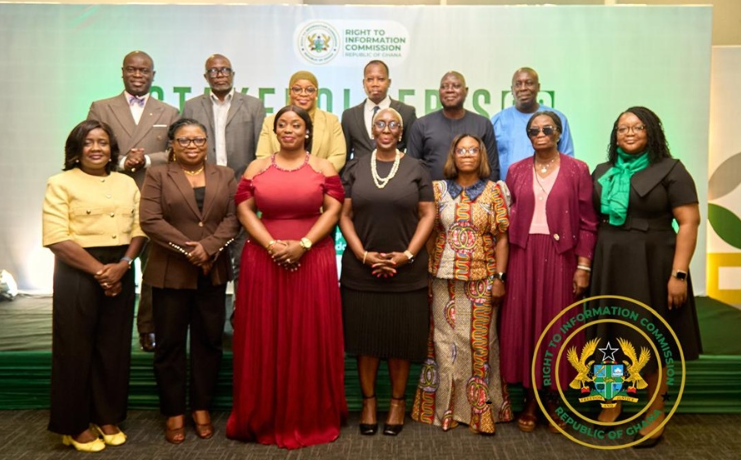
In Ghana, the Right To Information Commission began the annual IDUAI celebration with a month-long programme of activities from September 1, 2026, which was rounded off with a Stakeholders Conference on September 24 in Accra.
The event brought together delegates from state and public institutions, international and local non-governmental organisations, academia, the media, development partners, diplomats, persons with disabilities, representatives from the private sector and representatives from underserved and underprivileged societies.
The President, Mr John Dramani Mahama, in an address read on his behalf by Mrs Maretta Brew, Senior Legal Counsel to the President, reiterated the importance of access to information by the citizenry, which determines the state and stage of inclusive and shared governance as the country continues to strengthen the culture of openness and transparency.
The President said the mandate of the Right To Information Commission was not just constitutional but also a fundamental necessity in the current stage of information management and dissemination occasioned by technological advancement.
In his address, read by the Deputy Government Spokesperson, Shamima Muslim, the Minister for Government Communications and Government Spokesperson, Felix Kwakye Ofosu, said the time had come for all to speak frankly about the challenges impeding access to information, which were basically poor records management by public institutions, unclear procedures, barriers faced by rural applicants and institutional reluctance to disclose.
He maintained that access to information cannot depend on the citizen’s ability to travel to Accra, navigate a website or write a formal letter and that Act 989 allows for oral applications in relevant processes.
He commended the Commission’s enforcement action against institutions that failed to meet RTI obligations, including failure to submit annual reports.
At the same stakeholder forum, Dr James Kwaku Asante, Chairman of the Board of the RTIC, dwelled on the relevance of information, which he described as “one of the most powerful resources of our time with the potential to shape public opinion, influence policy choices, direct economic behaviour, affect social relationships and, at critical moments, determine whether communities remain peaceful, healthy and united.”
The Executive Secretary of the RTIC, Ms Genevieve Shirley Lartey (Esq), explained that the stakeholder forum provided an opportunity to exchange ideas, share thoughts and confront the challenges of information disorder, explore practical solutions and strengthen partnerships necessary to promote information integrity.
She said the forum also offered a platform to consider how emerging technologies could be used responsibly while safeguarding privacy, personal data, national security and legitimate interests protected by law.
In a solidarity message, read on his behalf by Mr Carl Ampah, UNESCO National Professional Officer for Culture, the UNESCO representative to Ghana, Mr Edmund Moukala, stressed the vital importance of access to information as a fundamental need for the attainment of the Sustainable Development Goal (SDG) 16, specifically 10.2, which relates to public access to information and the protection of fundamental freedoms considered to be an enabler of all the SDGs.
After a long spell of agitation and concerns by stakeholders, including NGOs, the media and some vocal personalities, the Right To Information Act, Act 989, was passed by the Parliament of Ghana in March 2019, which established the Right To Information Commission later in the year 2019 to promote, monitor, protect and enforce the constitutional right of access to information.
In carrying out its mandate, the Commission has, in the six years of existence, engaged strategic partners, local and international, including STAR-Ghana, GIZ, the Open Government Partnership, European Union, UNESCO, diplomatic institutions, Ministry of Information, Media Foundation for West Africa, International Republican Institute, GETFund, other government agencies and civil society organisations.
BY KWEKU SERSAH JOHNSON
The Writer is the Technical Advisor at the Right To Information Commission.
You can now read the *Ghanaian Times* and *The Spectator* newspapers digitally on [TimesNewsPlus](https://timesnewsplus.com/newspapers).
Follow our WhatsApp Channel now! https://whatsapp.com/channel/0029VbAjG7g3gvWajUAEX12Q